.png)
Can I Build a House on My Land in Oklahoma? A Builder’s Guide
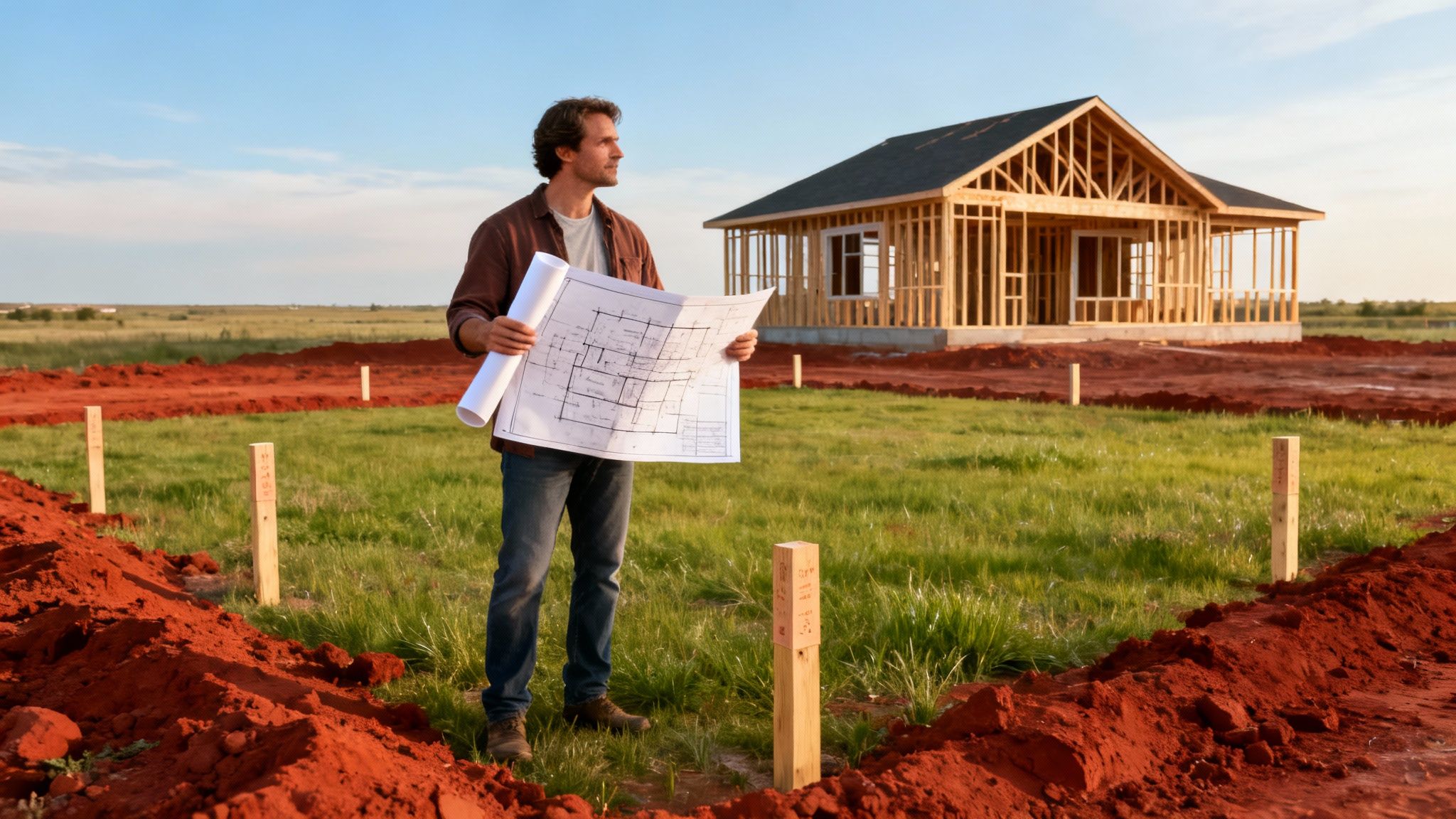
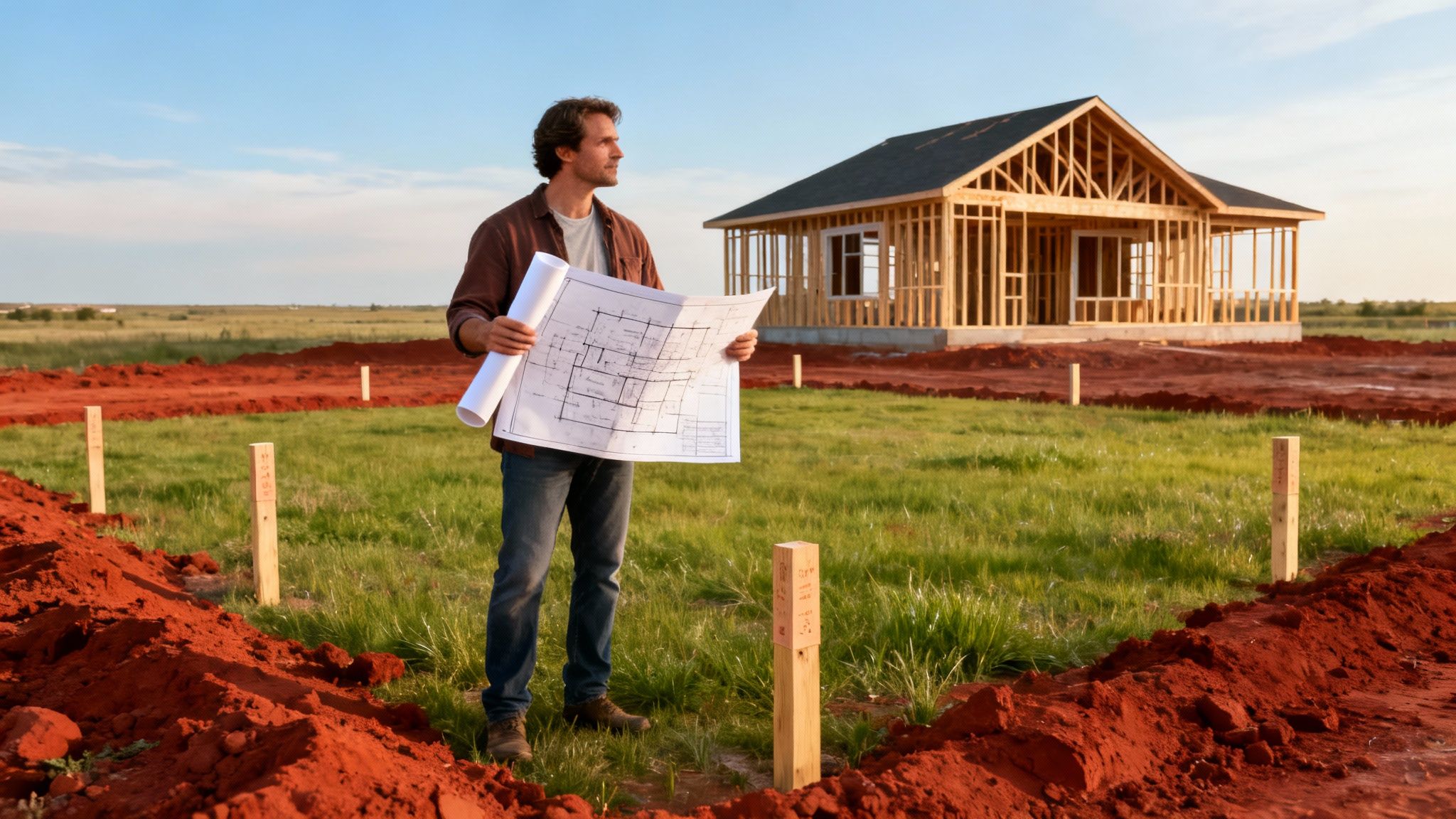
Yes, in many cases you can build a custom home on land you already own in Oklahoma. The important question is not simply whether you own the property, but whether the site is suitable for the home you want to build and what it will take to make the property construction-ready.
Before committing to a floor plan, budget, or construction schedule, evaluate the property for access, easements, setbacks, drainage, utilities, wastewater, soil conditions, topography, and any applicable local requirements.
For a broader step-by-step overview, see ACET's Build on Your Land in Oklahoma guide.
What should I check first if I want to build on my land?
Start with the property itself. A homesite that looks ideal can still require substantial development before construction begins.
- Property boundaries and easements: Confirm the legal boundaries and whether utility, access, or other easements affect home placement.
- Setbacks and buildable area: Determine where the home can practically and legally sit on the property.
- Road and driveway access: Consider how construction equipment, delivery trucks, and future residents will reach the homesite.
- Drainage and topography: Evaluate slope, runoff patterns, low areas, waterways, and grading requirements.
- Utilities: Verify the availability and cost implications of electricity, water, wastewater, gas or propane, and communications.
- Soil and foundation conditions: Site-specific testing or engineering may be needed to determine the appropriate foundation approach.
Do I need city water and sewer to build?
No. Many Oklahoma homes are built outside municipal utility systems. Some properties use rural-water service or another approved water source, while wastewater may be handled through a septic system when public sewer is unavailable.
The correct solution depends on the property and applicable requirements. Utility availability should be confirmed early because long service runs, septic needs, or other infrastructure can materially affect the budget.
Does ACET build on client-owned land?
Yes. Build-on-your-land projects are part of ACET Custom Homes' work. ACET primarily serves the Oklahoma City metro and surrounding and rural Oklahoma communities, with farther projects considered individually based on scope and logistics.
ACET does not currently sell land or lots, but the team can be a resource when a client is evaluating a property and wants construction-oriented input before purchasing.
Can I bring my own floor plan?
Yes. Clients may bring an existing plan, customize an ACET floor plan, or combine ideas from multiple plans into a personalized design. The final design must still work with the property, budget, engineering, constructability, and applicable requirements.
Land and floor-plan decisions are best made together. A plan that works well on one property may need changes on another because of setbacks, driveway placement, drainage, utilities, septic location, views, or topography.
How much does it cost to build if I already own the land?
Owning the land can remove the land-purchase cost from the project, but it does not eliminate site-development expenses. Total project cost can still include clearing, grading, drainage, driveway construction, utilities, septic or sewer work, surveys, testing, engineering, permits or approvals, and the home itself.
ACET typically considers custom-home projects with an overall build investment around $399,999 and above. This is a general positioning guide, not a quote or guaranteed minimum. Every property and home is evaluated individually.
Do I need a soil test before building?
Whether a particular test is required depends on the property, project, engineering needs, and local conditions. ACET treats foundation design as site-specific rather than assuming the same foundation system is appropriate for every Oklahoma homesite.
How long does the process take?
A complete custom-home journey can take roughly 12 to 18 months when planning, financing, design, engineering, approvals, selections, and construction are considered together.
Once a project is fully ready for construction, the build itself is commonly around 8 to 10 months. Actual schedules vary with weather, inspections, site conditions, project complexity, material lead times, and client changes.
Can ACET help me with financing?
ACET Custom Homes is not a lender and does not provide financing. The team can help clients understand the general construction-financing process and may provide lender resources when appropriate.
Construction-loan requirements vary by lender and borrower, so down-payment percentages, equity requirements, draw procedures, rates, and underwriting terms should be confirmed directly with the lender.
What is the best first step?
If you already own land, gather the property address, survey if available, information about utility access, and your initial ideas for home size, style, budget, and timeline. That gives the builder a much better starting point for discussing feasibility and next steps.
If you are still shopping for land, consider involving a builder before closing on a property. Construction-oriented input can help identify site issues early and reduce the chance of buying land that creates avoidable design or budget problems.
Frequently asked questions
Can I build on rural acreage?
Yes, subject to property feasibility and applicable requirements. Rural acreage often requires additional planning for utilities, septic, driveway access, grading, and drainage.
Do I have to use an ACET floor plan?
No. ACET can work from client-provided plans, customized ACET plans, or a combination of ideas developed into a personalized design.
Does ACET sell buildable lots?
No. ACET does not currently sell land or lots.
Can ACET review land before I buy it?
ACET can provide construction-oriented guidance as part of the planning process. Formal surveys, engineering, testing, title review, or governmental determinations may still require the appropriate licensed professionals or authorities.
What should I bring to an initial consultation?
Bring the property location, any survey or land information you have, desired home size, floor-plan ideas, architectural style, budget range, timeline, and any known utility or site information.
Ready to see whether your property is a good fit for a custom home? Contact ACET Custom Homes to discuss the land, your design goals, and the next practical steps.
Book Your Project Consultation