Dreaming of building a custom home but feel overwhelmed by where to start? You're not alone. The journey from an empty lot to your dream front door is exciting, but the custom home building process can feel like a maze of permits, plans, and decisions. Without a clear roadmap, you risk costly mistakes and stressful delays, turning your dream into a nightmare.
This is where clarity becomes your greatest asset. Whether you're envisioning a modern farmhouse on a few acres in rural Macomb or a luxury estate in Edmond, understanding each phase is the key to a successful build. At ACET Custom Homes, our 15+ years of experience building across Oklahoma—from Deer Creek to Norman—have shown us that an informed client is an empowered client.
This guide breaks down the entire custom home building process into 10 clear, actionable phases. We'll give you the insider knowledge to navigate each step confidently, from selecting the perfect piece of land to the final walkthrough. You'll learn what to expect, which questions to ask, and how to make smart decisions that protect your investment and bring your vision to life. Let’s get started.
1. Site Selection and Analysis
Your dream home starts with the right piece of land. The site selection and analysis phase is the first and most critical step, as the property you choose dictates everything from your home's design and foundation type to your final budget. It's more than finding a great view; it's a technical investigation to ensure the land can support your vision.
At this stage, we help you evaluate a property's core characteristics. This includes its topography (the slope of the land), soil composition, zoning laws, and access to utilities like water and electricity. A thorough analysis prevents expensive surprises and confirms your dream home is both physically and legally possible on the lot.
Evaluating Oklahoma-Specific Site Conditions
Oklahoma’s terrain presents unique challenges. A sloped lot in Guthrie offers stunning views but requires a specialized foundation and drainage plan. Building near Moore or Norman means dealing with expansive red clay soil, which demands an engineered foundation to prevent shifting and cracking. For rural builds in places like Shawnee, we must confirm access to utilities and conduct percolation tests for septic systems.
Builder Insight: Never buy land without a professional site assessment. We’ve seen clients fall in love with a property only to discover that massive site prep costs or restrictive zoning made their project unfeasible. A small investment in due diligence upfront saves you a fortune in the long run.
Actionable Steps for Site Analysis
Protect your investment with this checklist before you buy:
- Hire Professionals: Engage a surveyor to confirm boundaries and a geotechnical engineer to test the soil. This tells you what kind of foundation you’ll need.
- Check Regulations: Review local zoning ordinances and any HOA rules. These can dictate your home’s size, style, and placement.
- Confirm Utilities: Verify the cost and timeline to connect to water, sewer, and electric lines. For rural lots, this means ensuring a viable well water source.
- Plan for Access: Figure out how construction vehicles will access the site. A stable path is essential from day one.
2. Design and Architecture Phase
With your land secured, it’s time for the exciting part: the design and architecture phase. This is where your ideas, lifestyle needs, and inspiration are translated into a buildable blueprint. It’s a collaborative process between you, the architect, and our design-build team at ACET Custom Homes to ensure every room is tailored to you.
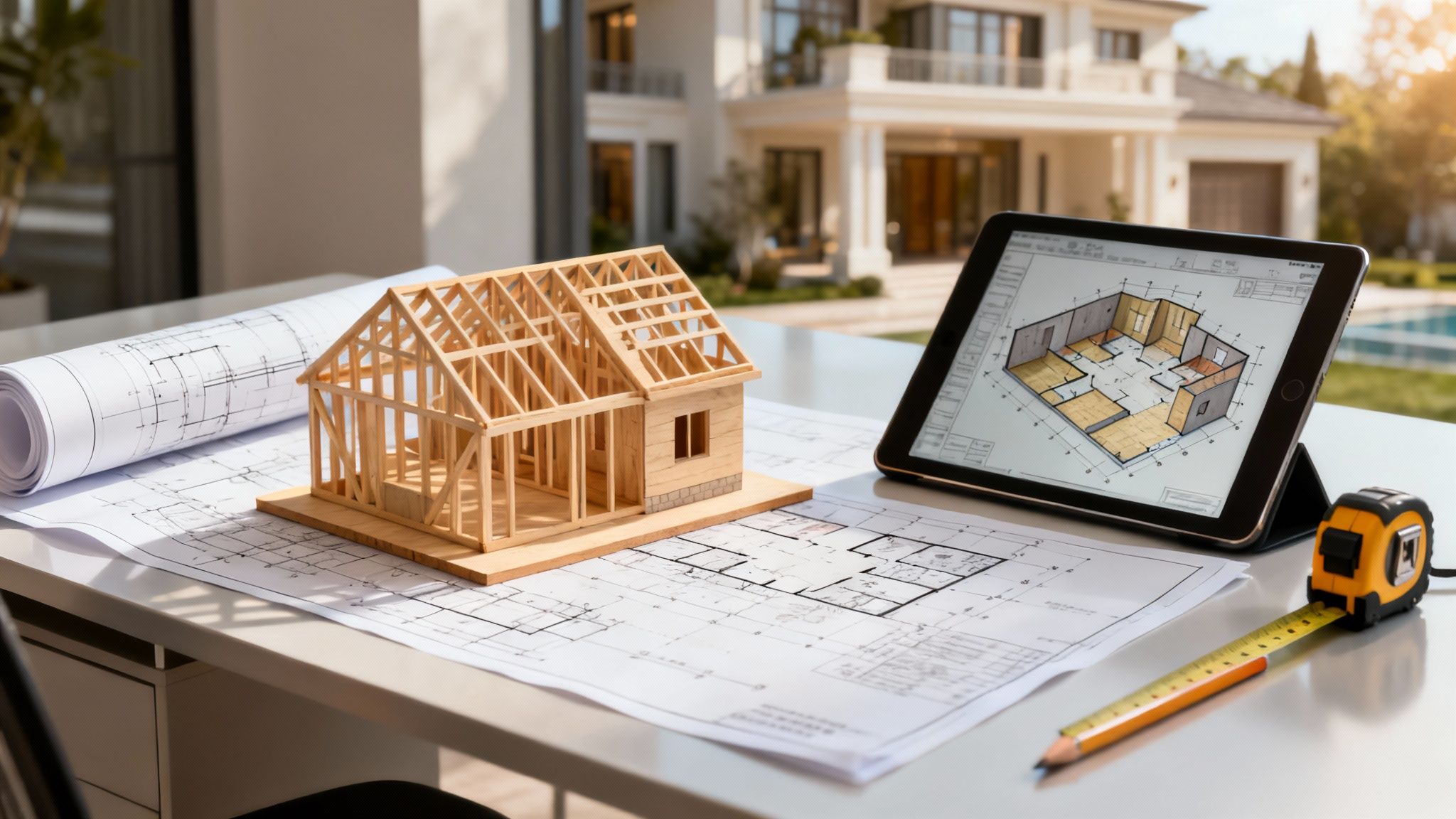
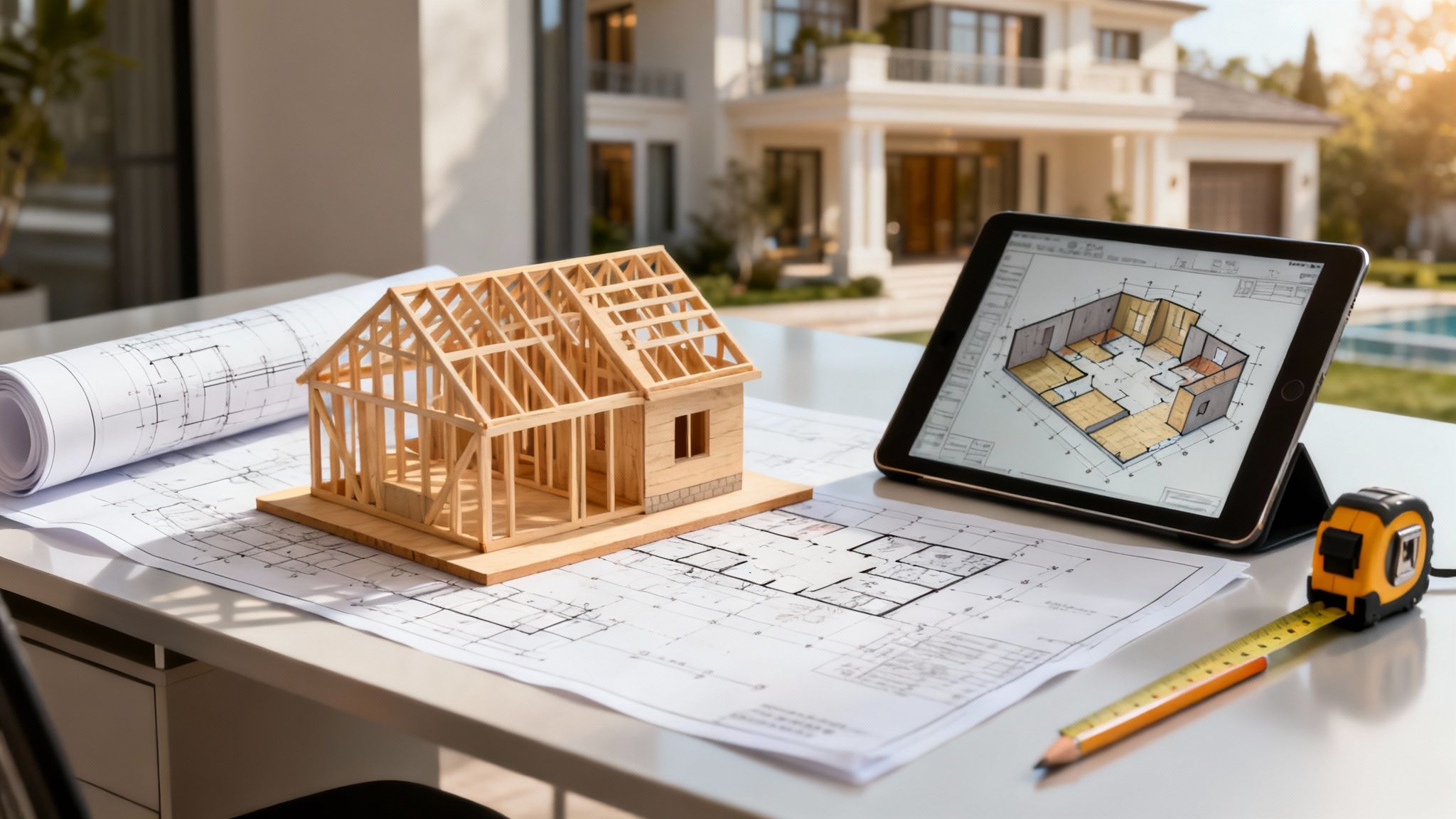
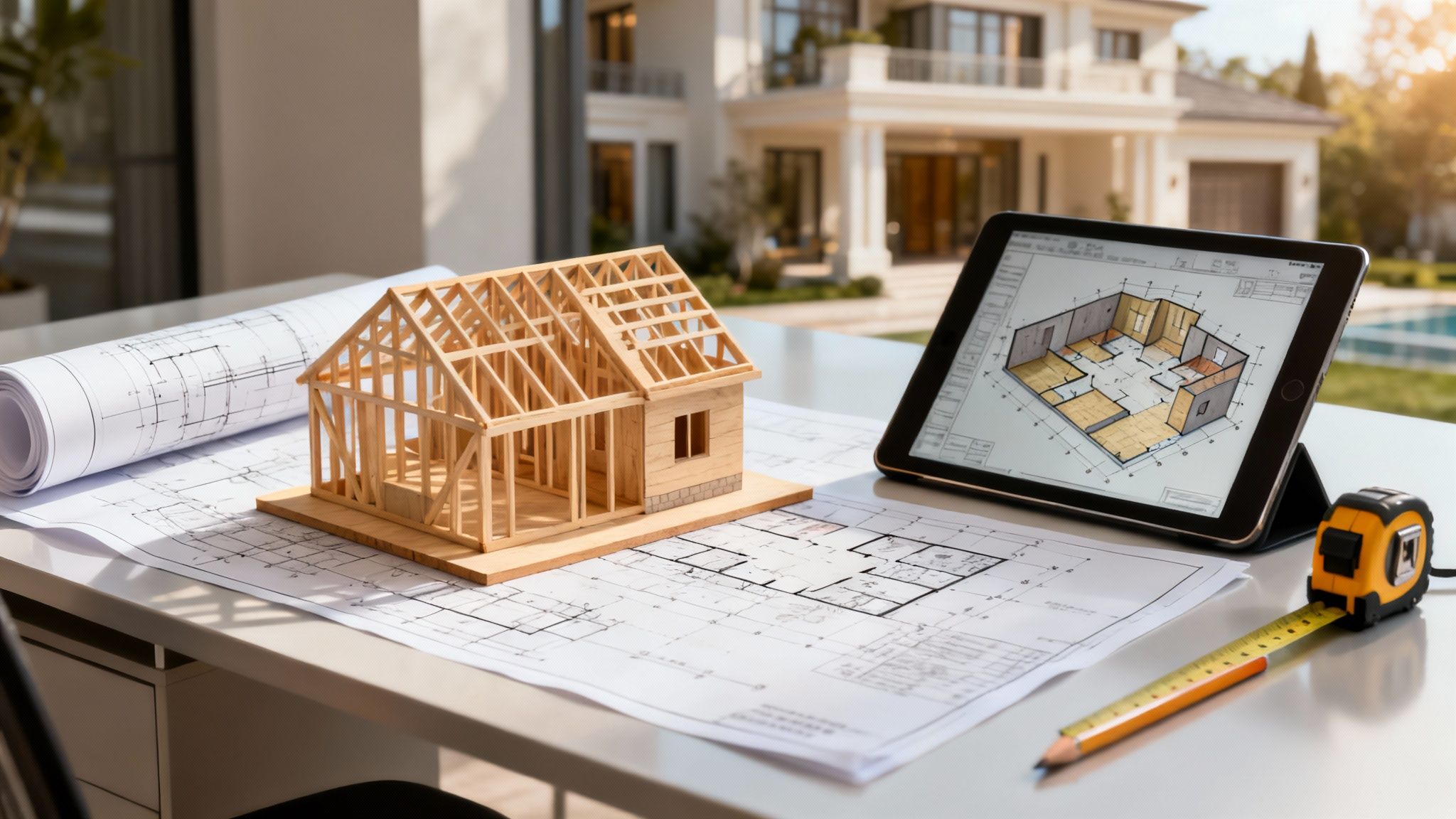
This stage turns your vision into detailed floor plans, exterior elevations, and 3D renderings, allowing you to walk through your home virtually before construction even starts. We use this digital model to refine the layout for optimal flow, function, and aesthetics, catching potential issues before they become real-world problems.

Tailoring Design to Oklahoma Lifestyles
A great design responds to Oklahoma's environment. For a modern farmhouse in Edmond, we might include large covered porches to provide shade from the summer sun. For a luxury home in Deer Creek, we can seamlessly integrate a storm shelter into the foundation or a safe room in a closet—a vital feature for Oklahoma families. You can explore initial layouts with our guide to designing a floor plan for your home.
Builder Insight: Clear communication is the key to a design you'll love. Share your Pinterest boards and magazine clippings. The more we understand your daily routines and "must-haves," the better we can craft a home that feels like it was made just for you.
Actionable Steps for a Successful Design Phase
- Create a Vision List: Before meeting with the architect, list your needs and wants. How many bedrooms? Home office? What’s your preferred style?
- Be Honest About Your Budget: An upfront budget discussion allows the design team to make realistic recommendations for size and finishes, preventing a design that’s too expensive to build.
- Use 3D Renderings: Request views from multiple angles to see how natural light will fill each space. This is the time to make changes, not during construction.
- Plan for the Future: Think about your needs in 5-10 years. Wider doorways or a main-floor primary suite can make the home more accessible long-term.
3. Permitting and Regulatory Approval
With a final design in hand, the next step is navigating permitting and regulatory approval. This is the official checkpoint where local government agencies review your plans to ensure they meet all building codes, zoning laws, and safety standards. No construction can begin until these permits are approved.
This stage involves submitting a full package of documents—blueprints, engineering plans, and site surveys—to the city or county. It’s a meticulous process, but it ensures your home will be safe, structurally sound, and legally built, protecting your investment.
Navigating Oklahoma’s Regulatory Landscape
Permitting varies by location. Building in a historic district in Oklahoma City requires extra reviews to maintain architectural integrity. In contrast, getting permits for a rural build in Macomb might be simpler but requires careful verification of septic and utility approvals. An experienced builder knows how to navigate these local requirements efficiently.
Builder Insight: The permitting phase can be a major source of delays. A project in Edmond was once held up for four months because the application was missing one drainage plan. Submitting a complete, error-free application from the start is the key to keeping your project on schedule.
Actionable Steps for a Smooth Approval Process
- Submit a Perfect Package: Ensure your application is 100% complete with all drawings, reports, and signed documents. This is the #1 way to avoid delays.
- Hire an Expert: In complex jurisdictions, an experienced permit expediter who knows local officials can speed up the review timeline.
- Budget for Time and Fees: Plan for a 3- to 6-month buffer in your timeline for approvals. Also, set aside 3-5% of your construction cost for permit fees.
- Stay in Touch: Proactively communicate with the building department to track your application’s progress and address any questions quickly.
4. Financing and Construction Loan Setup
With your design finalized, the next step is securing funding. Financing and construction loan setup is unique because funds are disbursed in stages, or “draws,” that align with construction milestones, rather than a single lump sum like a standard mortgage.
This process involves finding a lender and a loan product that fits your needs. Construction-to-permanent loans are a popular choice, as they convert to a traditional mortgage once the home is complete, saving you from a second closing. The right loan ensures a smooth flow of capital to the build site, preventing delays.
Navigating Oklahoma's Lending Landscape
Oklahoma offers diverse lending options. While national banks have structured programs, local banks in cities like Edmond and Oklahoma City often provide more flexibility for unique custom projects. We work with your lender to align our construction timeline with their draw schedule, ensuring seamless progress. For more details, you can learn more about Oklahoma construction loans here.
Builder Insight: Get pre-approved for your construction loan before signing a contract with your builder. This confirms your budget and shows you are a serious, qualified client. A construction-to-permanent loan is often the most efficient option because it involves a single closing.
Actionable Steps for Securing Financing
- Compare Lenders: Get quotes from at least three different lenders (national banks, local banks, credit unions) to find the best rates and terms.
- Build in a Contingency Fund: Work with your lender to include a 10-20% contingency reserve in your loan. This buffer covers unexpected costs without derailing the project.
- Clarify the Draw Schedule: Before closing, ensure you, your builder, and the lender all agree on the draw schedule that dictates when funds are released.
- Stay Organized: Keep impeccable records of your plans, contract, and all communications. This is vital for timely draw approvals.
5. Contractor Selection and Bidding
With plans finalized, it's time to choose the right builder. The contractor selection and bidding phase is about finding a partner who can execute your project on time, on budget, and to the highest quality standards. It's about building a relationship based on trust and expertise.
A great general contractor acts as the CEO of your project, managing every subcontractor, supplier, and inspection. Their experience directly impacts the final quality and your overall enjoyment of the building journey.
Vetting Builders for Oklahoma Luxury Homes
When selecting a builder in Oklahoma, look for experience with our local conditions. A builder in Edmond or Deer Creek should have a portfolio of luxury homes. For rural builds near Chickasha, they need expertise in managing wells and septic systems. The right partner has established relationships with top-tier local subcontractors, ensuring quality work.
Builder Insight: The lowest bid is rarely the best value. We’ve seen homeowners choose a cheap builder only to face endless change orders and subpar work. A detailed, itemized bid from a reputable builder like ACET Custom Homes gives you a realistic cost and protects you from surprises.
Actionable Steps for Contractor Selection
- Get at Least Three Bids: Solicit detailed bids from pre-qualified builders to compare costs line-by-line.
- Verify Credentials: Confirm each contractor is licensed, insured, and bonded in Oklahoma. This protects you from risk.
- Check References: Call past clients and ask about their experience with communication, budget, and quality. If possible, visit a completed home.
- Assess Professionalism: How a builder communicates during the bidding process is a strong indicator of how they'll manage your project. For more tips, learn how to hire the right custom home builder.
6. Pre-Construction Planning and Mobilization
Once permits are approved, the project moves from paper to the physical site. The pre-construction planning and mobilization phase is where we create a detailed schedule and prepare the land for construction. Meticulous organization here prevents delays and ensures a smooth workflow.
This stage involves creating a day-by-day construction timeline, scheduling subcontractors, ordering initial materials, and setting up the job site with temporary utilities and safety measures. A well-executed mobilization sets a positive tone for the entire project.
Coordinating Complex Logistics for Oklahoma Builds
Managing a build site in Oklahoma requires proactive planning. On a tight lot in an Edmond neighborhood, the mobilization plan must detail material delivery times to minimize disruption. For sprawling rural sites near Chickasha, it means setting up temporary power and water long before the foundation crew arrives.
Builder Insight: Poor mobilization is a common cause of early delays. We've seen projects stall because a materials delivery wasn't aligned with the site work. That's why we create a detailed critical path schedule, ensuring every task is sequenced perfectly.
Actionable Steps for a Seamless Project Kickoff
- Establish a Master Schedule: We create a schedule that outlines every milestone and share it with all subcontractors.
- Hold a Pre-Construction Meeting: We gather all key trades—excavators, foundation contractors, framers—to align everyone on the schedule and safety protocols.
- Document Site Conditions: We photograph and video the entire property before work begins to create a clear baseline.
- Set Up the Job Site: This includes installing temporary fencing, a construction entrance to manage mud, and waste disposal.
7. Foundation and Structural Work
With the site prepped, the foundation and structural work begins. This is where your home starts to take physical shape, beginning with the base that supports everything else. The quality of work here ensures long-term stability and durability.
This phase involves excavating the site, pouring the concrete foundation, and erecting the home’s structural frame or "skeleton." It’s a critical part of the custom home building process that sets the stage for every subsequent trade, from plumbing to painting.

Choosing the Right Foundation for Oklahoma Soil
Oklahoma's expansive clay soils require foundations engineered to handle movement. For homes in Edmond or Deer Creek, a post-tension slab is often the best choice. This system uses steel cables tensioned after the concrete cures, creating a stronger, more crack-resistant foundation. For sloped lots near Guthrie, a pier and beam foundation may be needed to anchor the home to stable ground.
Builder Insight: Weather is critical during a concrete pour. Pouring a slab right before a heavy rain or during a freeze can compromise its strength. We would rather reschedule a pour than risk the structural integrity of your home.
Actionable Steps for a Solid Foundation
- Verify Utility Placement: Before pouring concrete, triple-check that all plumbing and electrical conduits are correctly placed in the foundation forms.
- Insist on Waterproofing: Ensure your builder uses high-quality waterproofing membranes and a proper drainage system around the foundation.
- Schedule Third-Party Inspections: Consider hiring an independent engineer to inspect the rebar before the pour and the framing once it’s complete.
- Define Clear Standards: Work with your builder to set acceptable tolerances for level floors and plumb (perfectly vertical) walls.
8. MEP Installation (Mechanical, Electrical, Plumbing)
Once the home is framed, the MEP installation phase begins. This is where we install the systems that provide comfort and convenience: Mechanical (HVAC), Electrical, and Plumbing. It’s the technological backbone of your home.
During this "rough-in" stage, licensed trades run pipes, wires, and ductwork through the walls, floors, and ceilings. This foundational work is hidden behind the drywall but is essential for everything from flipping a light switch to enjoying a hot shower.
Engineering High-Performance Systems for Oklahoma's Climate
Oklahoma’s climate, with its hot summers and cold winters, demands efficient MEP systems. For a luxury home in Edmond, we often recommend a high-efficiency geothermal HVAC system, which drastically reduces energy bills. For rural properties in Chickasha that can lose power, integrating a whole-home backup generator provides peace of mind.
Builder Insight: The rough-in phase is your last chance to make affordable changes to your home’s systems. Want an EV charger in the garage? An outlet in the pantry for a coffee maker? Plan for these details now to avoid cutting into finished drywall later.
Actionable Steps for MEP Planning and Installation
- Specify High-Efficiency Systems: Discuss options like variable-speed HVAC units and tankless water heaters during the design phase.
- Plan Your Electrical Layout: Walk through the framed home with your electrician to finalize the placement of every outlet, switch, and light fixture.
- Integrate Smart Home Wiring: If you want home automation, now is the time to run the necessary low-voltage wiring for speakers, security cameras, and network access points.
- Keep Detailed Records: Request diagrams showing where every pipe and wire is located behind the walls for future reference.
9. Finishing Work (Drywall, Flooring, Painting, Trim)
After the mechanical systems are installed, the finishing work phase transforms the raw structure into a refined, livable space. This is where your personal style comes to life through colors, textures, and details.
This stage begins with hanging and finishing drywall to create smooth walls. This is followed by painting, trim and flooring installation, and setting custom cabinets and countertops. Each step requires precision and an artistic eye to achieve a high-end result.

Executing Oklahoma-Specific Finishes
Material choices for finishes in Oklahoma must account for our climate. In Edmond or Deer Creek, we recommend engineered hardwood flooring, which is more stable and less prone to expanding and contracting than solid wood. Using high-quality paint is also essential to resist fading from the intense sun.
Builder Insight: The quality of your drywall finish is non-negotiable. A Level 5 drywall finish—the highest grade—provides a perfectly smooth surface that is essential for modern paints and lighting. It's a small upfront cost that makes a huge difference in the final aesthetic.
Actionable Steps for Finishing Work
- Finalize Selections Early: Lock in your flooring, tile, paint colors, and cabinet details at least 6-8 weeks before this phase begins to avoid material backorders.
- Test Paint Colors On-Site: Apply large sample swatches to the actual walls to see how the color looks in your home’s natural light throughout the day.
- Sequence Installation Correctly: A proper schedule is key. Drywall is finished first, followed by priming, ceiling paint, trim, flooring, and then final wall paint.
- Inspect Millwork Carefully: Check all cabinetry and trim for precise joints, level installation, and a blemish-free finish.
10. Final Inspections, Testing, and Occupancy
The last major step before you get the keys is the final inspections and testing phase. This is where we verify that every detail meets our quality standards and all building codes are satisfied, ensuring your home is safe, functional, and ready for move-in.
During this stage, we coordinate final inspections with municipal officials from cities like Edmond or Oklahoma City to obtain the Certificate of Occupancy (CO). This document legally certifies that your home is habitable. Simultaneously, our team conducts its own exhaustive review, creating a detailed "punch list" of any final items that need adjustment.
Navigating Oklahoma’s Final Approval Process
Securing a CO in Oklahoma requires passing a series of final inspections. In tornado-prone areas like Moore and Norman, inspectors will pay close attention to storm shelter certifications. For rural properties, final approvals for septic systems and well water quality are mandatory.
Builder Insight: The final walkthrough is your most important opportunity to identify any cosmetic issues. Be thorough. A small scratch on a cabinet is much easier to fix before your furniture is in place. Our goal is a zero-item punch list at handover.
Actionable Steps for a Smooth Handoff
- Create a Detailed Punch List: Walk through every room with your project manager and use blue painter's tape to mark any spots needing attention.
- Test Every System: Run full cycles on appliances, test every outlet, open and close every window, and check both heating and cooling.
- Request All Documentation: Before closing, get a binder with all warranties, user manuals, and a list of subcontractors.
- Schedule System Training: If your home has complex systems like smart home automation, schedule a training session to learn how to operate everything.
Key Building Stages & Timeline
Frequently Asked Questions (FAQ)
How long does the custom home building process take in Oklahoma?
On average, building a custom home in Oklahoma takes 10 to 16 months from the start of design to move-in day. This timeline can vary based on the complexity of the design, permitting delays, weather, and the availability of materials and labor.
What is the first step in the custom home building process?
The very first step is securing your financing and creating a realistic budget. Before you can select a lot or design a floor plan, you need to know what you can afford. Getting pre-approved for a construction loan is a critical starting point.
How much does it cost to build a custom home in Oklahoma?
The cost to build a custom home varies widely based on location, size, materials, and level of finish. As of 2023, costs in Oklahoma can range from $175 to $300+ per square foot. It’s essential to get a detailed quote from a reputable builder like ACET Custom Homes.
What is the hardest part of building a custom house?
For most homeowners, the most challenging part is the decision-making process during the design and selections phase. Choosing every detail, from doorknobs to siding, can be overwhelming. Working with a structured design-build firm helps streamline these choices and reduce stress.
Ready to design your custom home? Schedule a free consultation with ACET Custom Homes today.
Consultation Today!
.png)