.png)
How to Build a Custom Home in Oklahoma
Building a custom home is an incredible journey, but knowing how to build a custom home the right way can feel overwhelming. You have a vision for your family's future, but the path from idea to reality is filled with complex decisions about land, financing, and design. How do you ensure your dream doesn't turn into a series of costly mistakes?
This guide provides the solution. We will walk you through every stage, offering actionable insights from our 15+ years of experience as ACET Custom Homes, building in communities like Edmond, Deer Creek, and across the OKC metro. We’ll break down the process into clear, manageable steps specifically for building in Oklahoma.
Think of this as your complete roadmap. We'll cover everything from securing a construction loan to the final walkthrough, packed with practical, Oklahoma-specific advice you won't find anywhere else.
What to Expect From This Guide
This isn't generic advice. We’re diving deep into what it takes to build a home that stands up to Oklahoma's unique challenges, from our expansive clay soil to unpredictable weather.
Here’s a glimpse of what you'll learn:
- Actionable Steps for Planning and Budgeting: Navigate construction loans, evaluate land, and create a realistic budget with a built-in contingency fund.
- A Practical Guide to Home Design: Decide between modifying a proven floor plan or a fully custom design, and learn how to translate your family’s needs into a functional blueprint.
- A Breakdown of the Construction Phases: Understand each milestone, from pouring a post-tension slab foundation to selecting finishes, and what to expect for your timeline.
- Checklists for Oklahoma-Specific Decisions: Discover how to build for energy efficiency and durability to save money and avoid future headaches.
Building a home is one of the most significant investments you'll ever make. Our philosophy is simple: empower you with knowledge so you can make confident, informed decisions at every step, ensuring the final result is a home you’ll love for decades.
Step 1: Laying the Groundwork for Your Build
Before a single shovel hits the dirt, the most crucial work begins. This is the foundational stage for smart planning, honest budgeting, and assembling the right team. Getting these early steps right is the key to sidestepping costly surprises and ensuring your vision stays on track.
The custom home market is a surprisingly resilient part of the housing industry. Custom projects made up 19% of all single-family starts in a recent quarter, with 54,000 new homes getting started in that period alone. This steady demand, highlighted by the National Association of Home Builders, underscores why a rock-solid plan isn't just a good idea—it's essential.
Action Point: Build Your Financial Foundation
Your budget is the financial blueprint for your entire home. A common mistake is planning only for the construction cost itself. A comprehensive budget must account for every expense.
Your Realistic Budget Checklist:
- Land Acquisition: The purchase price of your lot.
- Site Preparation: Costs for clearing, grading, and utility connections. In Oklahoma, this can vary wildly.
- Construction Costs: The "hard costs" of all labor and materials.
- Professional Fees: Payments for your architect, engineers, and designers.
- Permits and Fees: Necessary costs for municipal and county approvals.
- Contingency Fund: Actionable Step: Set aside 10–15% of your total budget for the unexpected. Based on our 15+ years of experience, this fund is the single biggest factor in keeping a project stress-free.
Action Point: Secure the Right Financing
Financing a custom home requires a construction loan, not a typical mortgage. These are short-term loans that pay your builder in stages (called "draws") as key milestones are met. Once the home is complete, the loan converts into a standard mortgage.
To get approved, be prepared with finalized building plans, a signed builder contract, and a detailed budget. Oklahoma lenders need to see a clear, viable plan and a qualified builder.
Action Point: Evaluate Your Oklahoma Land
The land you choose dictates everything from foundation type to home orientation. In Oklahoma, with our expansive clay soil, a thorough site evaluation is non-negotiable. Don't fall for a view before vetting the ground beneath it. For clients in our build on your land program, this is our first step.
Oklahoma Land Evaluation Checklist:
- Soil Quality: Get a soil test. High clay content in areas like Edmond and OKC requires a specific foundation, usually a post-tension slab, to prevent future cracking.
- Drainage and Topography: Understand how water flows. Proper grading is vital to direct Oklahoma's heavy rains away from your foundation.
- Utilities Access: Confirm connection points for water, sewer (or septic), electricity, and gas. Rural lots can have high connection fees.
- Zoning and Covenants: Check local zoning laws and any neighborhood restrictions that might limit your home's size, style, or placement.
Action Point: Choose Your Build Partner
Your relationship with your builder is the most important one in this process. Vet builders beyond price quotes—look for experience, transparency, and a process that feels right.
Builder Insight: The lowest bid is rarely the best value. A detailed, transparent bid might seem higher initially but often includes more realistic allowances and leads to fewer surprise costs than a vague, lowball estimate.
A design-build firm like ACET Custom Homes offers a streamlined approach by managing design and construction under one roof. This ensures everyone is aligned on your vision and budget from day one. When reviewing contracts, watch for red flags like vague payment schedules or the lack of a clear warranty.
Step 2: Designing a Home That Fits Your Life
With finances and land secured, you can create the blueprint for your life. This is where your vision becomes a tangible plan. The first key decision is whether to modify a proven floor plan or design a home from the ground up.
At ACET Custom Homes, we’ve walked hundreds of Oklahoma families through this. The right path depends on your budget, timeline, and how unique you want your home to be.
Plan-Modify vs. Fully Custom Design
Modifying a proven floor plan is often the most efficient route. You start with a layout that has been engineered and built, saving time and money on architectural fees. This is perfect if a plan is about 80% right and just needs a few tweaks, like expanding a patio or redesigning a closet.
A fully custom design is a true blank canvas. It’s for homeowners with a specific vision that can't be met with an existing plan. This gives you total creative freedom but requires a longer design phase and a larger budget.
Comparing Design Paths: Plan-Modify vs. Fully Custom
This table breaks down the key differences to help you decide which path aligns with your goals.
Action Point: Translate Your Lifestyle into a Functional Blueprint
A beautiful home that doesn't work for your daily life is a failure. You are the expert on how your family lives.
Builder Insight: Before you look at a floor plan, write down every frustration with your current home. Where does mail pile up? Why is the laundry room so far from the bedrooms? These are the golden nuggets that lead to a truly functional design.
The goal is a home that flows intuitively with your daily rhythms. Client Example: We worked with a young Edmond family who loved an open concept but dreaded toy clutter. We designed a full-wall built-in that kept the space feeling airy while providing hidden storage. Our 3D home design service lets you walk through these ideas virtually before we break ground.
Action Point: Incorporate Oklahoma-Specific Features
Designing a home in Oklahoma is about being smart. Our climate demands thoughtful planning for safety, comfort, and efficiency.
- Storm Safety: A storm shelter is non-negotiable for many Oklahomans. We often integrate them into the foundation, hidden in a garage or closet for easy access.
- Energy Efficiency: To combat the summer sun, we use high-performance, low-E windows and pay close attention to placement, especially on south- and west-facing walls, to cut cooling costs.
- Outdoor Living: A well-designed covered patio or outdoor kitchen is an extension of your living space, giving you a shaded retreat to enjoy warm evenings.
A seasoned design-build firm handles architectural reviews and permitting in cities like OKC or Edmond, saving you from costly delays.
Step 3: Bringing Your Blueprint to Life
This is where planning transforms into a physical structure. Knowing the major construction milestones is key to a smooth, enjoyable process. With our 15+ years of experience building in Oklahoma, we’ve learned that a well-informed client is a happy client.
A Step-by-Step Breakdown of Major Construction Phases
- Site Preparation and Foundation: Our crews clear and grade the land for perfect drainage—a must for Oklahoma's heavy rains. For most homes in the OKC area, we pour a post-tension slab, an engineered foundation designed to handle our expansive clay soil and prevent cracking.
- Framing: This is when your floor plan comes alive. Walls go up, floors are laid, and the roof structure takes shape. It’s the first time you can walk through the rooms you’ve only seen on paper.
- Drying In: We install sheathing, house wrap, windows, and roofing to create a "dried-in" shell, protecting the interior from the weather.
- Mechanical, Electrical, and Plumbing (MEP) Rough-In: With a secure shell, we install the home's inner workings. This includes HVAC ductwork, plumbing lines, and electrical wiring for outlets, switches, and fixtures.
- Pre-Drywall Walkthrough: Action Point: We schedule a crucial walkthrough with you at this stage. This is your chance to confirm every outlet and light switch placement before we hang drywall. It’s far easier and cheaper to move an outlet now.
- Insulation and Drywall: Once you approve the rough-ins, we install insulation and close up the walls with drywall.
Builder Insight: Hitting the "dried-in" milestone is critical in Oklahoma. An unexpected spring thunderstorm can cause major delays and damage if the home isn't sealed. We obsessively plan our schedules around the forecast to protect your investment.
Your Role During the Construction Phase
Your involvement is still important. Stay connected through effective communication and productive site visits.
Best Practice: Always schedule site visits with your project manager. Dropping by unannounced can disrupt workflow and pose safety risks. A planned visit allows us to walk you through progress and answer your questions efficiently.
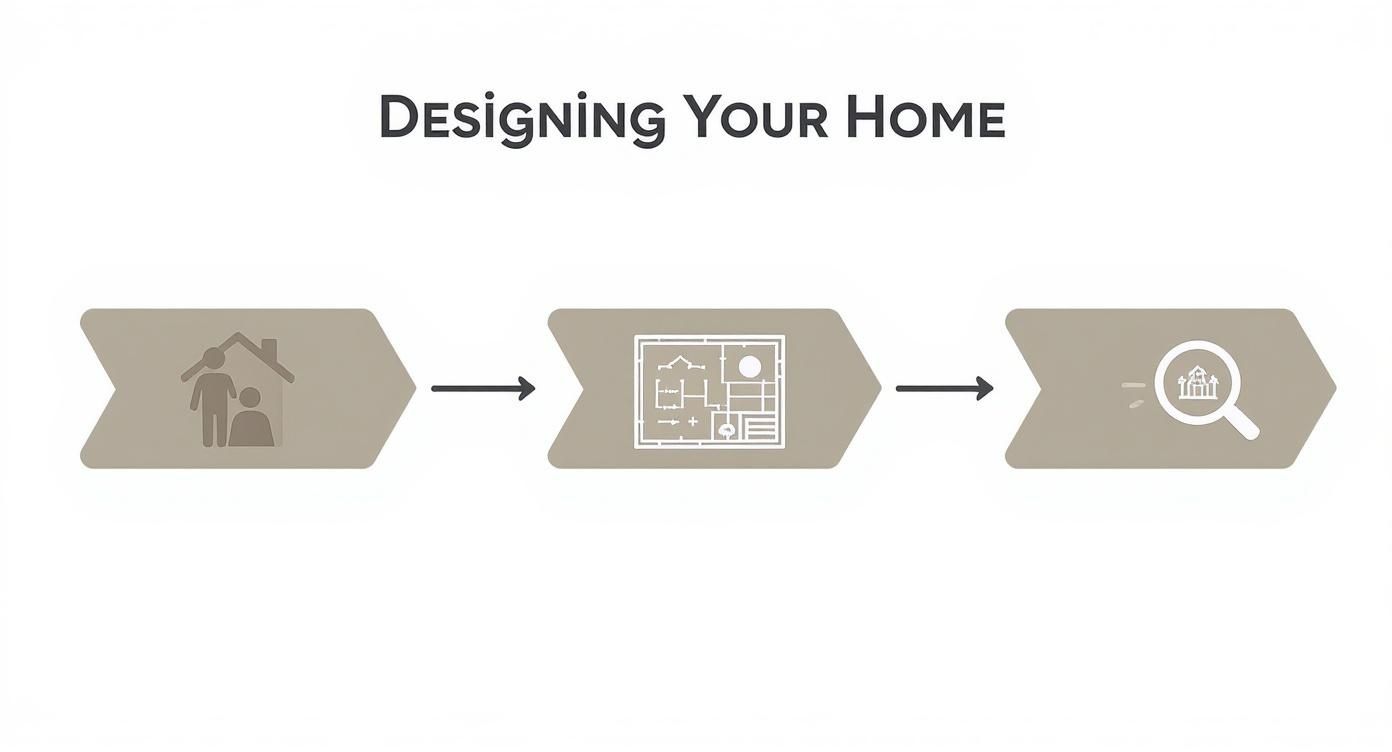
This entire process follows three simple steps: defining your family's needs, translating that into a floor plan, and then bringing it to life.
Navigating Timelines and Inspections
Building a custom home in Oklahoma typically takes 9 to 14 months, depending on complexity, materials, and weather. Each major phase ends with a municipal inspection to ensure work is up to code.
Global spending on residential construction is projected to reach $4.25 trillion in 2025. This demand highlights the importance of partnering with a builder who manages timelines and supply chains effectively.
At ACET, we handle the entire inspection schedule, preventing costly rework and keeping your project on track. While you can browse our customizable floor plans page, nothing beats seeing the progress in person.
Step 4: Adding Finishes and Final Touches
As the drywall goes up, your home's character starts to shine through. This is when the fine details that reflect your personal style come into play. Managing all the finish selections—from flooring to fixtures—can feel overwhelming, but a structured approach makes all the difference.
With our 15+ years of experience, we guide our ACET Custom Homes clients through this process to ensure every selection is made on time, preventing costly delays while balancing your budget and vision.
A Structured Timeline for Selections
Making finish decisions out of order creates bottlenecks. A logical timeline is essential.
Your Selection Timeline Checklist:
- Exterior Finishes First: Brick, stone, siding, and roofing have long lead times and must be finalized early.
- Hard Surfaces Next: Flooring, countertops, and cabinet styles anchor the interior design and are needed for precise measurements.
- Plumbing and Lighting: Faucets, sinks, and light fixtures must be on-site before drywall is finished.
- Paint and Trim: Choose paint colors and trim styles that complement your hard surfaces.
- Final Touches: Door hardware and cabinet pulls are the final pieces of the puzzle.
Balancing Your Budget with Your Vision
The finishes phase is where budgets can get out of hand. The key is deciding where to invest for maximum impact.
Builder Insight: Allocate more of your finish budget to high-traffic, high-visibility areas. Splurge on durable flooring for main living spaces and stunning countertops in the kitchen. You can save on secondary bathroom tile or guest bedroom fixtures without sacrificing the overall feel.
Client Example: A recent client in Edmond wanted a luxurious primary bathroom on a budget. We installed a high-end quartz countertop and premium shower fixtures—the elements they touch daily—while selecting a stylish, budget-friendly floor tile. The result was an elevated space without breaking the bank.
The Final Stretch to Move-In Day
As interior details come together, we focus on the final steps that transform your house into a home.
- Oklahoma-Friendly Landscaping: This is about more than curb appeal; it’s about smart water management. We focus on grading that directs heavy rainfall away from your foundation and suggest native, drought-resistant plants.
- The Final Walkthrough: We conduct a detailed walkthrough with you to create a punch list—a list of any minor items needing adjustment. Our goal is a “zero-item” punch list.
- Certificate of Occupancy: After passing the final inspection, the city issues this official document from agencies like HUD, certifying your home is safe and up to code.
- Closing: You sign the final documents and officially take ownership. Our team coordinates every detail to ensure a smooth process.
This final phase is where our commitment to quality truly shines, managing every detail so you can focus on the excitement of moving into your new custom home.
FAQs: Answering Your Top Questions About Building a Custom Home
Building a custom home is a huge step, and it comes with questions. After more than 15 years building dream homes across Oklahoma, we’ve heard them all. Here are straight answers to the most common questions.
How Long Does It Take to Build a Custom Home in Oklahoma?
On average, the hands-on construction of a custom home in Oklahoma takes between 9 and 14 months. This can vary based on design complexity, weather, and material availability. Remember, the design, planning, and financing process will add another 3 to 6 months to the total journey.
What Is the Average Cost Per Square Foot to Build in the OKC Area?
While a firm "per square foot" number can be misleading, a general starting point for the Oklahoma City metro is $175 to $250+ per square foot. High-end finishes, intricate rooflines, or significant site work will push a project toward the higher end. The only way to get a real number is a transparent, line-by-line breakdown from your builder.
Builder Insight: Be cautious of any builder who gives a firm price per square foot without reviewing your architectural plans. An honest quote requires a thorough review of thousands of details. You can discover more insights about the evolving residential construction market and its trends online.
What Are the Biggest Mistakes to Avoid When Building a Home?
We've seen a few common pitfalls over the years. Here are the top three red flags to avoid:
- Not having a realistic budget. This is the biggest one. It's crucial to build in a 10-15% contingency fund for unexpected costs.
- Choosing a builder on price alone. The cheapest bid is rarely the best value. A builder's reputation, communication, and track record are far more important.
- Making major changes after construction begins. "Change orders" are the number one cause of blown budgets and frustrating delays. Finalize your decisions before breaking ground.
Ready to design your custom home? Schedule a free consultation with ACET Custom Homes today.
Article created using Outrank
Book Your Project Consultation