.png)
Hiring Luxury Home Contractors: An Oklahoma Guide
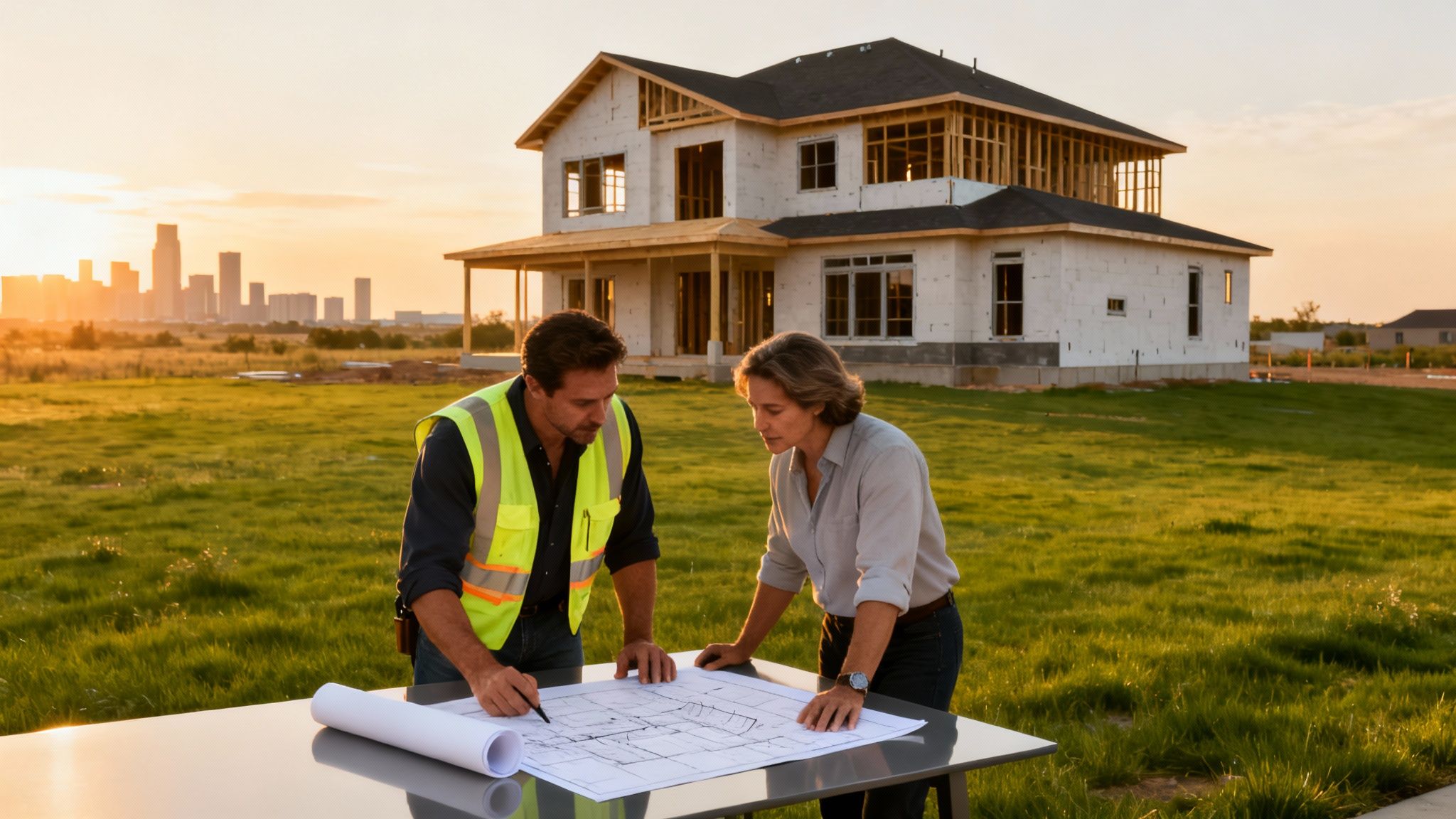
Finding the right luxury home contractors is the most critical decision you'll make when building your dream home in Oklahoma. It’s not just about hiring a crew; it’s about finding a partner who understands our unique climate and soil, translating your vision into a home built to last. This guide cuts through the noise, giving you actionable steps to find a team like ACET Custom Homes, ensuring your project is a success from the ground up.
Key #1: Find a Builder Who Understands Oklahoma Realities
A luxury home is deeply personal. You need a builder who moves beyond blueprints to grasp the why behind your choices. A true partner anticipates challenges you haven't even considered.
For instance, any builder can install a wall of west-facing windows. But an experienced Oklahoma builder knows that without high-performance, low-E glass and strategic overhangs, you’re just inviting brutal afternoon sun and sky-high energy bills. That foresight is priceless.
The Power of Local Expertise
A builder’s hands-on experience with local conditions can make or break your project. With over 15+ years of build experience, ACET Custom Homes has navigated every challenge Oklahoma presents, from tight lots in Edmond and Deer Creek to expansive acreage in rural towns like Macomb, Elmore City, and Shawnee.
Actionable Insight: Ask potential builders for specific examples of how they’ve handled Oklahoma’s expansive clay soil or designed for high-wind resistance. A great local builder can immediately explain the difference between a post-tension slab and a pier-and-beam foundation and tell you which is right for your land. This expertise saves you time, money, and future headaches.
Key #2: Choose the Right Project Model: Design-Build vs. Traditional
Your project's management structure shapes everything from budget to timeline. As you vet luxury home contractors, you'll encounter two primary models: Design-Build and the traditional Design-Bid-Build. Understanding the difference is crucial.
The Integrated Design-Build Model
The Design-Build model uses a single, integrated team for both architectural design and construction. You have one contract, one point of contact, and a unified team working collaboratively from the first sketch to the final walkthrough.
Think of it this way: the architect and builder are on the same side from day one. When the architect designs a stunning feature, the builder is right there to assess engineering and cost implications. This collaboration irons out issues before they become expensive problems.
Builder Insight: With Design-Build, the budget is a living document. As we design your home at ACET, we are simultaneously pricing materials and labor. For a recent project in Edmond, this allowed us to adjust the window package in real-time to meet the client's aesthetic goals without exceeding their budget.
The Traditional Design-Bid-Build Model
The Design-Bid-Build path is fragmented. First, you hire an architect to create blueprints. Once complete, you take the plans to several builders for bids, often choosing the lowest price.
While this seems competitive, it often creates conflict. The architect and builder have separate contracts. When an issue arises—like a supply chain delay for a specified material—the finger-pointing can begin, leading to change orders, delays, and blown budgets, with you caught in the middle. For a deeper analysis, see our detailed comparison between the design-build and architect-led models.
Decision Point: Comparing Project Models
For most clients building a high-end home in Oklahoma, the Design-Build model delivers a smoother, more transparent experience built on teamwork and proactive problem-solving.
Key #3: Vet Your Luxury Home Contractor Thoroughly
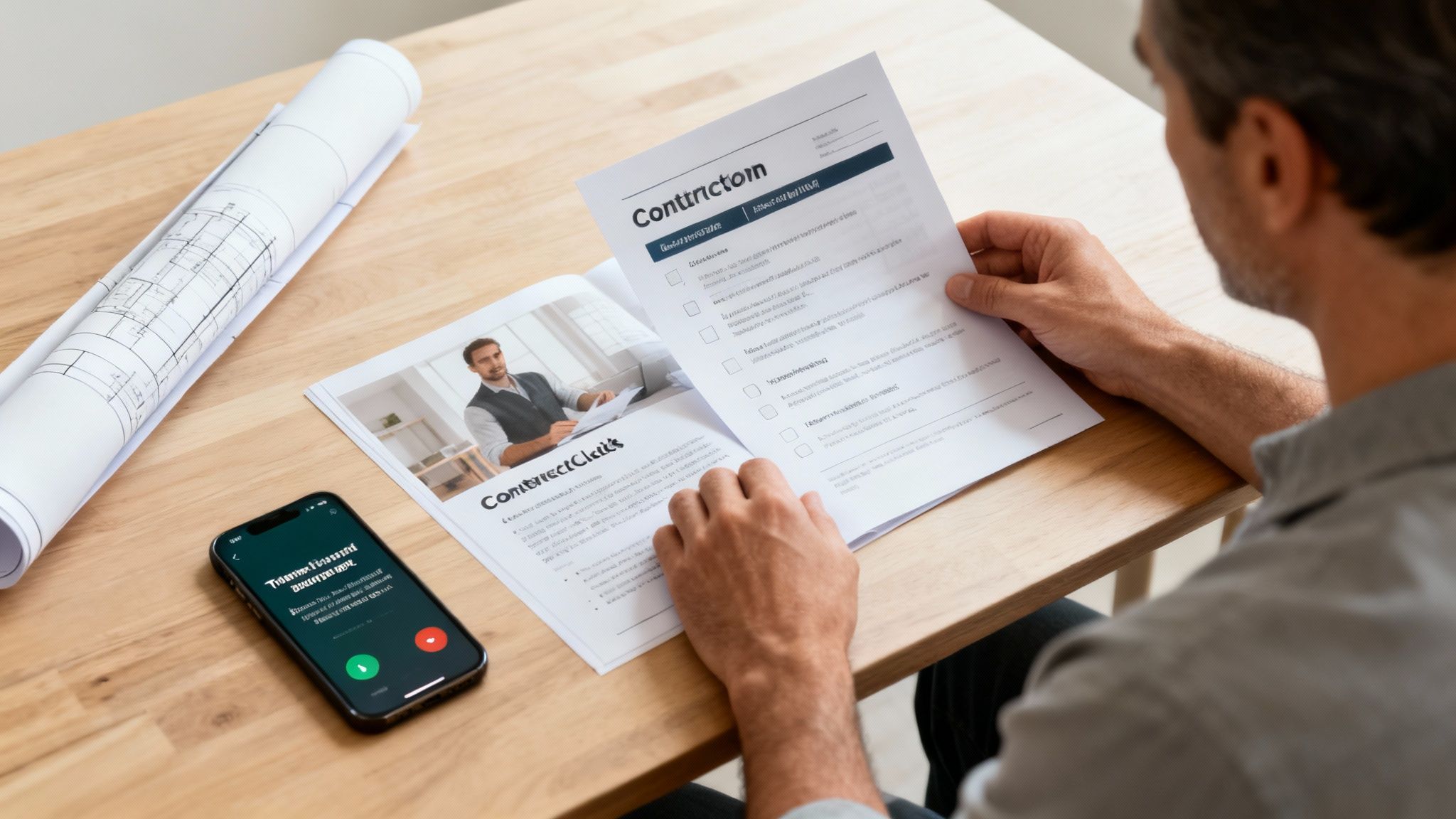
Once you have a shortlist of luxury home contractors, the real work begins. This vetting process is where you confirm they have the experience, integrity, and skill to execute your vision.
Actionable Vetting Checklist:
- Red Flag: Hesitation to provide a certificate of insurance directly from their agent.
- Best Practice: Request proof of general liability and workers' compensation insurance. This protects you from job site accidents.
- Check for Consistency: Does the craftsmanship in a home in Shawnee match the quality of an estate in Edmond? A great builder maintains high standards regardless of project size.
- Look for Local Solutions: Do their projects show solutions for Oklahoma's climate and soil? A home built on the red clay near Deer Creek with an appropriate foundation speaks volumes.
- Ask about Problems: "How did the builder handle an unexpected challenge, like a supply chain delay or an ice storm?" Their answer reveals their problem-solving skills.
- Ask about Money: "Were there surprise costs? How were change orders managed?" This uncovers their financial transparency.
- Ask about Post-Construction: "Have you made a warranty claim? How responsive was the builder?" The best builders stand by their work.
- Cost Factors: Land cost, site prep (clearing, utilities), professional fees (architects, engineers), permits, materials/labor, landscaping, and a non-negotiable 10-15% contingency fund.
- Builder Insight: On a recent build near Elmore City, the client budgeted for city water, but a connection wasn't feasible. Their contingency fund allowed us to pivot to drilling a well without derailing the project.
- Weather Considerations: We design for tornado-resistant features and proper drainage to handle heavy spring rains.
- Energy Efficiency: High-performance insulation and window selection are crucial to combat Oklahoma's extreme summer heat and winter cold.
- A geotechnical engineer's soil report informs the foundation design (e.g., post-tension vs. pier-and-beam) to prevent future structural failure. Skipping this step to save a few thousand dollars can lead to six-figure repairs. For more, read our guide on how to build on your lot in Oklahoma.
- One-Year Workmanship Warranty: Covers defects in labor and materials (e.g., cracked grout, nail pops).
- Two-Year Systems Warranty: Covers major systems like HVAC, plumbing, and electrical.
- Ten-Year Structural Warranty: Protects against major structural failures in the foundation and framing.
- Actionable Step: Schedule a pre-pour walkthrough to confirm the home's placement and see where plumbing lines will be before they're set in concrete.
- Actionable Step: Request a "four-way" walkthrough with the builder and tradesmen to confirm the placement of every outlet, switch, and fixture.
- Exterior & Interior Finishes (4-6 Months): Insulation and drywall are installed, followed by exterior materials (brick, stone) and all interior finishes (cabinets, flooring, tile, paint). This is often the longest phase.
- Final Walkthrough & Punch List (2-4 Weeks): Your builder will walk through the completed home with you to identify any final items needing correction before handing over the keys.
This detailed questioning gives you a true feel for what it's like to work with a contractor. For more tips, review our guide on what to look for in a custom home builder.
Key #4: Master the Pre-Construction Phase

The most critical work happens long before construction begins. The pre-construction phase is where your vision is grounded in reality, your budget is defined, and your lot's unique challenges are addressed.
Step-by-Step Pre-Construction Breakdown:
Key #5: Understand the Contract and Warranty
Your construction contract is the most important document protecting your investment. A professional builder will provide a clear, detailed agreement that leaves no room for interpretation. The U.S. home building industry is a massive market, as detailed by resources like ibisworld.com, and a strong contract is your best protection.
Contract Red Flags vs. Best Practices
Demystifying Construction Warranties
A comprehensive warranty demonstrates a builder's confidence. Look for a "2-10" warranty structure:
Builder Insight: At ACET Custom Homes, we provide a comprehensive warranty because we stand behind every home. A builder who is vague about their warranty is telling you everything you need to know about their quality.
Key #6: Know What to Expect During Construction
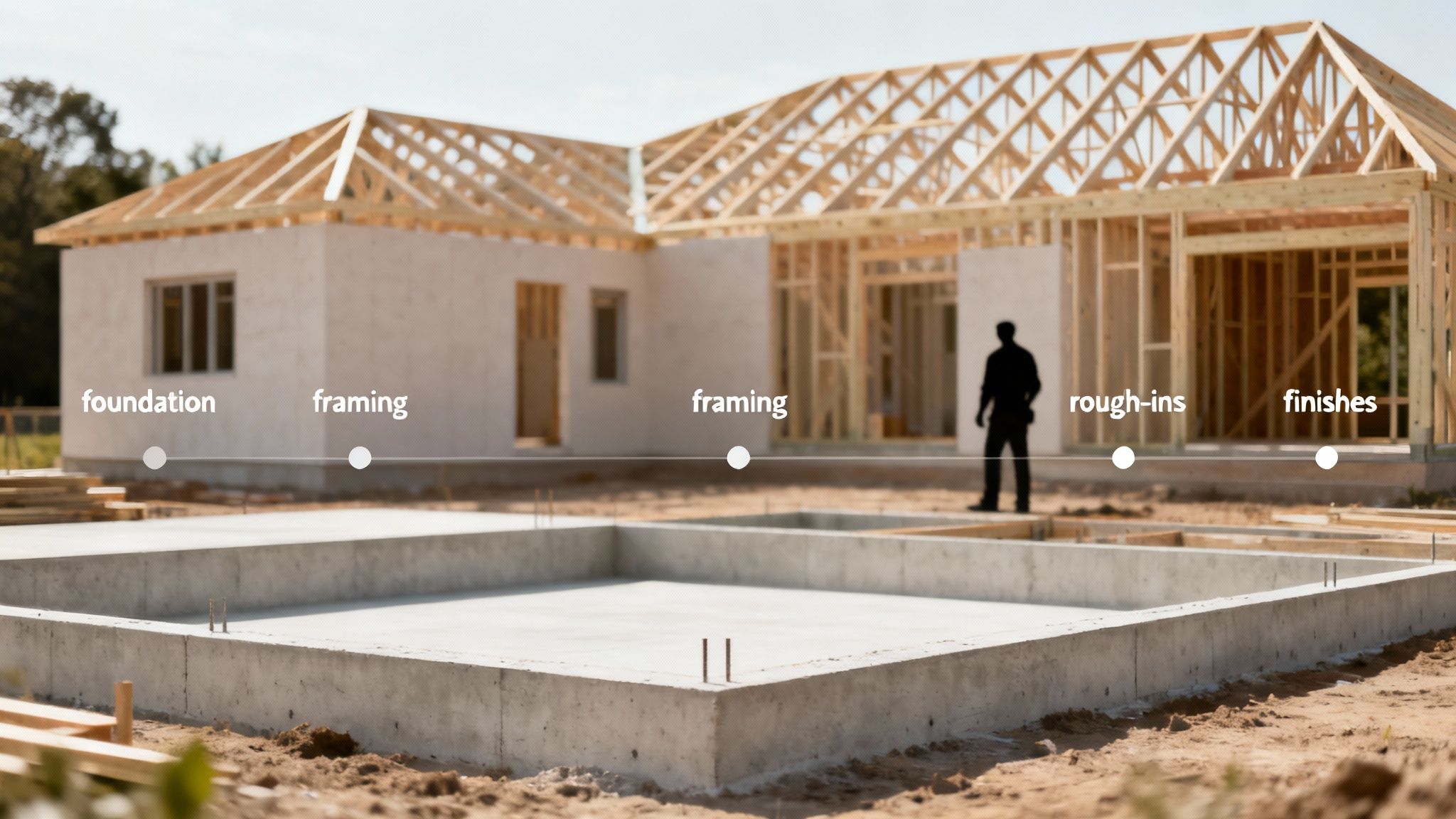
Watching your home take shape is incredibly rewarding. While every custom home is unique, the construction process follows a proven sequence.
Typical Oklahoma Build Timeline (9-12 Months Post-Permit)
Frequently Asked Questions (FAQ)
What is the difference between a luxury home builder and a general contractor?
A general contractor can manage various construction projects, but a luxury home builder specializes in high-end residential construction. They have expertise in managing complex designs, sourcing premium materials, and delivering the superior level of craftsmanship and client service that luxury projects demand.
How much do luxury homes cost to build in Oklahoma?
The cost for a true luxury home in Oklahoma typically ranges from $225 to over $450 per square foot. This wide range is driven by site complexity (a sloped lot vs. a flat one), architectural intricacy, and the level of interior finishes (e.g., commercial-grade appliances, custom cabinetry, imported stone).
How long does it take to build a luxury home?
From the initial design meeting to final completion, a typical luxury build in Oklahoma takes 12 to 18 months. This includes 3-6 months for the pre-construction phase (design, engineering, permits) and another 9-12 months for the actual construction.
What should I look for in a luxury home builder's portfolio?
Look for three things: quality craftsmanship across all projects, versatility in architectural styles, and evidence of solving Oklahoma-specific challenges. A portfolio showing successful builds on varied terrain, from OKC metro lots to rural acreage, demonstrates deep local expertise.
Ready to design your custom home? Schedule a free consultation with ACET Custom Homes today.
Book Your Project Consultation