.png)
A Complete Guide to New Home Construction in Oklahoma City
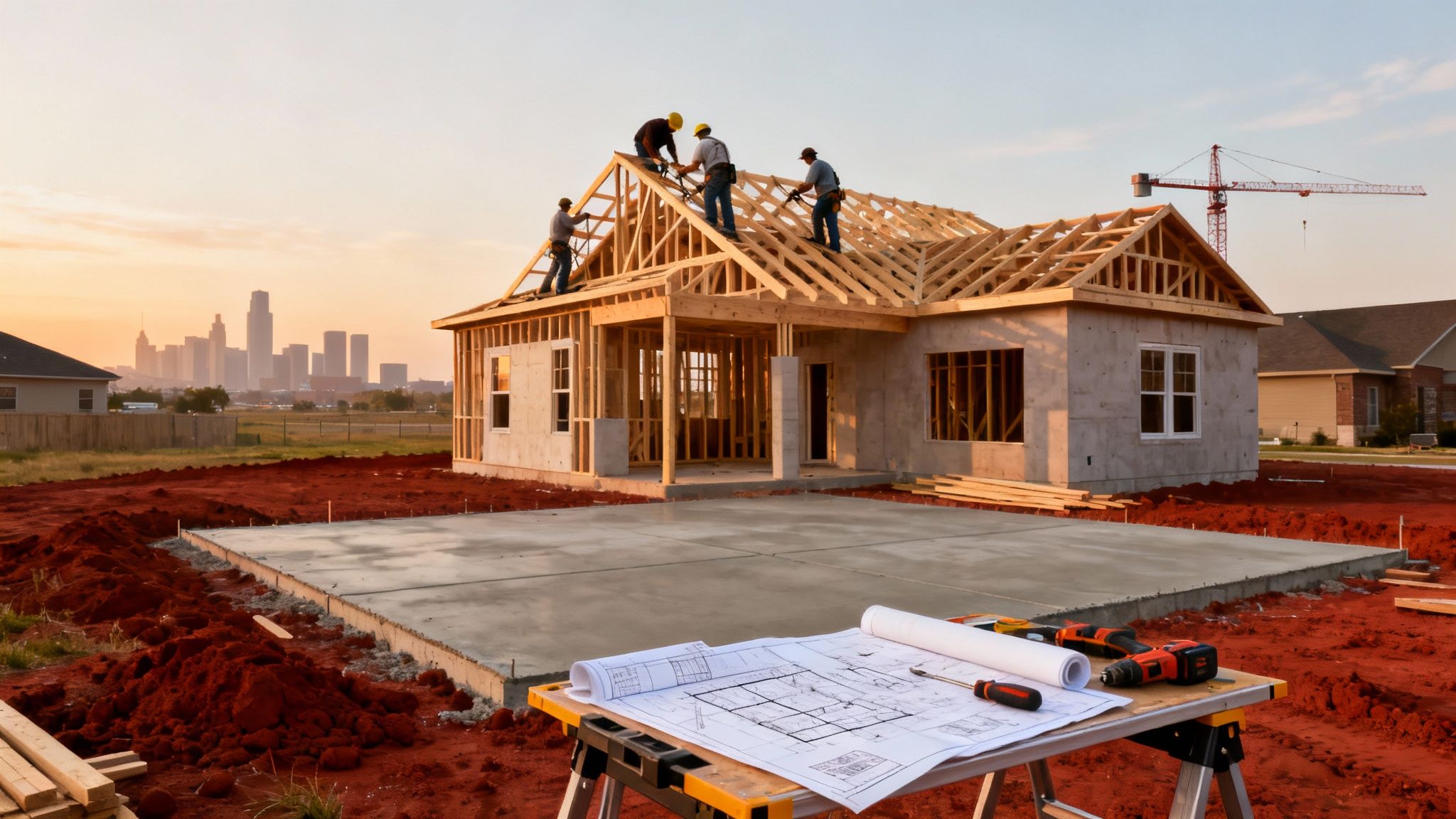
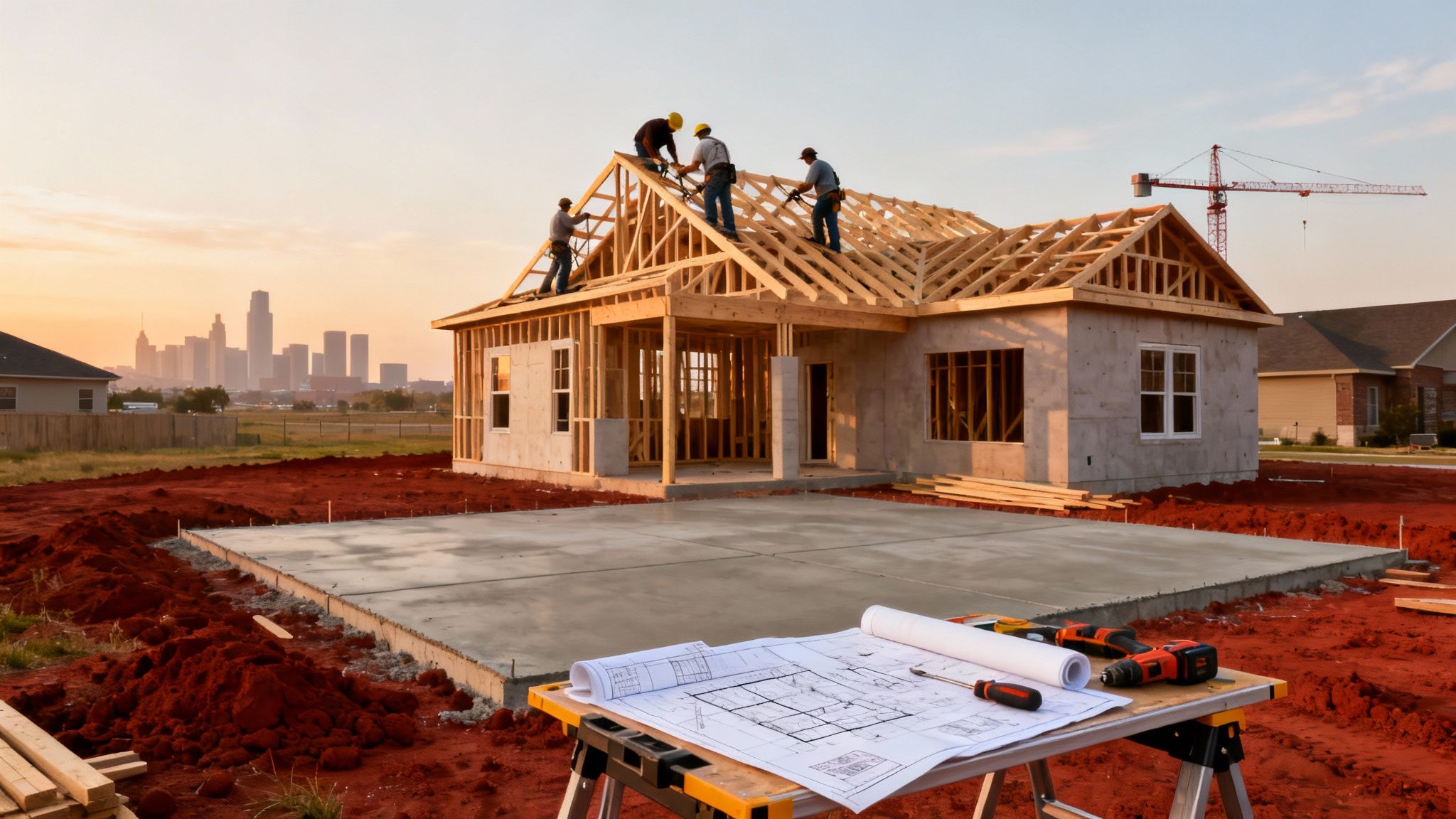
Deciding to build a home from the ground up is a huge milestone, but let's be honest—it usually starts with a mountain of questions. If you're considering new home construction in Oklahoma City, you're likely wondering about costs, timelines, and finding the right piece of land. This guide provides a clear, straightforward roadmap, turning an overwhelming process into one you can tackle with confidence.
With over 15 years of experience building across Oklahoma, ACET Custom Homes knows that creating your dream home should be an exciting journey, not a stressful one. Let's walk through the essential steps, from blueprint to move-in day.
Why Build New in the Oklahoma City Metro?
Building a new home in the Oklahoma City metro is a fantastic opportunity for anyone who values true customization and long-term quality. When you buy an existing house, you're buying someone else's choices. When you build, you get to create a space that fits your life perfectly, from the floor plan to the fixtures. It’s about so much more than just a house; it’s about crafting the backdrop for your future.

Right now, the OKC housing market is seeing steady growth and high demand, which makes it a great environment for new construction. It means your investment is a solid one. Think of this guide as your personal blueprint, walking you through every stage from a patch of dirt to a beautiful, finished home.
Understanding the Local Market Dynamics
The Oklahoma City metro is definitely on the move. We're seeing consistent population growth that’s fueling a real need for new housing across the area. In fact, a recent analysis from HUD projects a demand for around 19,550 new homes over the next three years.
Much of that demand comes from families putting down roots in the suburbs of Oklahoma and Cleveland counties. And even though overall home sales have dipped slightly, the average sales price still climbed by 2% to $255,600. That tells you the market for quality, well-built homes is as strong as ever.
With over 15 years of boots-on-the-ground experience, we at ACET Custom Homes have seen it all. We’ve built everywhere from bustling Edmond neighborhoods to quiet, sprawling lots out in Macomb. That firsthand knowledge gives us a deep understanding of the unique challenges and opportunities each corner of the metro presents.
This kind of local expertise is what helps you make every decision with certainty. Whether you’re dreaming of a home in a top-rated school district like Deer Creek or on a few acres out near Chickasha, knowing the local landscape is the first critical step. Our goal is simple: to give you the right information so the entire process feels clear and manageable from day one.
Breaking Down New Home Construction Costs in Oklahoma
Let's be honest: trying to understand the true cost of building a new home in Oklahoma City can feel overwhelming. Forget those generic price-per-square-foot numbers you see online. A real budget comes from digging into the details, from the dirt on your lot to the doorknobs on your closets. It's a complex puzzle, but with a good builder walking you through it, every piece will fall into place.
Think of it like this: your total cost is made up of several big buckets. You have the land itself, getting that land ready to build on, the foundation, the bones of the house (framing), the exterior skin, the interior finishes, and all the systems—plumbing, electrical, and HVAC—that make it a home. Every single decision, whether it's choosing a lot in Deer Creek or picking out windows, tips the scales on the final price.
Key Cost Drivers for Your Oklahoma Home
Everything starts with the land. The purchase price for a plot in a planned Edmond community or a few quiet acres out near Elmore City is your ground zero. But the costs don't stop there. Getting that land ready for construction is a huge part of the budget. We’re talking about clearing trees, grading the property so it drains properly during a downpour, and connecting essential utilities like water and electricity.
Here in Oklahoma, site work and foundation costs are a really big deal. Our infamous expansive clay soil means you can't just pour a standard concrete slab and call it a day. You need a specialized foundation, often a post-tension slab, to keep your home from cracking and shifting as the ground swells and shrinks. This is one area you absolutely cannot skimp on. A weak foundation can cause a world of structural headaches later. A builder who knows Oklahoma soil will get this critical first step right.
At ACET Custom Homes, we’ve spent over 15 years figuring out the best way to build on Oklahoma soil. We see a strong foundation not just as a line item in a budget, but as the literal bedrock of a home that will stand strong for generations.
From Blueprints to Finishes
Once your foundation is cured and ready, the budget focus shifts to the parts of the house you can actually see taking shape. This is where your vision really starts to come to life, and it’s helpful to understand the major categories that influence both the look and the cost of your home.
- Architectural Design & Permits: Before a single shovel hits the ground, you need a solid plan. This includes fees for architects or designers and navigating the permit process with municipalities like Moore, Norman, or Oklahoma City.
- Framing & Exterior: This is the skeleton of your home. Costs here cover all the lumber and labor to build the structure, plus roofing (think hail-resistant shingles!), windows, and exterior materials like brick or stone that can handle our wild weather.
- Interior Systems: All the crucial stuff hidden behind the walls falls into this category: your HVAC system, plumbing lines, and electrical wiring. Spending a little more on high-efficiency systems here can save you a lot on utility bills down the road.
- Finishes & Fixtures: Here's where your personality shines through—and where the budget can really swing. This bucket includes everything from drywall and paint to flooring, cabinets, countertops, light fixtures, and appliances. Your personal style, from standard-issue to pure luxury, will drive the cost here more than anywhere else.
To give you a clearer picture of how a budget gets allocated, we've put together a sample breakdown for a typical custom home in the OKC metro area.
Sample Budget Breakdown for a 2,500 Sq. Ft. Custom Home in OKC Metro
This table shows how different cost categories typically stack up, giving you a sense of where the money goes when building a new custom home.
At the end of the day, a detailed and transparent budget is your most powerful tool. When you work with a builder who provides clear, itemized quotes, you can make smart decisions every step of the way, making sure your investment perfectly matches your dream for a new Oklahoma home.
To see how these choices come to life, feel free to explore our customizable floor plans.
Finding and Preparing the Perfect Oklahoma Lot
Your new home doesn't start with a blueprint or a foundation. It starts with the land. That patch of earth is the single most important decision you'll make, influencing your home's design, your budget, and even your day-to-day life.
Whether you're looking at a tidy lot in a new Edmond community or a sprawling piece of acreage out near Guthrie, the ground itself is your real foundation. After 15+ years of building in this state, we've learned that getting the land right is the key to a successful project from day one.
Due Diligence: Your Oklahoma Land Checklist
Before you ever sign a contract for a piece of land, you have to do your homework. Think of it as being a detective. This "due diligence" phase is all about uncovering potential problems before they can turn into expensive nightmares. It’s the step that protects your investment and makes sure the site is actually buildable.
Here’s a practical checklist we run through with our clients:
- Soil Testing: This is non-negotiable in Oklahoma. Our infamous expansive clay soil swells and shrinks dramatically with moisture, and that movement can destroy a foundation. A professional soil test tells us exactly what we're dealing with so the foundation can be engineered correctly to prevent future cracks and major structural problems.
- Utility Access: Never assume utilities are ready to go. On a lot inside city limits—say, in Moore or Norman—you need to verify exactly where water, sewer, electric, and gas lines are. For a rural property near Macomb or Elmore City, you'll be looking at the feasibility and cost of a water well and septic system, which always requires a percolation (“perc”) test.
- Zoning and Covenants: You have to check with the local municipality to confirm that zoning rules allow for the type of home you want to build. Just as important, many neighborhoods have HOA covenants or deed restrictions that can dictate everything from your exterior paint color to the height of your fence.
- Drainage and Topography: We all know how Oklahoma storms can dump rain. Take a hard look at the land's natural slope. A lot that doesn't drain well can lead to a flooded crawlspace or a compromised foundation, often requiring thousands in extra grading work to fix.
Navigating the Current Land Market
The land market in the OKC metro is just as active as the housing market. Recently, the area saw a massive surge in housing inventory, with listings jumping 20.3% year-over-year. That shift has opened up more options for buyers, especially in fast-growing suburbs like East Edmond and Mustang. You can get the full story by reading the report on Oklahoma City's historic inventory surge.
More choices are great, but it also means you have to be even more careful to find true value. Whether you already own land or are just starting to look, getting a builder involved early is a smart move. If you want to learn more about the specifics, our guide on how to build on your lot in Oklahoma is a great resource.
An experienced build-on-your-lot partner like us can perform a professional site evaluation. We’ll assess everything from utility hookup costs to hidden site prep needs, giving you a crystal-clear picture of what it will take to turn that empty lot into your homesite. That kind of expert insight helps you choose with confidence, ensuring the land you pick is the perfect canvas for your new home.
Your Step-by-Step Oklahoma Home Building Timeline
Building a custom home from the ground up is an amazing journey, but it helps to have a map. Knowing what’s supposed to happen and when makes the entire process feel less overwhelming and a lot more exciting.
For a new home construction in Oklahoma City, the timeline is a series of carefully orchestrated steps, each one setting the stage for the next. While every project is unique—and timelines can shift depending on the home’s complexity and the specific city you're building in, like Edmond versus Norman—the overall flow is pretty consistent.
Think of the following breakdown as your roadmap from an empty lot to your move-in day.
Phase 1: Pre-Construction (1–4 Months)
This is where the magic really begins—on paper. Before a single shovel of dirt is turned, we nail down every critical decision. Honestly, this is probably the most important part of the entire build, because great planning is what prevents expensive headaches down the road.
- Step 1: Design & Engineering: Finalize your floor plans, exterior look (the elevations), and all design choices. Once approved, the plans head to a structural engineer to ensure everything is up to Oklahoma's specific codes and ready for our wild weather.
- Step 2: Financing & Permitting: Lock in your construction loan. At the same time, we'll submit all the necessary paperwork to the local building department. Permit approval times can vary—OKC might be faster or slower than a smaller town like Shawnee—so plan for a few weeks here.
- Step 3: Site Evaluation & Prep: Conduct one last, deep-dive evaluation of the site to confirm where utilities will connect and how the land needs to be graded. We might start clearing the lot or setting up temporary power toward the end of this phase.
Phase 2: Foundation and Framing (1–2 Months)
Now things get real. This is when your home starts to take physical shape, and you can finally see the progress right there on your land. It’s an exciting time, but this is also where Oklahoma weather can throw us a curveball. A week of heavy spring rain or a sudden ice storm can put things on pause.
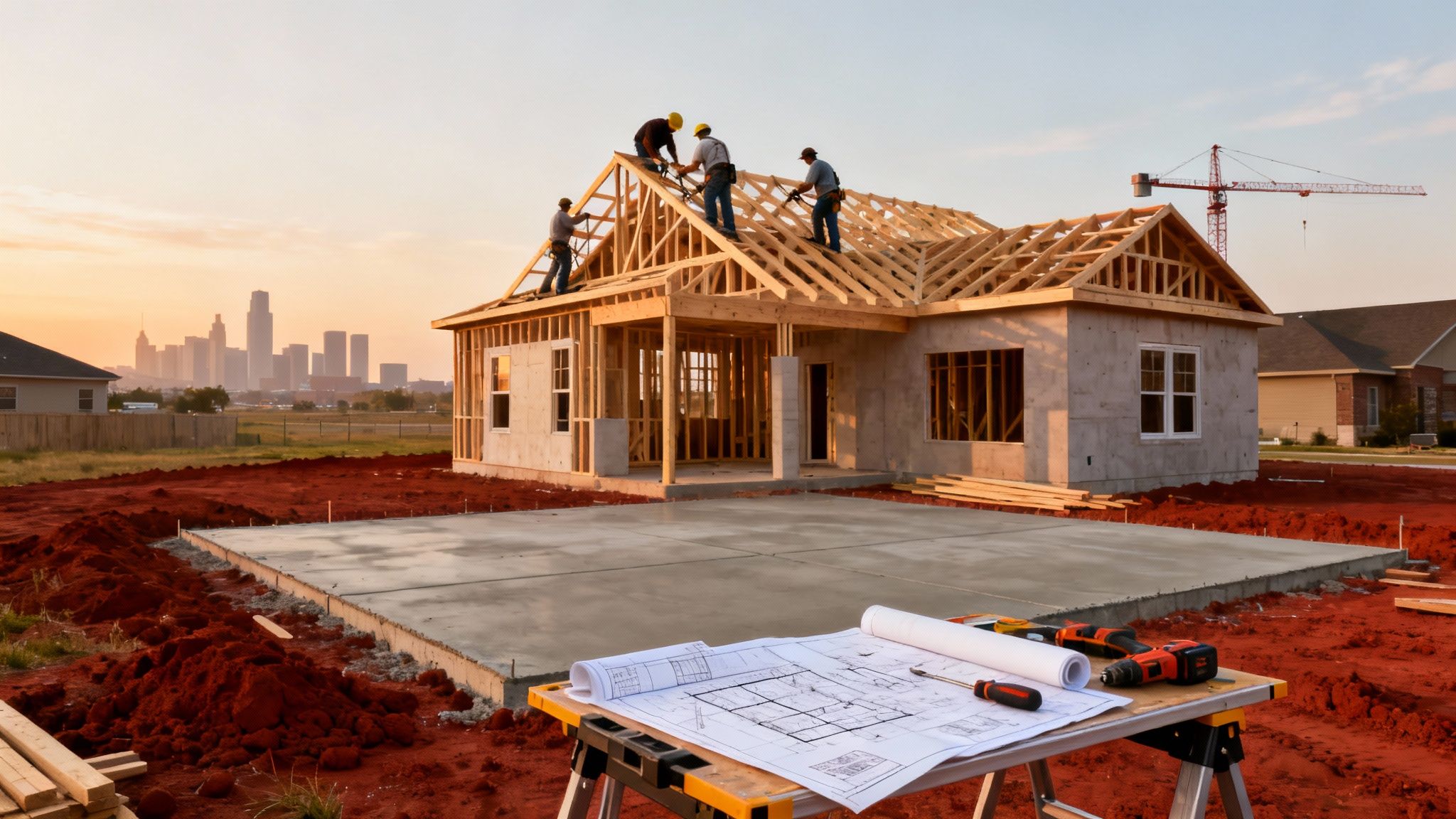
First, we excavate and prep the ground for the foundation. Here in Oklahoma, that almost always means engineering a post-tension slab, which is specifically designed to handle our infamous expansive clay soil. Once the concrete is poured and cured, the framing crew comes in to build the home's skeleton—the walls, floors, and roof structure go up, and it suddenly looks like a house.
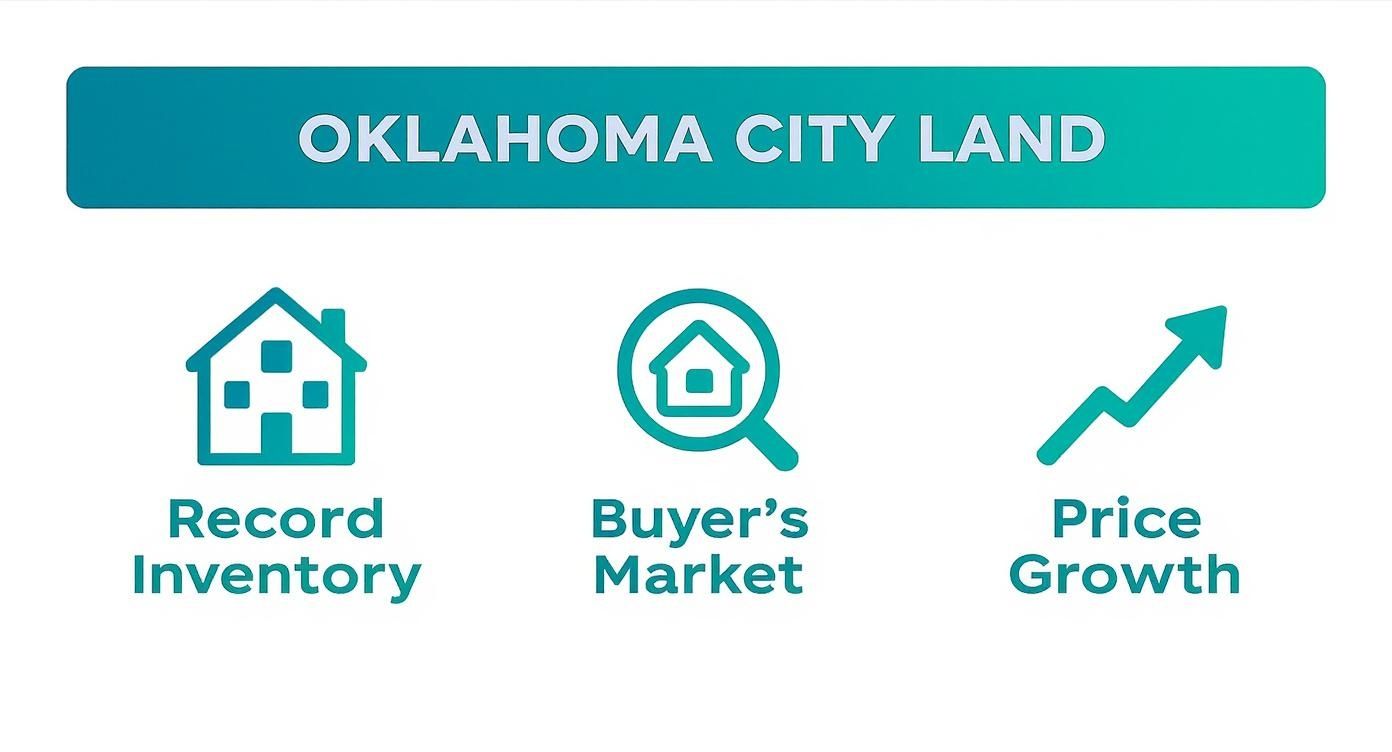
This snapshot of the OKC market gives you an idea of the landscape for finding land. Even with record-high inventory, prices are climbing, which shows just how much demand there is for quality new homes in the metro.
Phase 3: Rough-Ins and Exteriors (2–3 Months)
Once the house is "dried in"—a builder term for getting the roof and windows installed to protect the interior from the elements—the action moves inside. A whole swarm of specialized tradespeople descends to install the complex systems that will be hidden behind the walls.
Think of us as the orchestra conductor during this phase. Getting the plumbers, electricians, and HVAC techs to work in the right sequence is everything. It's the key to passing inspections on the first try and avoiding having to tear something out to fix a mistake.
Here’s what’s happening all at once:
- Plumbing and Electrical: Miles of pipes and wires are run through the walls and ceilings, and every outlet and switch box is placed.
- HVAC Systems: All the ductwork and the indoor AC/furnace units are installed. This is a non-negotiable for Oklahoma's hot summers and chilly winters.
- Exterior Finishes: The outside of the home gets its personality as siding, brick, or stone is applied.
Phase 4: Interior Finishes and Completion (2–4 Months)
We're in the home stretch! This is where all the detail work happens, turning the structure into a space that truly feels like your home. Craftsmanship is front and center here.
- Drywall & Paint: Sheetrock goes up, gets taped and textured, and finally, your chosen paint colors bring the rooms to life.
- Flooring & Cabinetry: Whether it's hardwood, tile, or carpet, the floors go in. At the same time, kitchen and bathroom cabinets are installed, followed by countertops.
- Fixtures & Appliances: The electricians and plumbers are back to install light fixtures, faucets, toilets, and all of your brand-new appliances.
- Final Touches: Outside, the yard gets its final grade for landscaping, and driveways are poured. Inside, the home gets a thorough, top-to-bottom cleaning.
- Final Walkthrough & Punch List: This is a big moment. You’ll walk through the finished home with us to create a "punch list"—a short list of any minor adjustments that need to be made. Once that list is complete, it's time to close and get the keys to your new home!
Knowing what to expect makes the process so much more enjoyable. If you want to dig into the nitty-gritty of local rules, the official City of Oklahoma City website is a great place to look up specific permit information.
Designing a Home That Fits the Oklahoma Lifestyle
Your dream home shouldn't just look good; it has to live well, especially here in Oklahoma. We're talking about designing a home that can handle everything our climate throws at it while still being a perfect reflection of you. It's about blending your vision with practical, long-lasting performance.
The design phase is where the magic happens, turning your ideas into a real blueprint. Driving around the OKC metro, you'll see a bit of everything, and that's what makes this area special. You might find a modern farmhouse with a wraparound porch out in Elmore City, a timeless brick traditional home in a quiet Moore neighborhood, or a sprawling ranch-style place near Shawnee.

After more than 15 years in this business, we know that the best homes strike a perfect balance between beauty and resilience. They’re built to be enjoyed, not constantly maintained.
Selecting Materials That Last
Let's be honest: Oklahoma weather is tough. We deal with blistering summer heat, powerful thunderstorms, hail, and relentless wind. Your home's exterior is on the front lines, so choosing the right materials from day one is one of the most important decisions you'll make.
Here’s what we always recommend prioritizing for a truly storm-ready home:
- Hail-Resistant Roofing: Think about investing in Class 4 impact-resistant shingles or a standing-seam metal roof. The initial cost is a bit higher, but it can save you thousands in repairs—and headaches—the next time a hailstorm rolls through.
- Durable Siding: There's a reason you see so much brick and stone here. They stand up to just about anything. Fiber cement siding is another fantastic choice, giving you the classic look of wood without the worry of rot or termites.
- High-Performance Windows: Double- or even triple-pane windows with low-E coatings are non-negotiable in our climate. They act as a barrier, keeping the summer heat out and the cozy warmth in during winter, which you'll definitely notice on your utility bills.
A well-built exterior is like a fortress for your family. By choosing materials engineered for our climate, you’re not just building a house; you're building peace of mind that will last for decades.
Designing for Energy Efficiency and Comfort
A smart design works with the Oklahoma climate, not against it. This is where you can really make an impact on your long-term cost of ownership, especially when it comes to energy efficiency. A few strategic choices can dramatically lower your heating and cooling bills.
It all starts with insulation. We’re not just talking about the walls; a properly insulated attic is your best defense against the sweltering summer sun. When you pair quality insulation with a high-efficiency HVAC system, you create a home that stays comfortable all year long without breaking the bank. For a closer look, read our guide on the top energy-efficient home features that deliver real savings.
It’s also interesting to see what’s happening in the wider OKC housing market. While the demand for custom homes remains strong, multifamily construction has slowed down a bit. New apartment projects only account for about 1.4% of the current inventory, which is far below the national average. This trend really underscores the lasting value and appeal of a well-built, single-family custom home in our area.
How to Choose the Right OKC Custom Home Builder
Picking your builder is easily the most critical decision you'll make when building a new home in Oklahoma City. You’re not just hiring someone to hammer nails and pour concrete; you're finding a partner to guide you through one of the biggest projects of your life. The right builder becomes your advocate, your expert, and your single point of contact, making sure the entire process feels manageable and, dare I say, enjoyable.
First things first, it's important to understand the lay of the land. There's a big difference between a production builder and a true custom builder. Production builders work off a set menu of floor plans and finishes, focusing on efficiency and volume. A custom builder like ACET Custom Homes, however, starts with a blank slate—your ideas. We design and build a home that is uniquely yours, whether that means starting from scratch or significantly personalizing one of our proven plans to match your family's needs.
Your Vetting Checklist for Oklahoma Builders
Finding a builder you genuinely trust takes a little homework. You absolutely should ask tough questions, and any reputable builder will be happy to answer them. In fact, a builder who is transparent and open from the get-go is exactly what you're looking for.
Here’s a checklist of what you should ask every single builder you consider:
- Licensing and Insurance: Are you fully licensed to build in Oklahoma? Can I see your proof of general liability and workers' comp insurance? This is a deal-breaker. It protects you from any liability during construction.
- Experience and Portfolio: How long have you been building homes here in the OKC metro? Can I look through a portfolio of your recent work, maybe even some homes in areas like Shawnee or Deer Creek?
- Client References: Would you mind if I spoke with 2-3 of your past clients? Hearing directly from people who have been through the process gives you a real feel for how a builder communicates and handles challenges.
- Change Order Process: What happens if I want to make a change after we've started? A clearly defined, written process for change orders is crucial for avoiding surprise costs and confusion down the road.
- Communication: How often can I expect updates? Who will be my main contact person from start to finish? Consistent, clear communication is the secret to a low-stress build.
How to Spot Red Flags
While you're looking for the good signs, it’s just as important to recognize the bad ones. There are a few red flags that should make you think twice about moving forward.
An experienced builder’s reputation is built on transparency, not just beautiful homes. If a builder is vague about their process, pricing, or timeline, it’s a clear warning sign. We’ve found that an open book approach from day one is the only way to build lasting trust.
Be wary of any builder who:
- Pressures you to make a quick decision or asks for a huge upfront deposit.
- Gives you a bid that seems too good to be true. It usually is, and it often means they're cutting corners somewhere.
- Lacks a professional website or a physical office you can visit.
- Hesitates or can't provide recent client references.
Ultimately, choosing the right partner is about finding a team that gets your vision and shares your values. A great builder doesn’t just put up a house; they build a relationship founded on trust. For a deeper dive, check out our guide on what to look for in a great custom home builder.
FAQs About Building a New Home in OKC
When you start thinking about building a custom home in Oklahoma City, a flood of questions is completely normal. We get it. Drawing on our 15+ years of building right here in the metro, we’ve put together some straight-talk answers to the questions we hear most often.
How Long Does It Really Take to Build a Custom Home Here?
From the day we first break ground, you can generally expect your custom home to be move-in ready in about 9 to 14 months. This is a solid estimate for most projects in the OKC area. Of course, several things can nudge that timeline. A more complex architectural design or a particularly stormy spring can add time, as can the speed of permit approvals in your specific city, whether it's Edmond, Norman, or right here in OKC. Also, don't forget the pre-construction phase—design, making all your selections, and getting financing lined up—which usually adds another 3 to 6 months before any dirt starts moving.
What’s the Real Cost Per Square Foot in OKC?
Everyone asks this, but the truth is, cost-per-square-foot can be a tricky number. For a ballpark, new construction in the Oklahoma City area often falls somewhere between $150 and $250+ per square foot. But please, take that with a grain of salt. Why? Because the final price tag is driven by so many other factors. Think about the finishes you choose—quartz countertops versus laminate, high-end fixtures versus standard ones. The architectural complexity and specific site requirements, like needing to install a well and septic system for a lot out near Guthrie, will also heavily influence the final cost. An itemized quote from your builder will always give you a much clearer picture than a simple square-foot average ever could.
Do I Need a Special Type of Loan to Build in Oklahoma?
Yes, you’ll almost certainly need what’s called a construction-to-permanent loan. It’s a special financial tool designed specifically for building a new home. It works by funding the construction in stages (known as "draws") as work is completed. Once your home is finished and you’re ready to move in, the loan automatically converts into a familiar, long-term mortgage. We always recommend partnering with a local lender who really understands the Oklahoma construction scene; their expertise makes the entire process so much smoother.
What Are the Biggest Hurdles to Building in Oklahoma?
If we had to name the two biggest challenges we face day in and day out, it would be Oklahoma's unpredictable weather and its infamous expansive clay soil.
- Weather: We always build with durable, hail-resistant materials, but let’s be honest—when a major storm system rolls through, it can cause delays that are simply out of anyone's control.
- Soil: That red clay isn't just for looks. It expands and contracts dramatically with moisture, which is why we engineer specialized foundations, typically post-tension slabs, to prevent your home from shifting and cracking down the road. This is one of those areas where having a builder who knows Oklahoma ground, literally, is non-negotiable.
Ready to design your custom home? Schedule a free consultation with ACET Custom Homes today.
Book Your Project Consultation