.png)
How to Choose the Right Custom Home Builder OKC for Your Dream Home
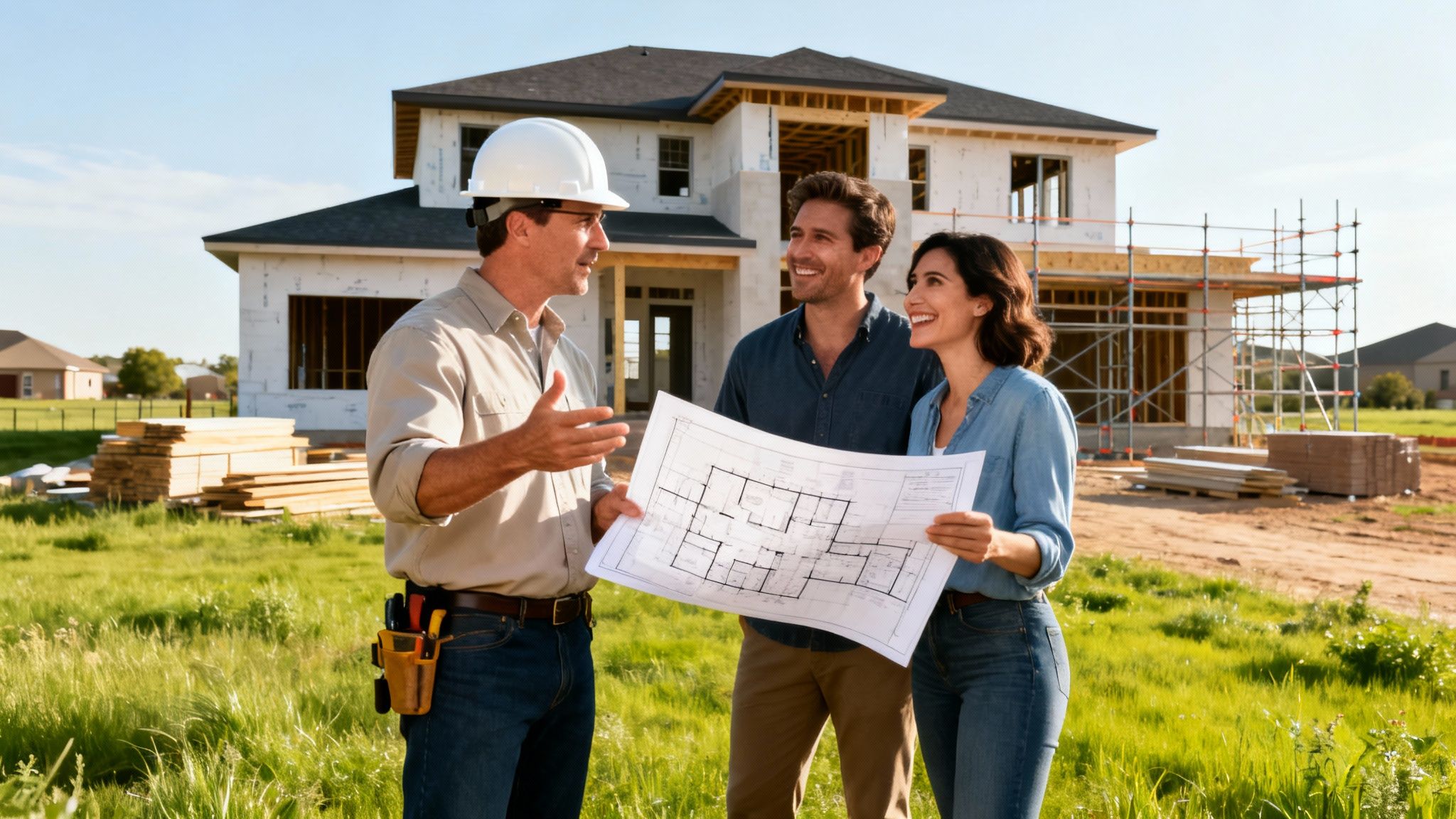
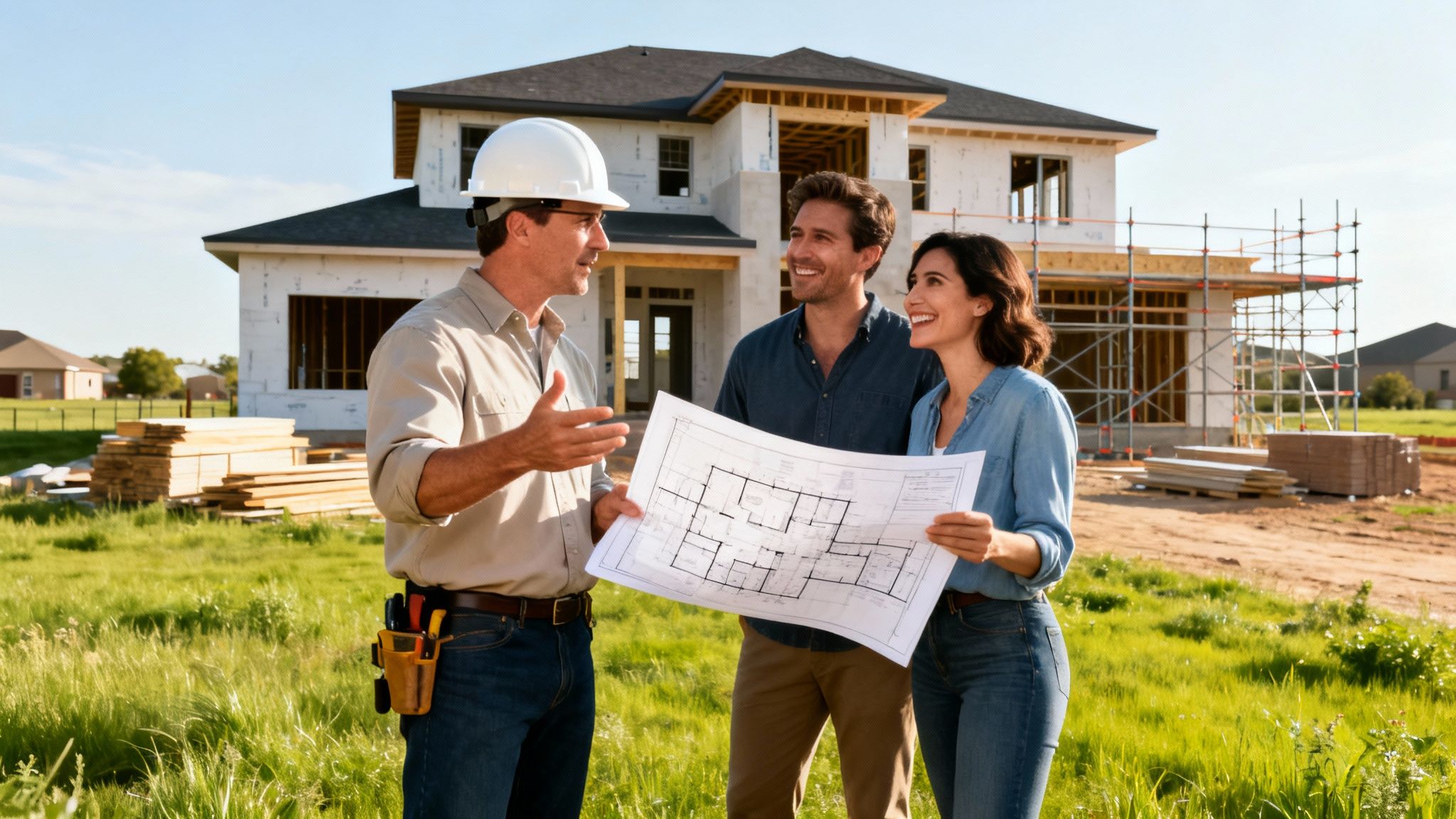
That feeling of handing over your life's savings for a house that's almost right? It’s a compromise you don’t have to make. Building a custom home in Oklahoma City is about creating a space that fits your life perfectly, not forcing your life into a pre-built box. But turning that dream into your front door key hinges on one critical choice: finding the right custom home builder OKC to guide you.
Imagine finally having a kitchen designed for how you cook, a floor plan that flows with your family’s rhythm, and a home built on your perfect piece of land in Edmond or out in the quiet of Macomb. This guide is your roadmap to get there, making sure the partner you choose is the one who will bring your vision to life, on time and on budget.
Your Guide to Building a Custom Home in Oklahoma City
Starting a custom home build is a monumental step. It’s not just a construction project; it’s the beginning of a new chapter for your family. Unlike buying a spec home where you inherit someone else's choices, a custom build puts you in the driver's seat. You control the layout, select the materials, and fine-tune every detail.
At ACET Custom Homes, our 15+ years of experience building Oklahoma new construction has taught us everything about turning your vision into reality. We've mastered the art of building on our state’s infamous red clay and designing homes that stand strong against our unpredictable weather, ensuring your investment is built to last.
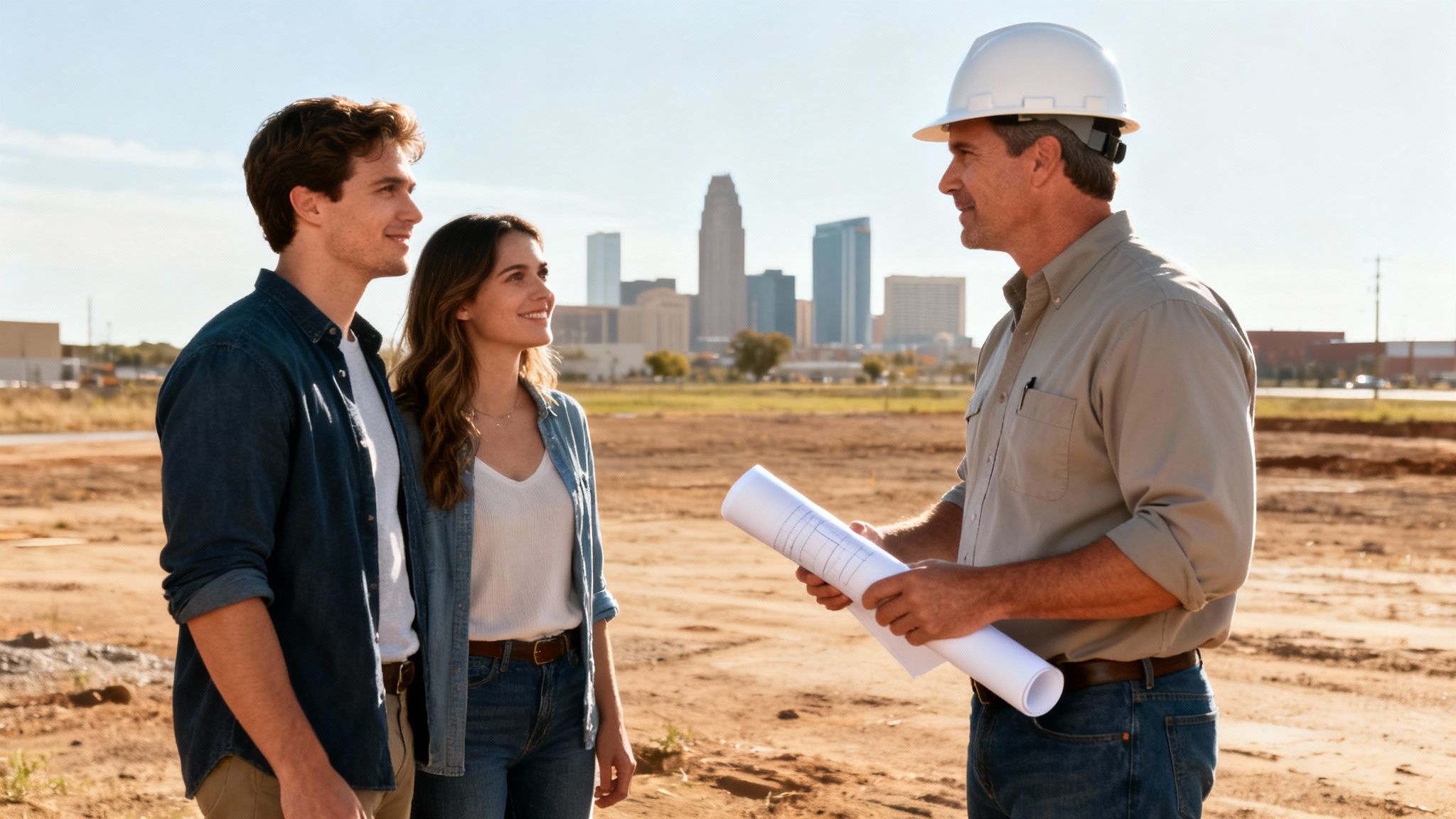
The goal is to create a home that truly works for you. Maybe that's a sprawling one-story on an acre out in Macomb, or a sleek, modern two-story tucked into a close-knit Deer Creek neighborhood. It’s a significant investment, yes, but it’s one that pays off every single day in your quality of life and the home's long-term value.
Why Building Custom Makes Sense
More and more people are choosing to build a home from the ground up, and for good reason. Even as the market shifts, the demand for custom homes remains strong.
In fact, the National Association of Home Builders reported that in the second quarter of 2023, custom home building in the U.S. saw a 4% growth, with a total of 54,000 starts. That’s nearly 19% of all single-family homes—the highest share since 2022. It shows that buyers who know what they want are skipping the standard options and investing in a home built just for them.
A true custom build gives you a level of control you can't get anywhere else.
- Lot Optimization: You can orient your home on the land to capture the best views, maximize natural light, and ensure privacy.
- Unmatched Personalization: Every single element is your choice, from the type of foundation right down to the cabinet hardware.
- Future-Proof Design: This is your chance to build for the long haul. You can integrate smart home technology, plan for energy-efficient systems, and create a floor plan that will adapt as your family grows and changes.
At ACET Custom Homes, we're here to walk you through all of those decisions. Our job is to make sure the finished home isn't just a reflection of your vision, but a solid investment for your family’s future.
How to Vet and Select the Best OKC Home Builders
Picking the right builder for your custom home is, without a doubt, the most important decision you'll make in this entire process. Think of it less like hiring a contractor and more like entering a long-term partnership. This relationship will last for months, and the quality of that connection will absolutely shape your final home and your overall experience.
You have to go deeper than just "checking references." It’s about really digging into their process, understanding their communication style, and seeing how transparent they are.
A truly great builder will welcome your questions and give you straight answers. If you get a vague contract or sense any hesitation when you ask about their subcontractors, that's a major warning sign. You're looking for someone who operates with total honesty, giving you confidence every step of the way.
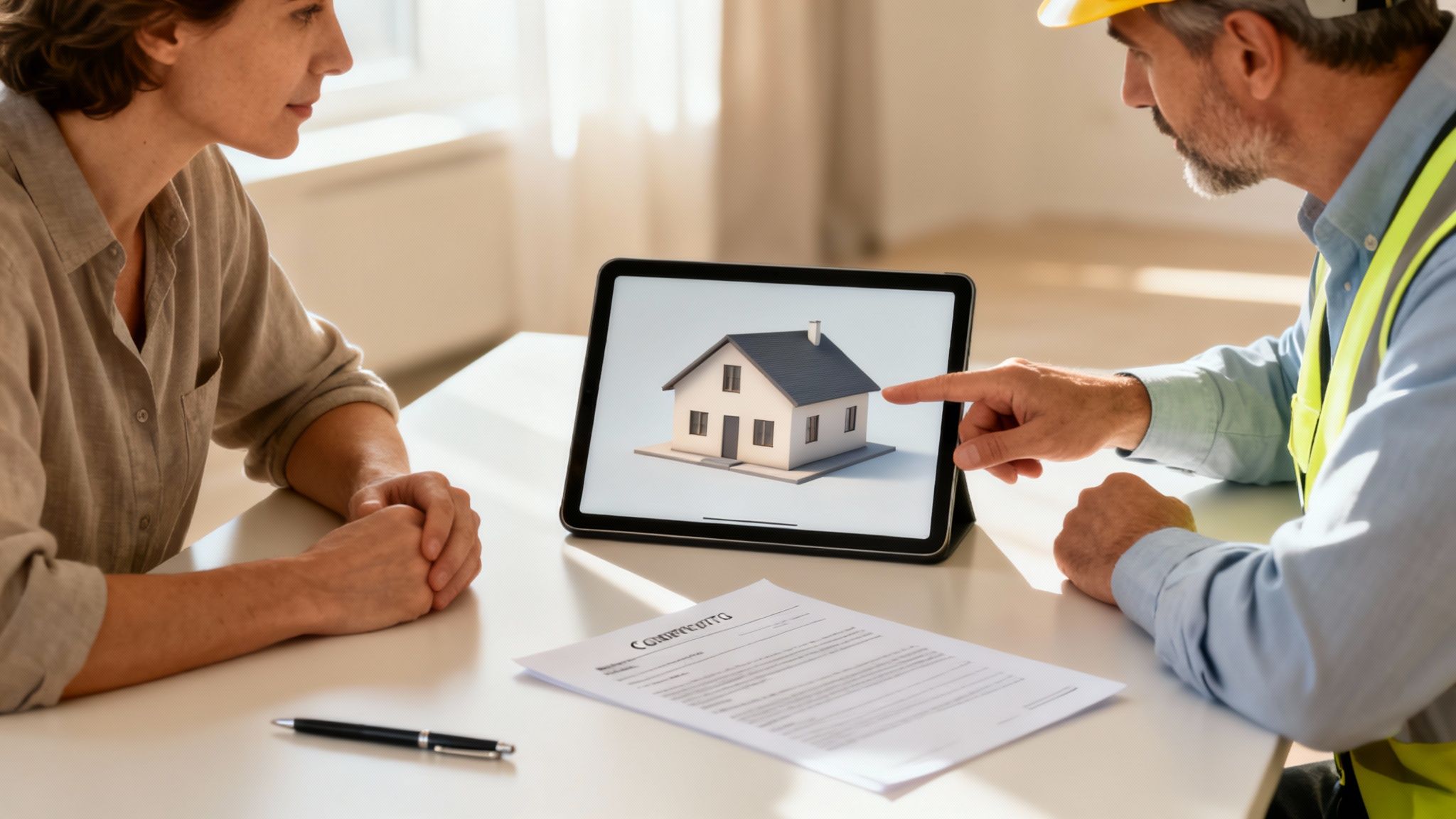
Key Questions to Ask Every Potential Builder
Before you even think about signing a contract, you need to sit down with your short list of builders and interview them. Seriously, treat it like a job interview. Their answers (or lack thereof) will tell you everything you need to know about their experience, their process, and how dedicated they are to your vision.
Here are the non-negotiable questions you should ask:
- "Can you walk me through your entire design-build process, from start to finish?" You're listening for a structured, clear system. A builder who can’t articulate their process probably doesn’t have one. When a builder offers in-house design and 3D renderings, like we do at ACET Custom Homes, it signals a seamless experience where the design you approve is the home that gets built.
- "How will we stay in touch? Who is my main point of contact?" Do they use a project management app? Will you get weekly updates? Consistent, scheduled communication is the hallmark of a professional and is the best way to prevent stressful misunderstandings down the road.
- "What, specifically, does your warranty cover and for how long?" A builder worth their salt stands behind their work. Get the details on their structural, workmanship, and systems warranties. A one-year comprehensive warranty is standard, but you should expect longer coverage for major structural components.
- "Can I see a home you have under construction and one you finished about a year ago?" This is a fantastic two-for-one question. It lets you see how clean and organized their job sites are (a huge indicator of professionalism) and also how well their craftsmanship holds up over time.
- "How do you handle budget tracking and change orders?" Changes happen. It's just a reality of custom building. But a builder should have a transparent, documented process for pricing and approving those changes so you aren’t hit with surprise costs on your final bill.
A Quick Tip From Our Experience: The best client-builder relationships are built on trust and clarity. If a builder can't give you a detailed, itemized budget or is fuzzy on how they calculate their change order fees, that's a red flag. A true professional is always prepared to explain every single line item.
The Value of an Integrated Design-Build Firm
There’s a reason so many people are choosing a design-build firm. The traditional route—hiring an architect, then finding an interior designer, then bidding the plans out to several builders—can be fragmented and inefficient.
A design-build firm brings everything under one roof.
This integrated approach saves a ton of time, helps control costs, and dramatically reduces the risk of miscommunication between separate teams. At ACET Custom Homes, our design-build model means our designers, project managers, and construction crew are all collaborating from day one. That synergy ensures your vision, budget, and timeline stay aligned from the first sketch to the final walkthrough, making the whole journey smoother and a lot more enjoyable.
For more on what to look for, explore our guide on finding quality home builders you can trust.
Builder Vetting Checklist: What to Ask and What to Look For
Sorting through potential builders can feel overwhelming. This quick checklist is designed to help you compare your options objectively and spot the green flags that signal a great partner.
Use this framework as you interview builders. The goal isn't just to find someone who can build a house, but to find the right team to build your house. A builder who checks all the "green flag" boxes is likely a professional you can rely on.
Finding Your Spot: Land Selection and Prep in Oklahoma
Long before the first concrete truck arrives, the real foundation of your dream home is the land you choose to build it on. In Oklahoma, picking the right site is a massive first step, one that directly shapes your budget, your home's design, and how much you'll love living there for years to come. It’s about more than just a great view; it’s about understanding what’s happening underground and preparing for the unique challenges our state can throw at you.
A good custom home builder in OKC doesn't just show up to build on a lot you've already bought—they should be your partner in evaluating it. With over 15 years of building here, we’ve learned that a successful project always starts with a rock-solid site assessment. We can help you spot potential red flags before they turn into five-figure problems, making sure the land you love is truly ready for the home you envision.
What to Know About Oklahoma’s Landscape
Oklahoma's terrain is beautifully diverse, but that variety comes with its own set of rules for building. Prepping a rural lot out in Macomb is a completely different ballgame than clearing a suburban plot in Moore, and the main difference is right under your feet: the soil.
- That Famous Red Clay: Central Oklahoma is known for its expansive red clay. It looks great, but it’s notorious for swelling when it gets wet and shrinking dramatically when it dries. That movement can absolutely destroy a standard foundation. In other parts of the state, you might find sandy loam, which drains better but needs its own kind of stabilization. This is why a geotechnical soil test isn't just a good idea—it's essential. It tells us exactly what we’re dealing with and dictates how the foundation must be engineered.
- Grading for Our Weather: We’re no strangers to torrential downpours that can drop inches of rain in a flash. Proper site grading is your first line of defense, channeling all that water away from your foundation to prevent leaks and long-term moisture damage. This is especially critical for properties in Norman or anywhere near the Canadian River, where high water tables can be a serious issue.
- Engineered Foundations: Because our soil is so active, a simple slab-on-grade foundation often won’t cut it. To handle the constant shifting, a post-tension or pier-and-beam foundation, specifically engineered based on those soil reports, is often the answer. It provides the heavy-duty stability your home needs to resist cracking and structural problems for decades.
The Site Evaluation Checklist
Before you ever sign the papers on a piece of land, a thorough evaluation is a must. This is where you uncover the hidden surprises that can blow up a budget. A site visit with your builder should be a deep dive into utilities, access, and local rules.
An unprepared lot can easily add tens of thousands of dollars to your build. Finding out you need to run several hundred feet of electrical line or that the soil requires a complex aerobic septic system can completely change the math. This is exactly why we insist on walking the property with our clients beforehand.
Oklahoma's housing market is hot, drawing in new residents who love our blend of affordability and new construction. That energy makes finding a builder who can guide you through the complexities of site prep more important than ever. In fact, a recent State-by-State Report Card ranked Oklahoma’s market in the top half nationally for its balance of affordability and construction activity. Builders like us are busy meeting that demand for high-quality, truly custom homes. You can get a deeper look at the numbers in this hyperlocal analysis of Oklahoma's housing market.
Thinking through these factors from the very beginning ensures your home is built on solid ground, ready to stand strong against whatever our wild Oklahoma weather brings its way.
Turning Your Dream Home From Blueprint to Reality
How does an idea sketched on a napkin actually become a real, livable, beautiful home? It can feel like a massive undertaking, but a proven design-build process breaks it all down into clear, manageable steps. It’s a collaborative approach designed to keep your vision, budget, and timeline all aligned from day one.
The real magic of an integrated design-build firm is having the architect, designer, and construction manager all on the same team, under one roof. This setup completely eliminates the communication breakdowns and conflicting priorities that can derail a traditional build. If you want to dive deeper, we have an entire article explaining what a design-build firm is and why it's such a game-changer for custom homes.
Phase 1: From Big Ideas to a Solid Plan
This is where your vision truly starts taking shape. It all kicks off with a deep-dive conversation about your lifestyle, your personal style, and your absolute must-haves. We can start with one of our refined floor plans as a base, or we can begin with a completely blank slate—either way, this phase is all about translating your dreams into a functional blueprint.
We'll talk about how you really live. Do you host big family dinners in Edmond and need a chef’s kitchen? Or maybe you work from home and need a quiet office with tons of natural light? Perhaps your land is out in Elmore City, and you need a seriously durable mudroom. We take all that information and create initial sketches and 3D renderings, letting you virtually walk through the space before we even think about breaking ground.
Phase 2: Choosing the Details That Make It Yours
Once the architectural plans are locked in, the fun part begins. This is where you get to inject your personality into every room by choosing the selections and finishes. From the exterior brick and stone to the interior paint colors, flooring, countertops, and light fixtures—it all happens here.
This process can feel overwhelming, but it doesn't have to be. Our design team provides curated options that fit both your style and your budget. We'll walk you through every choice, explaining the practical differences between materials—like the incredible durability of quartz countertops versus the classic look of granite, or the pros and cons of hardwood versus luxury vinyl plank.
While we're working on the initial design, we're also making sure your land is ready for your dream home.
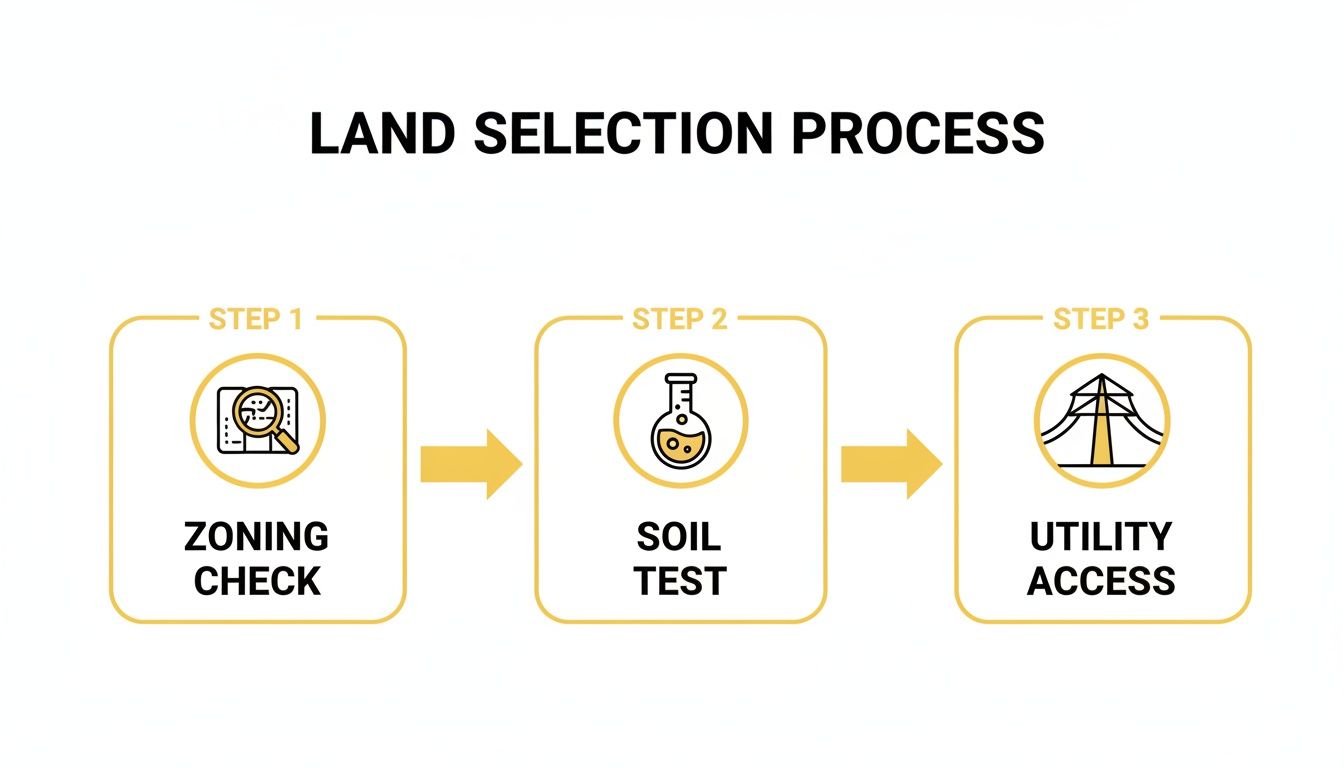
This step is critical. Before finalizing any plans, we have to confirm the land is viable by checking zoning, testing the soil, and verifying utility access. A solid build starts from the ground up.
Phase 3: Bringing the Vision to Life
With plans approved and selections made, it's time to build. This is where a builder's experience and project management skills are put to the test. Our team handles everything, from securing the right permits in cities like Shawnee or Guthrie to scheduling our trusted network of trade partners.
A Quick Word on "Change Orders"
From my experience, the single biggest cause of budget overruns and timeline delays is the dreaded "change order." This is any deviation from the original, approved plans. While some changes are unavoidable, deciding to move a wall or change a window size after construction has started can create a domino effect of delays and extra costs. We work hard to prevent this with a thorough design and selection process upfront, so you feel 100% confident in every choice before we start.
We believe you should never be in the dark about your own home. You’ll have a single point of contact and get regular updates, so you always know what’s happening on-site. From pouring the engineered foundation to framing, electrical, plumbing, and drywall, every stage is meticulously managed and inspected to meet our non-negotiable standards for quality. It’s this hands-on, transparent approach that makes the journey from blueprint to your front door a smooth and predictable one.
Getting a Handle on Your Oklahoma Custom Home Budget
Let's talk numbers. Getting a realistic grip on your budget from day one is probably the single most important thing you can do to make your custom home build a smooth, low-stress experience. It’s all about financial transparency and making confident decisions without second-guessing every choice.
The final price of a custom home isn't just about the size of the house. It's a complex recipe of land costs, labor, materials, and a handful of other expenses that people often forget about until it's too late.
Figuring out an accurate budget starts way before anyone picks up a hammer. It begins with the piece of dirt you’re building on. Here in Oklahoma, site prep costs can swing wildly. A flat, cleared lot in a Deer Creek development is one thing; a raw, wooded acreage out near Shawnee is a completely different ballgame. You have to account for things like clearing trees, grading the land for proper drainage, and running utilities to your build site—all of which can add up fast.
Where Does the Money Go? A Breakdown of Costs
To really build a solid budget, you need to know where every dollar is headed. While no two projects are identical, the costs generally fall into a few main categories. Any builder worth their salt will give you a detailed, line-item budget, but here’s the big-picture view.
- Land & Site Prep: This is more than just the price of the lot. It includes clearing, excavation, soil testing, and installing infrastructure like a septic system or a long gravel driveway.
- Design & Engineering Fees: These are the professional fees for your architect to draw up the blueprints and for an engineer to ensure the foundation is designed for Oklahoma's unique soil conditions.
- Hard Construction Costs: This is the big one. It's all the labor and physical materials—from the concrete for the foundation and the lumber for framing to the shingles on the roof, the windows, and all your interior finishes like flooring and cabinets.
- Soft Costs & Your "Just in Case" Fund: This is the category that often gets overlooked. It covers permits, impact fees from the city (looking at you, Norman and Guthrie!), insurance, and the builder's fee. Critically, this is also where you should budget a contingency fund of 10-15% for any surprises that pop up.
It's no secret that the Oklahoma City metro is booming. We’re looking at a projected 15% population increase over the next three years, fueled by a healthy economy and big projects like MAPS 4. This keeps the construction market buzzing.
Even with all the growth, OKC remains incredibly affordable. The area boasts a Realtor Affordability Score of 0.77, which makes building a truly premium custom home far more attainable here than in most other parts of the country. If you want to nerd out on the data, this detailed market analysis explains why OKC is such a hot real estate market.
This is exactly where having an experienced custom home builder in OKC in your corner makes all the difference. For an even more detailed look at the numbers, be sure to check out our complete guide on understanding luxury home construction costs.
Your Custom Home Questions, Answered
If you're thinking about building a custom home, you probably have a million questions. That's a good thing. Over the years, we've heard just about all of them, so we've put together some straight-to-the-point answers to the questions we get asked most often here in the Oklahoma City area.
How Long Does It Really Take to Build a Custom Home in OKC?
This is the big one, isn't it? From the first design sketch to the day you get your keys, you should plan for about 10 to 16 months.
Of course, that's a range. A highly complex architectural design will naturally take longer than something more straightforward. Permitting times can also vary quite a bit between, say, Edmond and Moore. And let's not forget about Oklahoma's weather—a few weeks of spring storms or a sudden freeze can definitely impact the schedule.
Another factor is your lot. Prepping a raw piece of land out in Chickasha with no utilities is a different ballgame than building on a ready-to-go lot in a planned neighborhood. An experienced local builder can look at your specific plans and give you a much tighter, more realistic timeline.
Custom Builder vs. Production Builder: What's the Difference?
Think of it like buying a suit. A production builder is like buying off the rack—you get a few solid choices in pre-set styles and colors. They build efficiently from a limited number of floor plans, which is great for speed and volume.
A custom home builder is your personal tailor. You're in complete control. You can bring in your own architect's plans, tweak an existing design you love, or sit down with their team and dream up a home from a blank slate. It’s all about creating a space that is uniquely yours, from the room layout down to the smallest fixture. If you want to dig deeper into building regulations, the U.S. Department of Housing and Urban Development has some great official resources over at HUD.gov.
Can I Bring in My Own Subcontractors or Materials?
We get why people ask this—it seems like a straightforward way to trim the budget. But in practice, it almost always creates more problems than it solves.
Professional builders have spent years building relationships with a team of trusted, insured, and reliable trade partners. They know who does quality work and who will stand by it. The same goes for suppliers.
When you bring in your own subs or materials, it creates a messy web of liability and warranty issues. If the flooring your uncle installed fails, is it his fault or the builder's? This confusion can void your builder's warranty, leaving you holding the bag for costly repairs.
It's almost always better to let the builder manage their vetted team.
What Does "Price Per Square Foot" Actually Cover?
The "price per square foot" figure is a useful starting point, but it's rarely the full story. It's an estimate that usually covers the "hard costs"—meaning the foundation, framing, roofing, and standard-level finishes.
What it often leaves out are some pretty significant expenses:
- The price of the lot itself.
- Major site work, like clearing a heavily wooded lot or significant grading.
- Fees for hooking up to city utilities.
- Upgraded finishes—think high-end appliances, specialty countertops, or custom-built cabinetry.
Always insist on a detailed, itemized budget. A transparent custom home builder in OKC will have no problem breaking down every single cost, so you can see exactly where your investment is going and avoid any surprises.
Ready to design your custom home? Schedule a free consultation with ACET Custom Homes today.
Book Your Project Consultation