You’re dreaming of building a new custom home in Oklahoma, picturing the perfect kitchen and the ideal backyard. But then a practical, and slightly daunting, question hits you: how long does it take to build a house? The uncertainty can feel overwhelming, but what if you could see the entire roadmap, from start to finish, before you even begin?
At ACET Custom Homes, we’ve guided families through this journey for over 15 years, building across the OKC metro from Edmond to Norman. Generally, the entire process to build a custom house in OKC takes between 10 to 16 months. This timeline is a solid benchmark, but factors like design complexity or Oklahoma's unpredictable weather can shift the schedule. Understanding each phase is the key to turning that dream into a stress-free reality.
An Oklahoma Homeowner's Guide to the Building Timeline
Building a house from the ground up is a marathon, not a sprint. Knowing what to expect is the key to a smooth experience. The journey from an empty patch of dirt to the day you get your keys involves a series of carefully orchestrated phases, each with its own timeline and potential hurdles.
We’re here to pull back the curtain on the entire process. Drawing on our 15+ years of experience at ACET Custom Homes, we’ll walk you through each stage. Whether you're planning for a sprawling lot out in Macomb or a tidy suburban spot in Moore, this guide will give you the clarity you need.
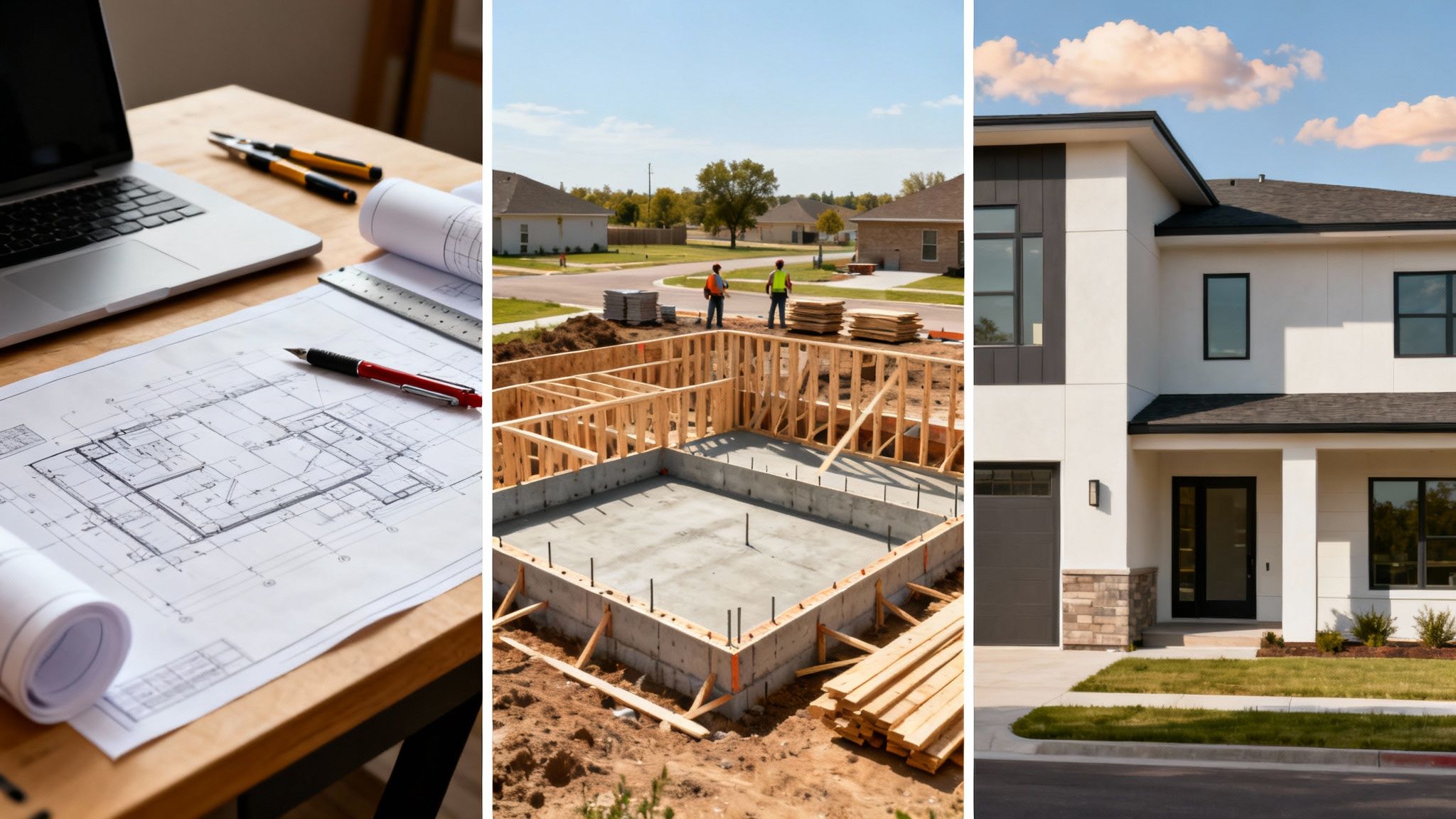
This visual gives you a bird's-eye view of the custom home building journey.

As you can see, that 10 to 16 month timeframe covers everything from the very first design sketch to finally moving in.
Key Factors Influencing Your Building Timeline
Several key things can stretch or shrink your construction schedule. Knowing them upfront helps set realistic expectations.
- Design Complexity: A home based on an existing, straightforward floor plan will get built much faster than a one-of-a-kind architectural masterpiece.
- Permitting & Approvals: The time it takes for local municipalities, whether it's Oklahoma City or a smaller town like Guthrie, to approve building permits can vary wildly. This is a common "hurry up and wait" phase.
- Site Conditions: A perfectly flat, clear lot is the dream. If your land needs major grading, tree clearing, or utility work, that adds time right from the start.
- Decision-Making Speed: Your decisiveness is a huge factor! The quicker you are with selections—flooring, fixtures, paint—the more you help the builder maintain momentum. Hesitation here can cause a domino effect of delays.
- Financing: Getting your funding in order is a critical first step. Your start date often hinges on having your financing secured. To get ahead of the game, check out our guide on Oklahoma construction loans.
Phase 1: Planning and Design (2-4 Months)
Before a single shovel hits the dirt, the most important work has already begun. The Planning and Design phase is where your vision is translated into a detailed, buildable blueprint. This foundational stage typically takes 2 to 4 months, and its importance can't be overstated. Rushing this step is a recipe for delays and budget overruns later.

Think of it as building your house on paper first. It’s where our 15+ years of build experience at ACET Custom Homes really shines, as we spot potential challenges and ensure every element aligns with your goals before construction starts.
From Ideas to Architectural Plans
This initial period is all about collaboration. You'll work side-by-side with our team to lock in every detail, from the overall flow of the home to the placement of each window.
The process has a few key milestones:
- Initial Discovery: We start by digging into your vision, needs, and budget. This conversation is the compass for the entire design.
- Lot Evaluation: We walk your property, whether it's a new lot in Edmond or rural acreage in Guthrie, to figure out the best home positioning.
- Preliminary Designs: Our designers create initial sketches and floor plans. We’ll review and tweak them together until they feel just right.
- Final Blueprints: Once you approve the design, sketches are transformed into comprehensive architectural and engineering documents.
At ACET Custom Homes, we have a saying: time spent in meticulous planning saves you triple the time—and headaches—during construction.
The Importance of Soil Testing in Oklahoma
Here in Oklahoma, one step we never skip is a thorough soil test. Our state is famous for its expansive clay soil, which can swell and shrink dramatically with moisture changes. Building a foundation without knowing what's underneath your lot is a massive gamble.
A professional soil analysis tells us what type of foundation—like a post-tension slab—is needed to guarantee your home’s long-term structural integrity. Skipping this can lead to devastating and costly foundation repairs.
Creating the Specification Sheet
As we finalize the design, we create a detailed specification sheet ("spec sheet"). This document is your project’s bible. It’s a comprehensive list of every material, finish, and fixture going into your home, from the brand of windows to the style of faucets.
The spec sheet is critical because:
- It Ensures Budget Clarity: It provides a precise cost breakdown, removing guesswork.
- It Prevents Costly Changes: Making decisions upfront minimizes change orders—the number one cause of delays.
Choosing the right building partner is essential. To understand your options, explore the differences between Design-Build vs. General Contractor approaches.
Phase 2: Permitting and Site Preparation (1-2 Months)
Once your blueprints are finalized, we pivot from the drawing board to the real world. This next stage, Permitting and Site Preparation, is about getting the official green light and physically preparing your land for construction. You can expect this to take anywhere from 1 to 2 months.
This is the essential bridge between your paper plans and the first day of building. The timeline can vary depending on where you're building—the permit office in Oklahoma City is a different experience than in a smaller town like Elmore City.
Our team at ACET Custom Homes manages the entire process of submitting your plans to local authorities. Securing building permits isn't just a box to check; it’s a critical step that guarantees your home will be built to strict safety and structural codes.
Getting the Land Ready for Construction
While the city or county reviews our permit application, we get to work preparing your property. This is a careful, engineered process that lays the literal groundwork for your home's stability.
Proper site prep is one of the most important parts of the build, a topic we explore more deeply in our guide to building a house on your own land.
Here's what happens on your property:
- Land Clearing and Grading: First, we clear the homesite of trees, rocks, or debris. Then we meticulously sculpt the land so water flows away from your foundation—a non-negotiable step for handling Oklahoma's notorious downpours.
- Foundation Staking: We physically stake out the exact footprint of your home on the lot. This gives everyone the first real-world glimpse of your home's placement.
- Utility Coordination: We get the ball rolling with local utility companies. For a rural lot near Shawnee or Chickasha, this often includes planning for a septic system and a water well.
Red Flags to Watch for in Site Prep
An inexperienced builder might rush through site prep to save a few bucks, but that almost always leads to catastrophic problems.
A poorly graded lot is a recipe for foundation disaster. If you stop by after a rain shower and see water pooling inside the staked-out area for your foundation, that’s a massive red flag.
Another warning sign is a builder who wants to start digging before official permits are in hand. This can lead to stop-work orders, expensive tear-downs, and legal headaches. With over 15 years of experience, we do things by the book, every single time.
Meticulous processes like these reflect global standards. The worldwide construction market was valued at about $11.4 trillion in 2024 and is expected to hit $12.1 trillion in 2025. You can discover more insights on the construction industry outlook on Buildern.com. This growth reinforces why sticking to professional methods is the only way to ensure a quality build.
Phase 3: Foundation, Framing, and Exterior (3-4 Months)
This is the moment everyone waits for. The blueprints and dirt lot finally start looking like a real house. The Foundation, Framing, and Exterior phase is one of the most exciting parts of the build, typically taking a solid 3 to 4 months. You get to see incredible progress every day as your home rises from the ground.

Think of this stage as a masterfully coordinated dance. From pouring the slab to sheathing the roof, every step sets up the next one. The goal is to get a secure, weather-tight structure ready for all the interior work.
Step-by-Step: From Foundation to Framing
- Pouring the Foundation: Everything rests on the foundation. In Oklahoma, with our clay-rich ground, this step is critical. We use the soil report to pick the right foundation, like a post-tension slab, for rock-solid stability. Once poured, the concrete needs to cure properly for several days before framing can begin.
- Framing the Structure: With the foundation cured, the pace picks up dramatically. The framers arrive and build the skeleton of the house, giving you the first real sense of the layout and scale of each room. This includes wall framing, floor system installation, and setting the roof trusses.
- The 'Dry-In' Process: After framing, our priority is to "dry-in" the house, making it weather-tight. This protects the new lumber and allows interior trades to work without weather delays.
The dry-in process includes several key installations:
Once the house is dried-in, we can start on the exterior finishes, like brick or siding, where your home's personality really starts to shine.
Phase 4: Mechanical, Electrical, and Plumbing Rough-In (1-2 Months)
With your home dried in and protected from Oklahoma weather, our attention pivots to the intricate systems that make a house a home. This is the Mechanical, Electrical, and Plumbing (MEP) rough-in.
This stage is a carefully orchestrated dance of skilled trades, typically taking about 1 to 2 months. It’s when we install the central nervous system and circulatory system of your house—all the critical components that will soon be tucked away behind drywall. Electricians run wiring, plumbers lay supply and drain lines, and HVAC technicians install ductwork.
After more than 15 years in this business, we know this is about building a home that's efficient, reliable, and ready for the future.
The Unsung Heroes Hiding in Your Walls
The MEP rough-in is one of the most technical parts of the build. Precision must be perfect. Every wire, pipe, and duct needs to land exactly where the blueprints say it should before we can close up the walls.
Here's a look at what’s happening:
- Electrical Rough-In: Setting junction boxes for outlets and switches, pulling wire to every room, and setting up the main electrical panel.
- Plumbing Rough-In: Installing all hot and cold water supply lines, along with drain and vent lines for kitchens and bathrooms.
- HVAC Rough-In: Getting the furnace and air conditioning coils in place and connecting the full system of ductwork.
A mistake found after the drywall is up is ten times harder and more expensive to fix. That's why we obsess over every connection, ensuring your home in Shawnee or OKC is built right from the inside out.
From Inspections to Labor: Real-World Hurdles
Before insulation or drywall goes up, your home must pass a series of tough municipal inspections. An inspector from your city will pore over all the MEP work to ensure everything is up to code and safe.
This phase is also where construction industry realities can influence the timeline. Labor shortages are a significant factor; the industry needs an estimated 500,000 new workers to keep up with demand. This means scheduling skilled electricians and plumbers requires strong relationships and planning. As your builder, we manage these logistics to keep your project on track. You can learn more about construction labor trends from JLL to get a bigger picture.
Phase 5: Interior Finishing (3-5 Months)
After months of watching the structure take shape, we get to the most satisfying part. This is the Interior Finishing phase, where carefully chosen details come together and the house truly starts to feel like your home. This is one of the longest stages, typically taking anywhere from 3 to 5 months.

This is where your vision, captured in the spec sheet, comes to life. Once the drywall is up, textured, and primed, the personality of each room emerges. It's an exciting time, but your timely decisions are essential to keeping the project moving.
From Blank Canvas to Finished Home
The interior finishing stage is a carefully choreographed sequence where one trade sets the stage for the next.
Here’s the general order of operations:
- Trim and Interior Doors: Carpenters install baseboards, window casings, crown molding, and interior doors.
- Cabinet and Countertop Installation: Kitchen and bathroom cabinets are set, allowing for precise measurements for countertops.
- Flooring and Tile Work: Flooring crews lay hardwood, LVP, or tile. Tile setters install shower surrounds and backsplashes.
- Final MEP Finishes: Electricians and plumbers return to install light fixtures, outlets, sinks, faucets, and appliances.
- Final Paint and Punch List: A final coat of paint is applied. Then, we walk through the nearly finished home with you to create a "punch list" of any small adjustments.
Builder Insight: The single biggest thing that derails the finishing schedule is waiting on material selections. A two-week delay in picking tile doesn't just hold up the tiler; it stops the plumber, which holds up the flooring guys. Decisive, early choices are your best friend.
A Practical Checklist for Finishing Selections
To keep things running smoothly, have all major finish selections locked in before drywall goes up. At ACET Custom Homes, we guide clients through this checklist well in advance:
Finalizing the Exterior
While work continues inside, crews wrap up the exterior. This work is at the mercy of Oklahoma’s weather but creates the curb appeal you’ve been dreaming of.
- Final Grading: We sculpt the yard to ensure proper water drainage.
- Driveways and Walkways: Concrete is poured for driveways, sidewalks, and patios.
- Landscaping: The last step is laying sod and planting trees or shrubs.
People Also Ask: Your Oklahoma Building Timeline Questions Answered
Building a home is a huge undertaking. Here are answers to common questions about the custom home building timeline in Oklahoma.
What are the biggest causes of delays when building a house?
In Oklahoma, weather is the biggest wildcard. Spring thunderstorms, ice storms, and summer heat can halt exterior work. A good builder builds buffer days into the schedule, but sometimes Mother Nature doesn't cooperate. The second-biggest hold-up is homeowner indecision on finishes like tile or flooring, which creates a ripple effect of delays. Proactive scheduling and clear communication are your best defense.
Can I build a custom home faster than 10 months?
It’s technically possible for a smaller, simpler home, but rushing a custom build is a bad idea. Cutting corners on crucial steps, like allowing the foundation to cure properly, can cause serious structural problems. The secret to an efficient build is having every decision finalized before breaking ground. A well-planned project almost always runs smoother and finishes faster.
How does building in a rural area affect the timeline?
Building in rural towns like Chickasha or Macomb often adds time to the schedule due to logistics like longer drive times for crews and deliveries. Permitting can also move at a different pace. Plus, installing a water well, septic system, and running power lines is a much bigger job than connecting to the grid in a suburb like Edmond. A builder experienced in rural construction, like ACET Custom Homes, knows how to plan for these challenges.
Does a fully custom design take longer than a stock plan?
Yes, almost always—at least in the beginning. The Planning and Design phase for a one-of-a-kind home is more involved and can add several weeks or months to the pre-construction timeline. However, once you break ground, the actual construction time may not be that different, unless the design involves complex features. That extra time upfront is an investment in creating a home that’s a perfect reflection of you.
Ready to design your custom home? Schedule a free consultation with ACET Custom Homes today.
Consultation Today!
.png)