.png)
Is Tyvek a Moisture Barrier? A Guide for Oklahoma Custom Homes
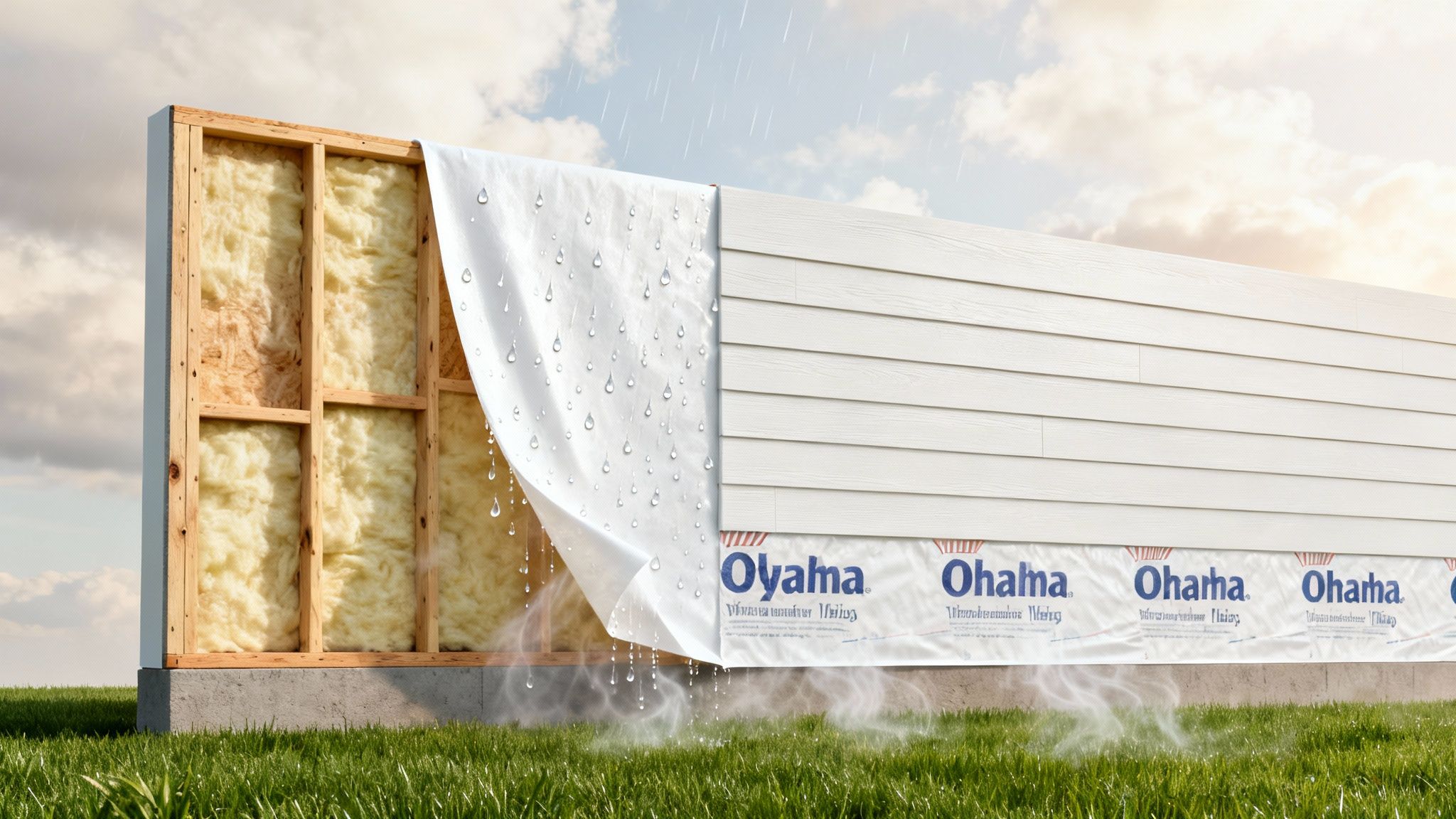
When planning your dream home, you’ll likely ask your builder, is Tyvek a moisture barrier? The quick answer is yes, but it’s more accurate to call it a Weather-Resistive Barrier (WRB). Understanding this key difference is critical to protecting your custom home’s long-term health, especially with Oklahoma’s unique weather challenges. At ACET Custom Homes, we see it as your home’s first line of defense.
This guide breaks down exactly what Tyvek does, why it’s essential for homes in areas like OKC and Edmond, and what you, as a homeowner, should look for during construction.
Your Home's First Line of Defense Against Moisture
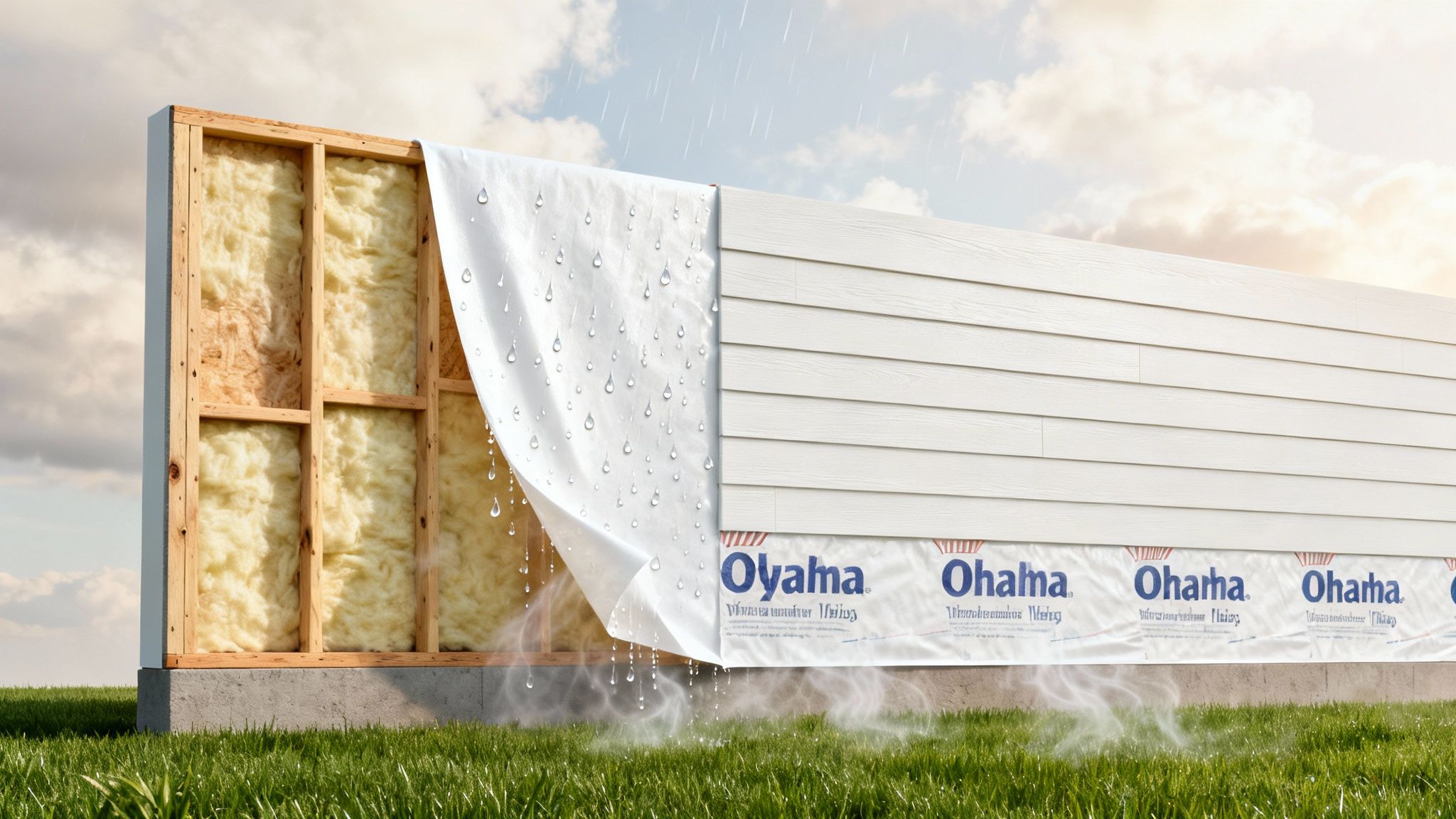
Think of Tyvek as a high-performance jacket for your house. It’s engineered to stop liquid water—like our notorious driving rain—from getting into your walls, but it allows water vapor from inside the house to pass through and escape. This is a crucial feature for any Oklahoma new construction project.
This “breathability” is vital. It prevents moisture from getting trapped inside your walls, a massive concern during the humid seasons we experience in Moore, Norman, and the surrounding OKC metro. When moisture gets stuck, it can lead to rot, mold, and serious structural damage.
With over 15 years of experience building custom homes across Oklahoma—from rural properties in Macomb and Elmore City to suburban communities in Deer Creek—we at ACET Custom Homes have seen the costly consequences of poor moisture management. Getting this detail wrong can lead to expensive repairs down the road.
A properly installed WRB like Tyvek is designed to perform three essential jobs:
- Block Bulk Water: It acts as the primary shield against rain, keeping your home's wood framing and sheathing dry.
- Allow Vapor to Escape: It lets moisture vapor from daily life (cooking, showers, breathing) dry to the exterior, preventing condensation buildup.
- Stop Air Leaks: When seams are properly taped, it also functions as an air barrier, boosting your home's energy efficiency and helping lower utility bills.
Protecting your home from the elements is a core part of building a high-performance home that will stand up to our state's climate for decades. In this guide, we'll break down exactly how these materials work to protect your investment.
How Tyvek Actually Works Its Magic
So, what’s really going on with Tyvek? Think of it like a high-end Gore-Tex jacket for your house. It stops a torrential downpour from soaking you, but it’s breathable enough that you don’t feel like you’re wrapped in a plastic bag. That’s exactly what Tyvek does for the walls of your custom home.
The secret is in its unique, nonwoven structure. If you put Tyvek under a microscope, you’d see a tangled web of super-fine, high-density polyethylene fibers that have been flash-spun and bonded together with heat and pressure. This process creates a material with millions of microscopic pores. Those tiny pores are the key to everything.
The Microporous Difference
The holes in Tyvek are small enough to stop liquid water droplets in their tracks, which is why it’s so good at shedding rain. At the same time, those pores are more than large enough for water vapor—which is a gas—to pass right through.
This ability to let water vapor escape is what we call breathability, measured by a "perm rating." A high perm rating means a material is very breathable. Tyvek is engineered to hit that sweet spot, allowing your wall assembly to dry out if moisture gets in from a heavy Moore thunderstorm or from everyday living inside the home.
This active drying process is your home's most important defense against mold, mildew, and rot. It protects the structural integrity that ACET Custom Homes carefully builds into every single project, ensuring the home stands strong for generations.
Performance When It Counts
But Tyvek isn't just about breathability; it’s about aggressively getting rid of water. As an engineered moisture barrier, its main job is to block bulk water while still allowing the wall to dry. That dual function is where its true value shines, especially here in Oklahoma's wild weather.
And it's not just marketing talk. Testing has shown that Tyvek housewraps can achieve drainage efficiencies greater than 90%. That means they get more than nine-tenths of the bulk water running down the outside of your walls safely away from the sheathing. It never even gets a chance to soak in and cause problems. You can dive deeper into the data in DuPont's technical analysis on drainage efficiency.
At the end of the day, the science behind Tyvek creates a powerful, multi-layered defense system. It rolls three critical jobs into one protective shield for your home:
- Water Resistance: It keeps liquid water from Oklahoma's unpredictable storms out.
- Vapor Permeability: It gives trapped moisture an escape route, keeping your wall cavities dry.
- Air Barrier: When the seams are properly taped, it cuts down on air leaks, which makes your home more comfortable and energy-efficient.
Comparing Tyvek to Other House Wraps
Picking the right house wrap isn't just a small detail—it’s a decision that will impact your home's integrity for decades. While you’ll see Tyvek on a lot of job sites, it’s worth understanding how it really stacks up against the other common options we see here in Oklahoma.
Let's break down the main contenders to see where Tyvek shines and where others fall short.
Traditional #15 Felt Paper
You might hear this called "tar paper," and it’s the old-school, traditional choice. The biggest draw? It's cheap. But that upfront savings can come at a steep price down the road.
From a performance standpoint, felt paper is a gamble in our humid climate. It’s notorious for tearing during installation, creating entry points for water. Worse, it can absorb moisture over time, which can eventually become a food source for mold inside your walls. Building science has come a long way.
The ZIP System Sheathing
The ZIP System is a more modern approach. It's an all-in-one product that combines the structural OSB sheathing with a built-in water-resistive barrier. Instead of wrapping the house, you seal the seams between the green panels with a special tape. When installed perfectly, it creates an incredibly tight air and water barrier.
Here's the catch: its effectiveness hinges almost entirely on that tape. In our experience building homes all over Oklahoma, from dusty rural sites in Guthrie to busy suburban developments in Edmond, getting a flawless tape seal is tough. If that tape fails—due to dust, moisture, or cold weather during application—the whole system's integrity is compromised.
Tyvek HomeWrap
This is where Tyvek offers a more resilient, layered defense. It delivers a proven combination of water resistance and excellent breathability at a reasonable cost.
What we value is the installation method. Tyvek is installed in a shingled, overlapping fashion, where upper layers are lapped over the lower ones. This simple, time-tested technique uses gravity to its advantage, directing any water that gets behind the siding down and out. It doesn't rely on a single line of adhesive tape for its water-shedding performance.
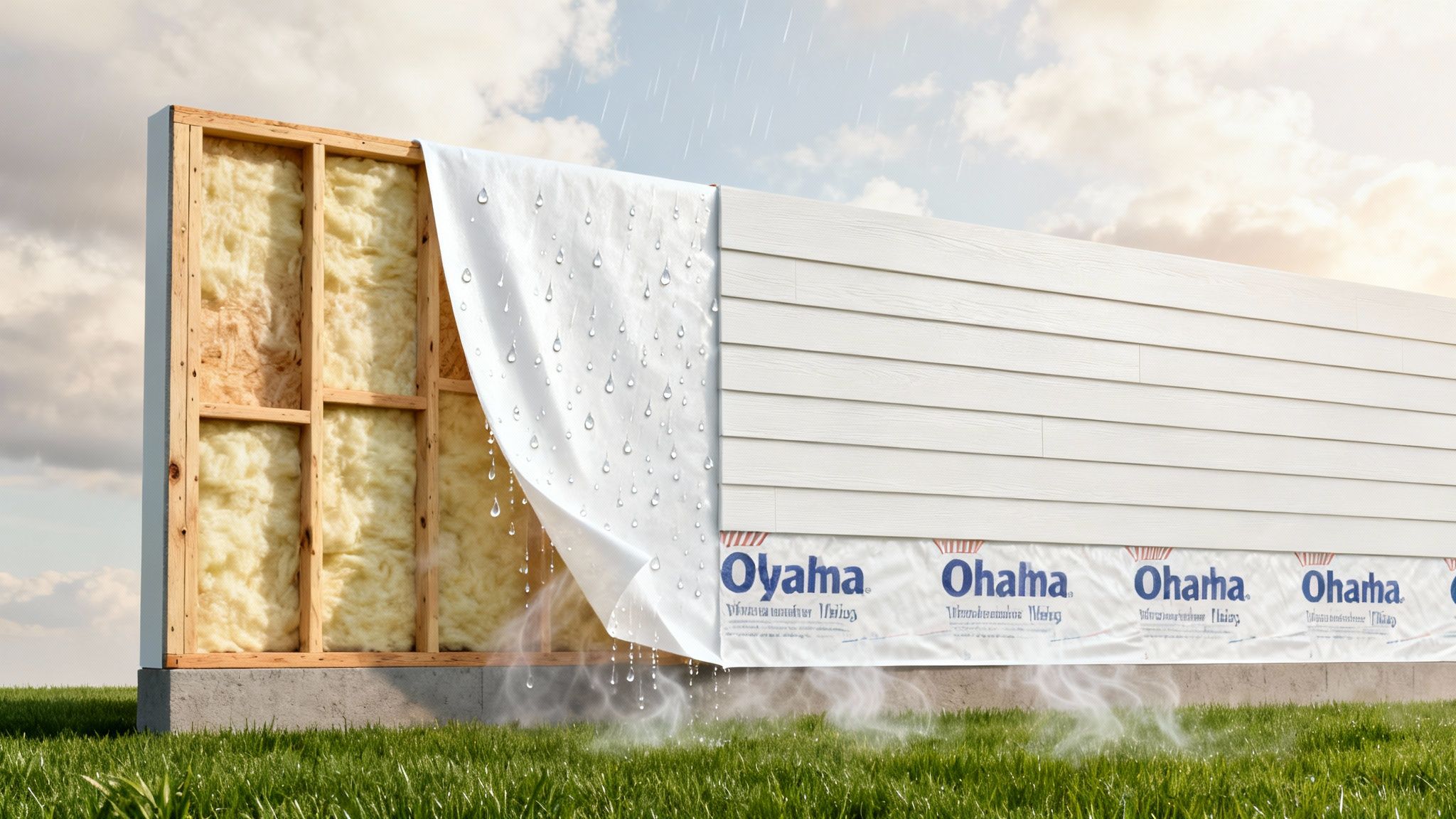
This visual really gets to the heart of why Tyvek works so well. It’s a double-duty performer, stopping liquid water from getting in while still allowing water vapor to escape. That ability for the wall to dry out is absolutely critical for preventing rot and mold over the long haul.
The science backs this up. Studies in hot, humid conditions revealed mold growth on Grade D black paper after just 75 days. On the Tyvek, there was no growth at all, thanks to its non-absorbent, continuous fiber structure. You can dive deeper into the data and learn how Tyvek's construction resists mold colonization.
Based on our 15+ years of build experience across Oklahoma, from rural Shawnee to the heart of OKC, the layered approach of Tyvek gives us the most reliable and forgiving barrier against our state's unpredictable weather.
House Wrap Comparison For Oklahoma Homes
To make it even clearer, here’s a side-by-side look at how these three popular systems compare on the key factors that matter for a custom home built to last in our climate.
Ultimately, while the ZIP System offers an impressive seal under ideal conditions and felt paper is a budget option, we find Tyvek HomeWrap provides the best all-around balance of performance, durability, and real-world resilience for custom homes in Oklahoma.
How Tyvek Boosts Your Home's Energy Efficiency
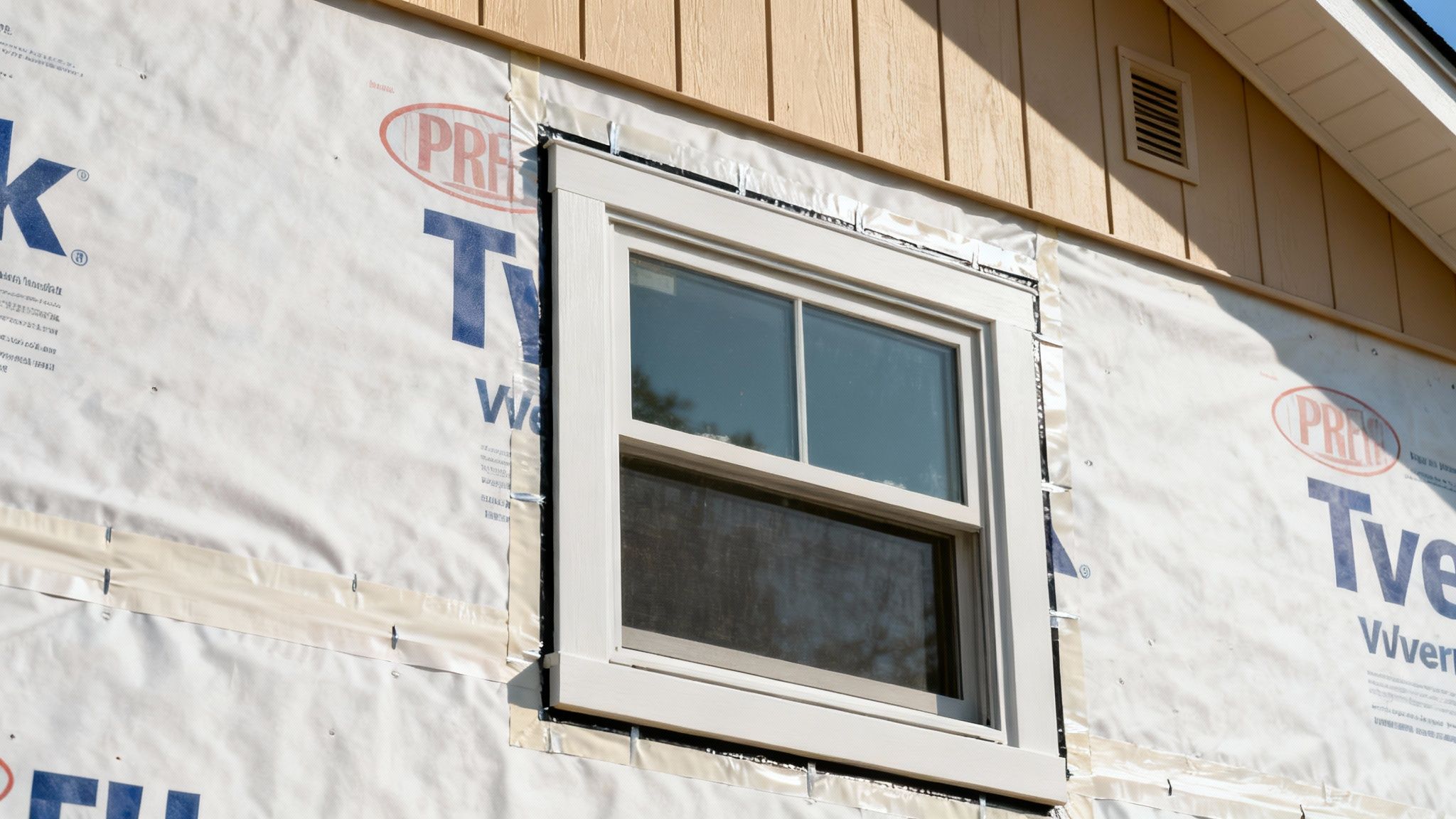
While the conversation around house wraps often centers on stopping water, its role as an air barrier is just as crucial for your home's performance—and your wallet. Think about all the tiny, unseen gaps around sheathing panels and window frames. Each one is a little pathway for outside air to sneak into your home.
This uncontrolled air exchange forces your HVAC system into overdrive, especially during those scorching Guthrie summers and frigid winter nights. When a house wrap like Tyvek is installed correctly, with every seam meticulously taped, it creates a continuous shield that dramatically cuts down on this costly air leakage.
The Impact of a Tight Building Envelope
Creating this tight "building envelope" is a cornerstone of how we build high-performance homes. It translates directly into lower monthly utility bills, a more comfortable indoor temperature, and even better air quality by blocking dust and allergens.
The numbers really drive this point home. Homes wrapped with Tyvek have shown significant reductions in both air and moisture infiltration, which can lead to energy savings of 10%–30% on heating and cooling costs. This is why the question of whether is Tyvek a moisture barrier has a more complex answer—it protects against both water and energy loss.
For a new custom home in Oklahoma, a well-sealed building envelope isn't a luxury—it's a necessity. It ensures the high-efficiency windows, doors, and insulation you've invested in can actually do their jobs properly without fighting constant air leaks.
Achieving True Energy Efficiency
A tightly sealed home does more than just save you money; it also makes your home healthier and more durable. By controlling the airflow, you gain better control over indoor humidity—a critical factor in preventing the damp conditions that lead to mold and mildew. This integrated approach to managing both air and moisture is a true hallmark of a well-built house.
At ACET Custom Homes, we focus on these details because they lay the groundwork for a genuinely comfortable and lasting home. If you're planning a new build, it's essential to discuss the specific energy-efficient features of your custom home with your builder to ensure your home is built to perform from day one.
Proper Installation Is Everything: A Step-by-Step Guide
You can choose the best materials in the world, but they're only as good as the hands that install them. When it comes to Tyvek, proper installation is the critical step that turns a simple roll of housewrap into a high-performance weather and air barrier that will protect your home for decades. The difference between a bone-dry wall assembly and a nightmare of leaks often boils down to a few fundamental details that a truly professional builder will never, ever skip.
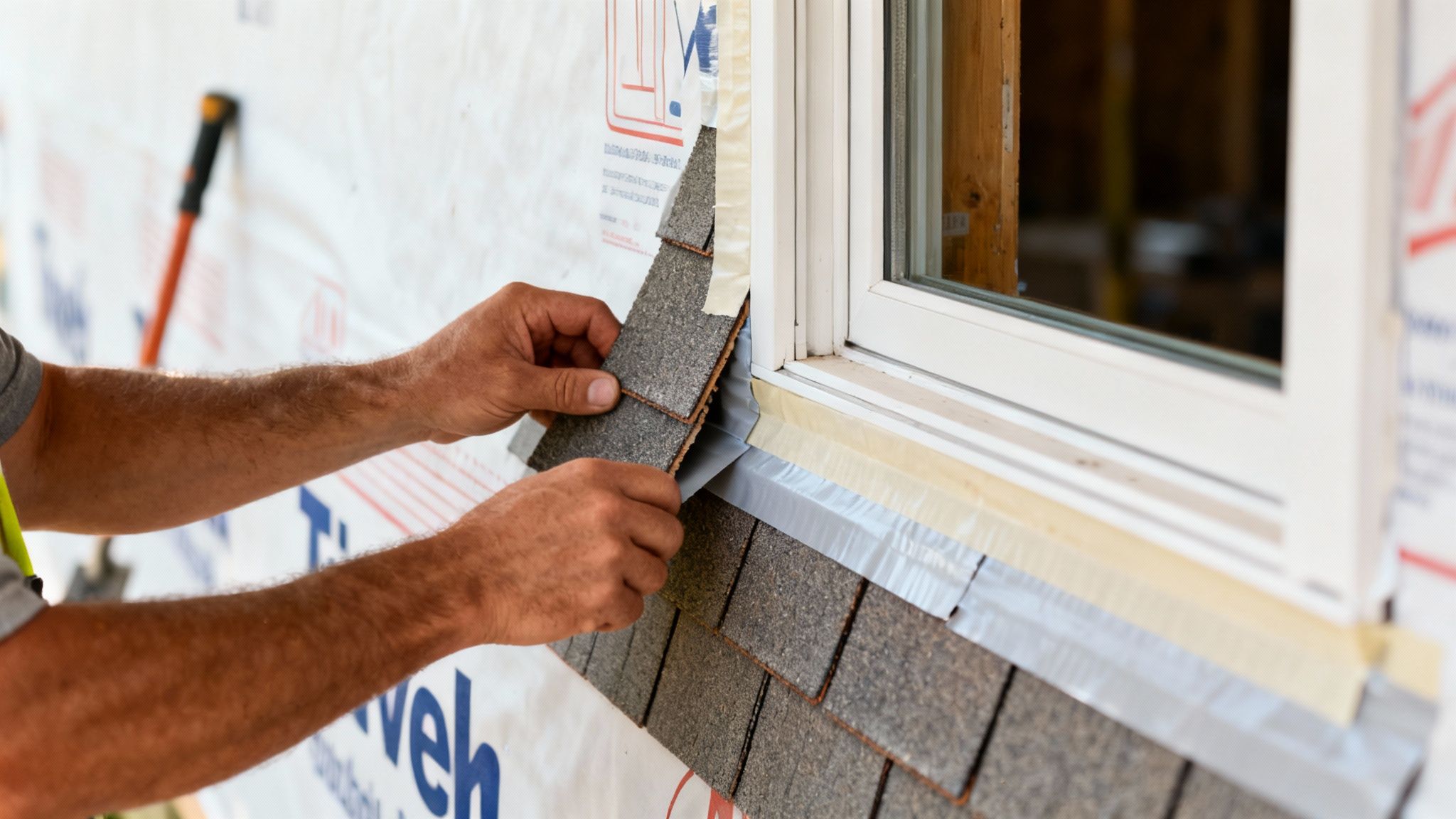
At ACET Custom Homes, we’ve been building homes to last for over 15 years, and we stick to the methods that are proven to work. The bedrock of a good Tyvek install is the "shingle-lap" method. It's a simple concept, but it's incredibly effective because it uses gravity to its advantage.
Step-by-Step Installation Best Practices
- Start at the Bottom: Always begin wrapping at the base of the wall, working your way up.
- Overlap Generously (Shingle-Lap): Each new horizontal course of Tyvek must overlap the course below it by a minimum of six inches. This simple overlap ensures any water that gets behind your siding is guided down and safely out.
- Tape Every Seam: While shingle-lapping handles bulk water, proper seam tape completes the system. Every vertical seam, every opening for pipes, and every edge around windows and doors must be sealed with Tyvek-approved tape. This turns the wrap into a true air barrier, stopping drafts and saving energy.
- Use Correct Fasteners: Use plastic-capped fasteners, not just staples. The caps distribute holding power, prevent tearing in the wind, and help seal the hole made by the fastener itself.
- Integrate with Windows and Doors: Proper flashing around openings is non-negotiable. The house wrap must be integrated with window and door flashing in a shingle-lap fashion to prevent leaks at these vulnerable points.
As the homeowner, you're the ultimate quality control. Knowing these basics empowers you to walk the job site and see for yourself that the team is building a home designed to last, whether you're in Deer Creek or rural Chickasha.
Installation Red Flags to Watch For
You don't have to be a building science expert to spot a problem. Keep an eye out for these common installation mistakes before the siding goes on and covers them up forever.
- Reverse Laps: This is a cardinal sin. It’s when a lower sheet of wrap is installed over the sheet above it. This acts like a funnel, directing water into the wall.
- Missing Tape: Check the seams and window flanges. Gaps in the tape are open doors for both air and water.
- Wrong Fasteners: Look for those plastic-capped fasteners. Bare staples can tear the wrap and create leak points.
- Too Much Sun: Tyvek has a UV-exposure limit of about 120 days. If the wrap is left exposed for months before siding is installed, the material can start to break down.
FAQ: Common Questions About Tyvek and Moisture Barriers
Even after digging into the science, a few key questions always pop up when homeowners are planning their custom build. Here are answers to the most common questions we get from clients at ACET Custom Homes.
What is the difference between a vapor barrier and a moisture barrier?
This is the most important concept to grasp. They do opposite jobs on opposite sides of your wall.
- A moisture barrier (like Tyvek) goes on the outside of your wall sheathing. Its job is to block liquid rain from getting in while letting water vapor out.
- A vapor barrier (or vapor retarder) is typically a plastic sheet installed on the inside of walls, behind the drywall. Its only purpose is to stop interior moisture (from showers, cooking) from entering the wall cavity.
In Oklahoma's mixed-humid climate, a true interior vapor barrier is a bad idea—it can trap moisture inside the walls. That's why having a high-performance exterior moisture barrier is so critical.
Does Tyvek need to be taped at the seams?
Yes, always. Taping the seams is a critical, non-negotiable part of the installation. Taping creates a continuous shield against wind-driven rain and, just as importantly, transforms the housewrap into a proper air barrier, which is essential for energy efficiency. A conscientious custom home builder will never skip this step.
How long can Tyvek be exposed to the sun?
Most standard Tyvek products are rated for 120 days of UV exposure. That four-month window is usually more than enough time for builders to get siding or brick installed. However, the intense Oklahoma sun means you never want to push this limit. A good builder schedules projects to cover the housewrap as quickly as possible to protect its long-term integrity.
Is Tyvek required by Oklahoma building codes?
Oklahoma's residential code doesn't name a specific brand. It requires a water-resistive barrier (WRB) that meets certain performance standards. Tyvek has become the go-to choice for reputable builders because it reliably meets and exceeds those code requirements, providing peace of mind that your home is protected.
Ready to design your custom home? Schedule a free consultation with ACET Custom Homes today.
https://acethomes.com
Book Your Project Consultation