.png)
Choosing a Traditional Home Builder in Oklahoma
Have you ever scrolled through pages of home designs, feeling like you’re just one click away from your dream, only to be paralyzed by the fear of making a costly mistake? Finding the right traditional home builder Oklahoma has to offer is the single most important decision you'll make, and it all begins long before breaking ground. It starts right now, by turning that collection of saved photos and daydreams into a concrete plan, ensuring the home you build is the one you’ve always wanted.
ACET Custom Homes has spent over 15 years turning those visions into reality across Oklahoma, from the suburbs of Edmond to the quiet countryside of Elmore City. We understand that a clear plan is the bedrock of a successful build. It’s what prevents budget overruns and ensures the final product is a perfect reflection of your family’s lifestyle.
Defining Your Vision for a Traditional Oklahoma Home
Building a “traditional” home isn’t about recreating a museum piece; it’s about capturing a timeless aesthetic while incorporating the modern functionality your family needs. This initial planning stage is where you translate your abstract ideas into a tangible blueprint that a builder can execute flawlessly. A clear vision empowers you, making every conversation with your builder more productive and ensuring everyone is aligned from day one.
"A common mistake is focusing only on the look of the home," notes Bono, Project Manager at ACET Custom Homes. "We encourage clients to first think about how they live day-to-day. A beautiful home that doesn't function for your family isn't a success. We spend a lot of time in the design phase making sure the layout supports their lifestyle."
Blending Classic Styles with Modern Living
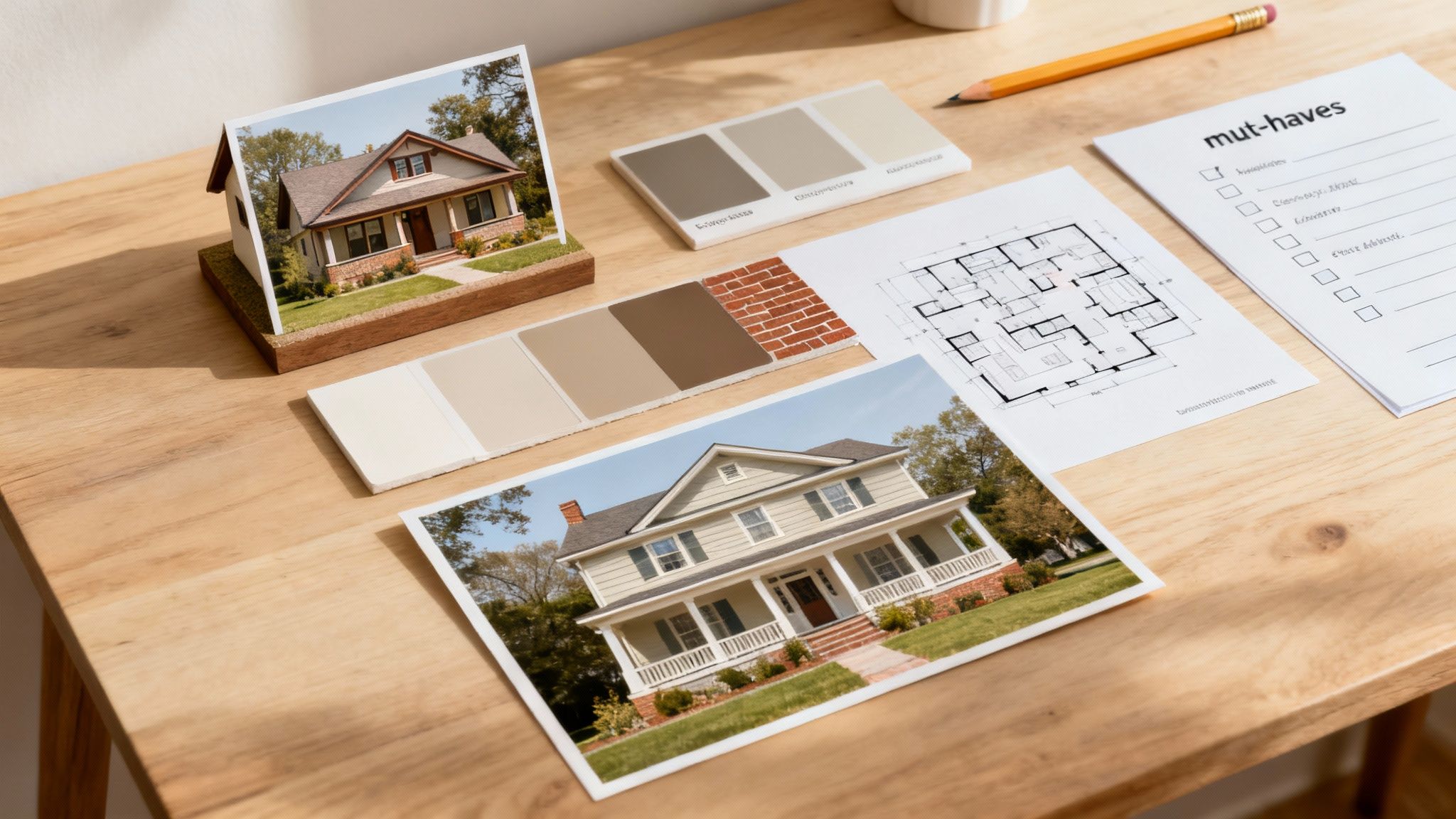
In Oklahoma, "traditional" encompasses a rich variety of architectural styles. The key is to select one that resonates with you and adapt it for contemporary living. You can find inspiration across the state, from the charming Craftsman bungalows in Norman to the stately Colonial Revivals in upscale Edmond neighborhoods.
Here are a few popular styles to consider:
- Modern Farmhouse: Characterized by board-and-batten siding, expansive front porches, and open-concept interiors, this style is ideal for rural properties near towns like Guthrie or Macomb. It delivers rustic charm without sacrificing modern amenities.
- Craftsman: Known for their low-pitched roofs, deep eaves, and sturdy porches supported by tapered columns, these homes exude warmth. The emphasis on natural materials like wood and stone makes them a perfect fit for established communities.
- Colonial Revival: If you appreciate symmetry, gabled roofs, and formal, classic details, this style offers timeless elegance and a sense of distinguished presence.
Once you’ve settled on a style, think about the practicalities. Do you need an open-plan kitchen that flows into the living area for entertaining? Is a private home office essential? Perhaps a flexible in-law suite is on your list. This is where you merge the classic aesthetic with the realities of your daily life.
Separating Must-Haves from Nice-to-Haves
To keep your project on budget, it's vital to prioritize. Create a simple two-column list: one for your "must-haves" and one for your "nice-to-haves." Must-haves are the non-negotiable features your home needs to function for your family. Nice-to-haves are the extras you’d love to include if the budget allows.
Actionable Checklist: Must-Haves vs. Nice-to-Haves
This simple exercise forces you to make critical decisions early on and provides a clear starting point for discussions with your builder. Walking into that first meeting with a traditional home builder Oklahoma trusts, armed with this level of clarity, will save you time, money, and stress. For more guidance on this, explore our custom home design services in Oklahoma.
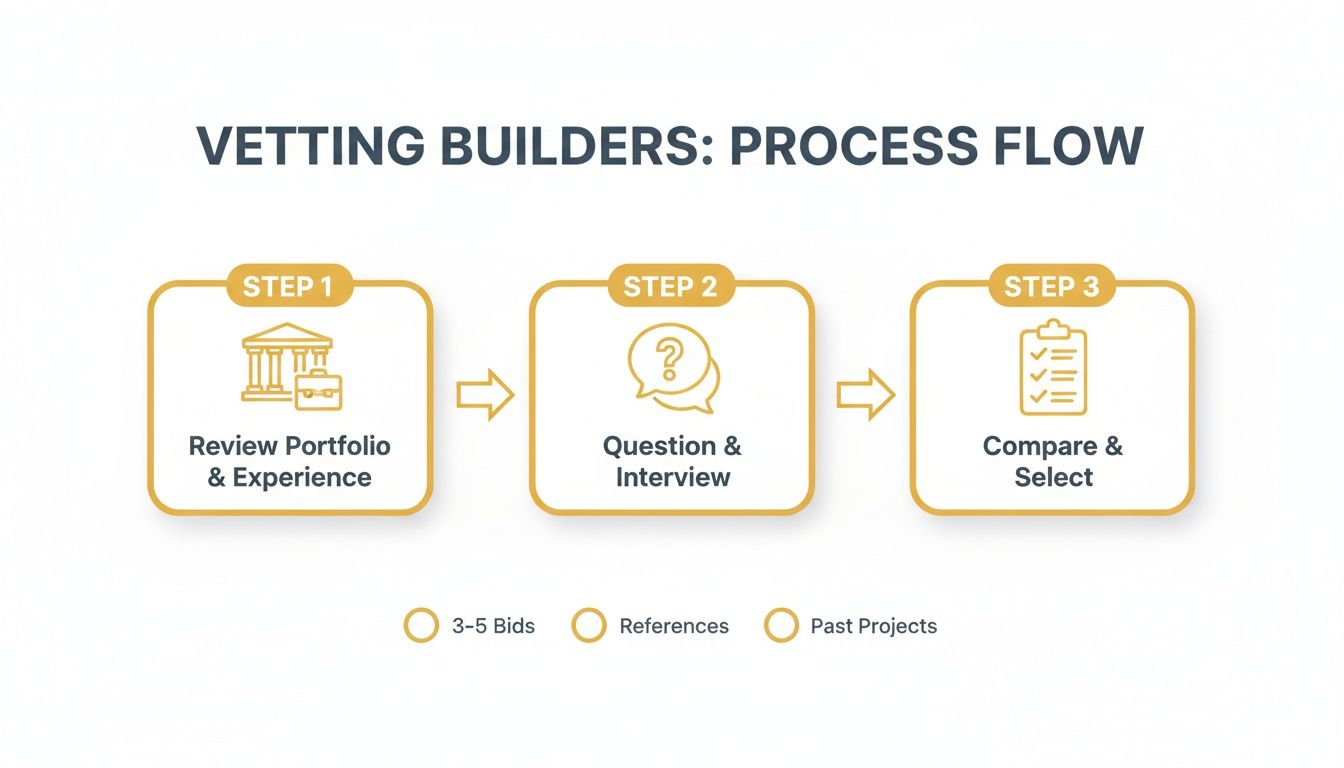
How to Properly Vet Oklahoma Home Builders
Imagine the relief of partnering with a builder who anticipates your needs and communicates transparently, versus the constant anxiety of wondering if your project is on track. Choosing your builder is the most critical decision in your home-building journey. With over 3,500 home building businesses in Oklahoma, according to the state of Oklahoma's home building industry reports, a thorough vetting process is not just recommended—it's essential.
Step 1: Analyze the Builder’s Portfolio and Experience
Start by examining a builder’s past projects. A portfolio is more than a gallery; it’s a resume of their craftsmanship. Look for consistent quality and a style that aligns with your vision for a traditional home.
Pay attention to the details:
- Craftsmanship: Are paint lines clean? Is trim work precise? Does the masonry look expertly executed?
- Authenticity: If you see mostly digital renderings, ask for photos of the completed homes to see how well they translate vision into reality.
Verify their experience in your specific area. Building on a flat lot in Deer Creek is vastly different from constructing on a sloped, wooded property near Shawnee.
Ask targeted questions:
- Have you built in my city or county before?
- Are you familiar with the local soil conditions and their impact on foundations?
- What is your working relationship with the local permitting office?
A builder with deep local experience will anticipate challenges and navigate municipal requirements smoothly.
Step 2: Go Beyond Hand-Picked References
Every builder will provide a list of happy clients. While you should call them, you must also seek out unbiased feedback to get the full picture.
Actionable Tip: Ask the builder for the contact information of a client whose project faced unexpected challenges, such as a supply chain delay or a subcontractor issue. How a builder handles adversity reveals their true character and problem-solving skills.
When speaking with references, ask revealing questions:
- How proactive was the builder’s communication?
- Were there budget or schedule overruns? If so, how were they addressed?
- How did they manage change orders or unexpected problems?
- What has their post-move-in warranty service been like?
As one of our clients stated in a Google review, "Their constant communication and attention to detail were amazing." This is the kind of feedback you're looking for, born from a refined process developed over 15+ years. Our article on the role of a custom home builder offers more insight into what to expect.
Step 3: Use a Builder Evaluation Checklist
A gut feeling is important, but a decision this significant requires objective data. A simple comparison table can help you score builders logically and remove emotion from the equation.
Builder Evaluation Checklist
This methodical approach ensures you select a builder who not only delivers a beautiful home but also serves as a reliable partner throughout the entire process.
Decoding the Budget for Your Oklahoma Custom Home
"What is this actually going to cost?" It's the question that keeps soon-to-be homeowners up at night. A realistic, detailed budget is the bedrock of a successful build. When you first meet with a traditional home builder in Oklahoma, it's easy to get fixated on a misleading price-per-square-foot figure. A true budget, however, is a transparent roadmap that accounts for every detail, from land prep to final fixtures.
Understanding the true cost of building in Oklahoma means looking beyond national averages. Local factors, such as the expansive clay soils common in areas like Moore and Norman, necessitate an engineered foundation—a critical upfront investment that protects your home’s structural integrity for decades.
Breaking Down the Core Costs
While every custom home budget is unique, the cost categories are consistent. Knowing these helps demystify the numbers and empowers you to make informed decisions.
According to a recent breakdown of Oklahoma home building cost factors, the cost to build a typical custom home (excluding land) can range from $250,000 to $450,000, with materials averaging around $50 per square foot.
Here’s a look at the main cost centers in a typical bid:
- Land Preparation: This includes clearing trees, grading the lot for proper drainage, and running utilities, especially for rural sites in places like Macomb or Chickasha.
- Foundation: Due to Oklahoma's soil, this often requires a post-tension slab or other engineered solution, which is more robust than a standard slab.
- Framing & Exterior Finishes: This is the home’s skeleton and skin, covering lumber, roofing, windows, doors, and exterior materials like brick or stone.
- Interior Systems & Finishes: This is a major category that includes electrical, plumbing, HVAC, insulation, drywall, paint, flooring, cabinets, countertops, and fixtures.
- Permits & Fees: These are administrative costs for architectural plans, engineering reports, and local building permits.
Understanding Contract Types
The contract you sign dictates how costs are managed. The two most common types are Fixed-Price and Cost-Plus.
"We prefer a transparent approach," says Bono of ACET Custom Homes. "Our clients see every invoice and know exactly where their money is going. It builds a partnership based on trust, not just a contract."
Where to Splurge and Where to Save
Smart budgeting is about maximizing long-term value. Some upfront investments save you money over time, while some short-term savings can lead to future expenses. Our guide to luxury home construction costs delves deeper into this topic.
Smart Splurges (High ROI):
- Energy-Efficient Windows & Insulation: In Oklahoma's climate, high-performance windows and superior insulation will significantly reduce your utility bills for years to come.
- Engineered Foundation: Never compromise on your foundation. The cost of future repairs far outweighs the initial investment in a properly engineered slab.
- Durable Exterior Materials: Opt for low-maintenance materials like brick or high-grade siding that can withstand Oklahoma's harsh weather.
Areas to Save (Easy to Upgrade Later):
- Cosmetic Finishes: You can always upgrade light fixtures, faucets, and cabinet hardware down the road.
- Elaborate Landscaping: Focus on essential grading and a basic lawn first. You can add extensive gardens and outdoor features in phases over the years.
Navigating Oklahoma’s Unique Building Environment
Building a home in Oklahoma presents a unique set of challenges that can turn a dream into a disaster if your builder isn't prepared. From our notoriously expansive clay soil to our extreme weather, a deep, practical understanding of local conditions is non-negotiable. Your home’s longevity and safety depend on getting these details right from the start.
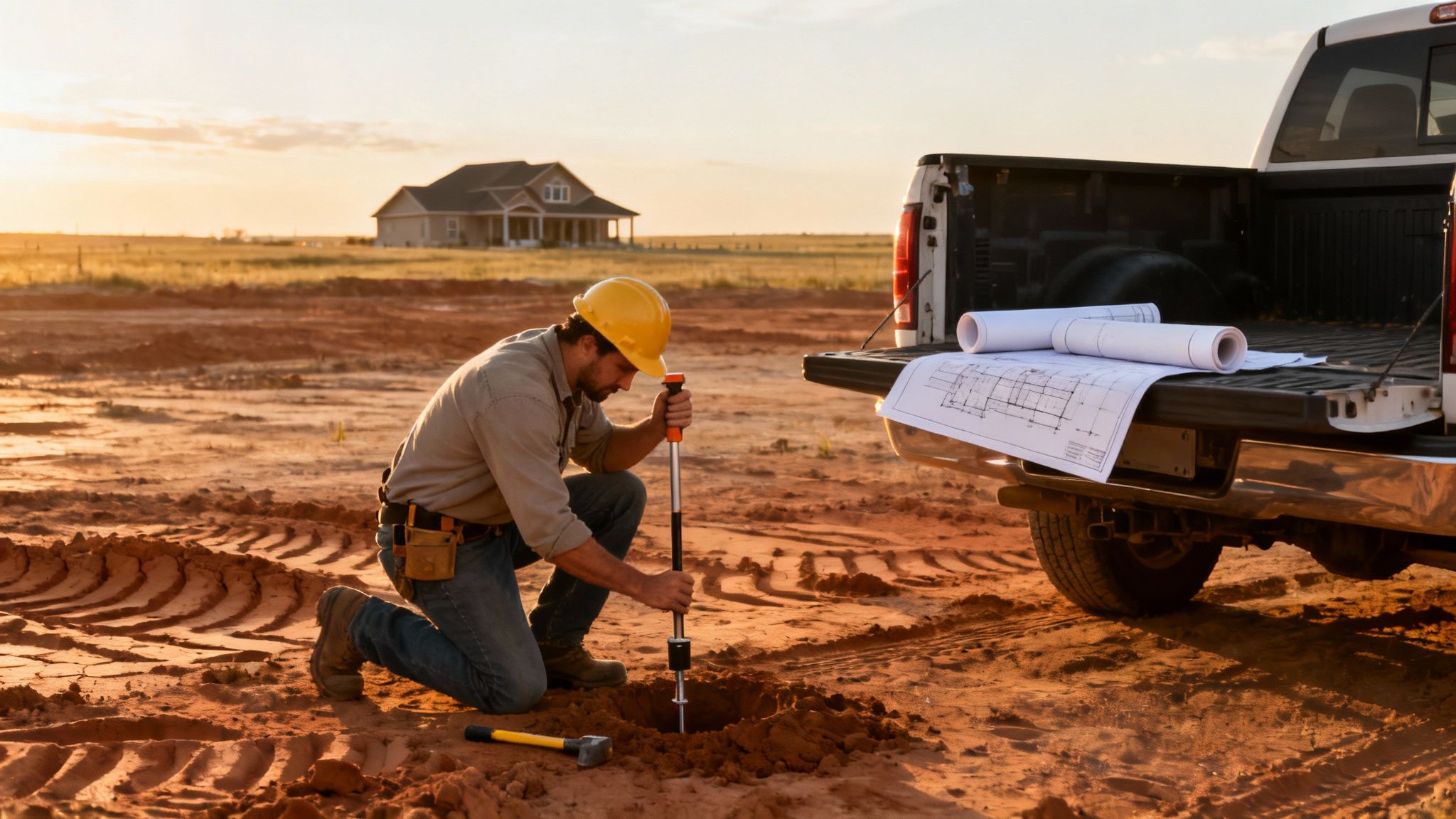
The battle begins with the ground beneath your feet. Central Oklahoma, from Norman up through OKC and Deer Creek, is known for its highly reactive red clay soil. This soil swells significantly with moisture and shrinks dramatically when dry, creating powerful forces that can crack and shift a standard foundation. This is why a professional soil test is the mandatory first step for any reputable traditional home builder in Oklahoma.
Building on a Solid Foundation
Once we understand the soil composition, a structural engineer can design a foundation specifically for your lot. In many parts of our state, the optimal solution is a post-tension slab. This advanced foundation involves a grid of high-strength steel cables that are tensioned after the concrete cures. This process creates immense internal strength, allowing the foundation to resist the soil's movement and prevent future structural damage.
A client building in Shawnee once told us, "My last home had foundation issues, and it was a constant source of stress. Knowing you guys started with soil tests and an engineered slab gave me peace of mind from the very beginning." That's the standard every homeowner should expect.
Designing for Oklahoma Weather
Your home must be a fortress against Oklahoma’s weather extremes. This means creating a high-performance building envelope—the integrated system of your roof, walls, windows, and foundation—that can withstand scorching heat, severe thunderstorms, and high winds.
Your builder must prioritize these critical components:
- Superior Insulation: High-R-value insulation, professionally installed to eliminate gaps, is your primary defense against energy loss.
- Energy-Efficient Windows: Modern double or triple-pane windows with a low-E coating are essential for reflecting summer sun and retaining winter heat.
- Resilient Exterior Materials: Choose materials like brick, stone, or high-quality fiber cement siding that can endure hail and wind-driven rain.
- Impact-Resistant Roofing: A high-impact-rated roofing material can be the difference between a minor repair and a major insurance claim after the next hailstorm.
A builder with local expertise plans for these factors during the design phase. For more on durable building practices, you can consult resources from the National Association of Home Builders (NAHB).
Navigating Local Permitting and Site Work
The permitting process varies significantly across Oklahoma. Navigating the requirements in Oklahoma City is different from dealing with rural regulations in Macomb or Elmore City. A builder with 15+ years of experience across the region understands these nuances, knows the local officials, and can manage timelines effectively.
A thorough site evaluation is the final piece of the puzzle. It goes beyond soil testing to analyze drainage, identify potential grading issues, and map utility connections. Proper site preparation ensures water flows away from your foundation, protecting it from the moisture that causes our soil to swell.
Combining Timeless Design with Modern Building Practices
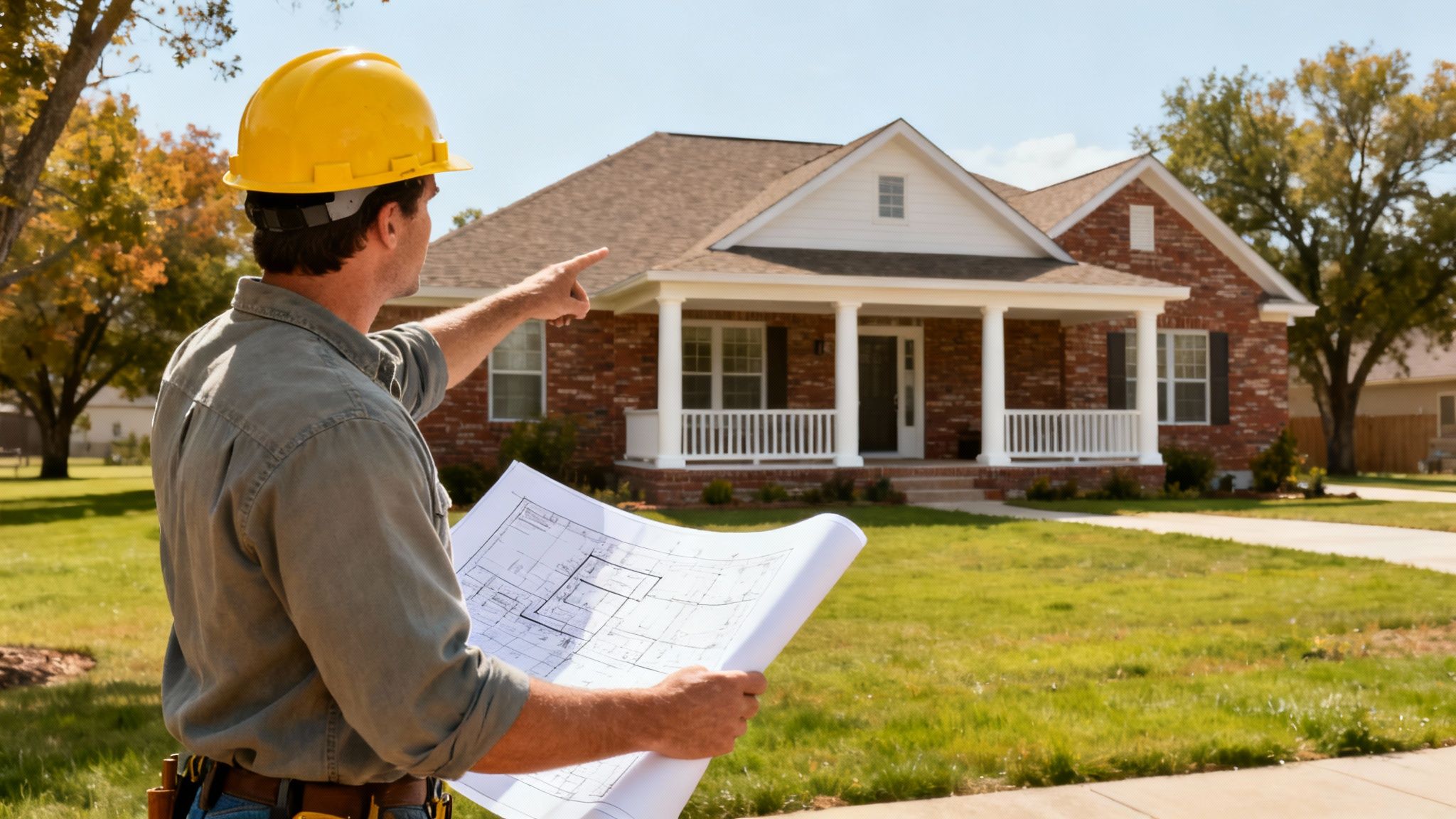
The image of a home builder with a hammer and paper blueprints is timeless, but today’s best traditional home builder in Oklahoma blends that hands-on craftsmanship with powerful modern technology. This fusion of classic design principles and cutting-edge tools results in a home that is not only beautiful but also meticulously planned, highly efficient, and built to last for generations.
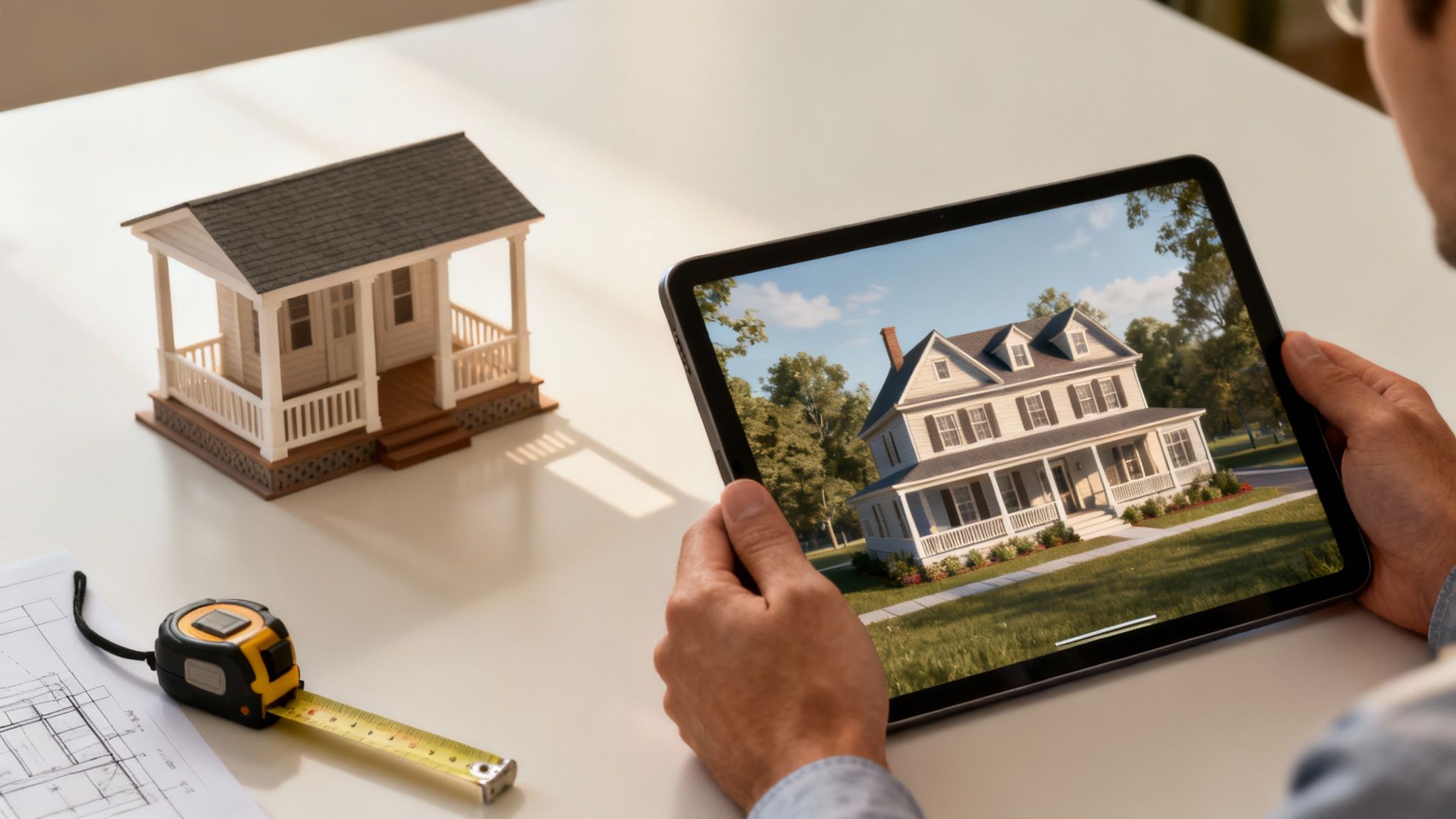
At ACET Custom Homes, we use technology to enhance, not replace, quality craftsmanship. The days of trying to envision a 3D space from a 2D floor plan are over. We can now take you on a virtual tour of your home before the first shovel of dirt is ever moved.
Visualizing Your Dream with 3D Design
3D design software is a game-changer for our clients. It transforms abstract lines on a page into a photorealistic, immersive experience.
This technology empowers you to:
- Feel the Flow: Walk virtually from room to room to experience the layout. You’ll know instantly if a hallway feels too narrow or an island is too large.
- Test Finishes: Experiment with different flooring, paint colors, and cabinet styles in real-time to find the perfect combination.
- Perfect the Lighting: See how natural light will fill a room at various times of day, ensuring your home feels bright and welcoming.
Making these crucial decisions in a virtual environment eliminates guesswork and helps prevent expensive change orders down the road.
Engineering Plans for Modern Demands
Behind every beautiful design is a rock-solid structural plan. We rely on structurally engineered floor plans to ensure every home meets the highest standards of safety and resilience, which is especially important given Oklahoma’s challenging soil and weather conditions. An engineered plan is the unseen framework that allows for stunning open-concept layouts and expansive windows without compromising strength.
"Every plan we build, whether it's from our library or a full custom design, goes through a structural engineering review," says Bono. "It's a non-negotiable step that gives our clients peace of mind. They know their beautiful home is also built incredibly strong."
Integrating High-Performance Systems
A truly modern home performs as beautifully as it looks. We integrate high-performance systems that enhance comfort, improve indoor air quality, and reduce operating costs. As noted in the latest Oklahoma construction updates and trends for 2025, energy efficiency and long-term value are top priorities for today's homeowners.
Key systems we incorporate include:
- Advanced HVAC: High-efficiency, multi-zone systems provide precise climate control and lower energy bills.
- Superior Air Quality: Energy Recovery Ventilators (ERVs) supply a constant flow of fresh, filtered air without wasting energy, which is ideal for allergy sufferers.
- Smart Home Integration: We build in the necessary infrastructure for seamless integration of smart lighting, security systems, and climate control, future-proofing your home.
By marrying timeless style with modern building science, we deliver a home that honors tradition while embracing the best of contemporary living.
Frequently Asked Questions (FAQ)
How long does it take to build a custom home in Oklahoma?
Realistically, you should plan for the entire process to take between 10 to 16 months. This includes 2-4 months for the pre-construction phase (design, selections, permits) and 8-12 months for the actual construction. Oklahoma weather can cause delays, so a good builder will incorporate flexibility into the schedule.
Can I get financing to build on my own lot?
Yes, this is very common. You will need a construction loan, which is a short-term loan that funds the build in stages, or "draws." Once the home is complete, this loan is typically converted into a standard, long-term mortgage. We can connect you with trusted local lenders who specialize in these loans.
What is the difference between a custom builder and a production builder?
The primary difference is flexibility. A production builder typically works in a subdivision with a limited set of floor plans and finishes. A true custom builder, like ACET Custom Homes, builds on your land and offers unlimited customization, whether you modify an existing plan or design a home from scratch.
What kind of warranty should I expect from a builder?
A comprehensive builder’s warranty is essential and should include three parts: a one-year workmanship warranty for finishes, a two-year systems warranty for plumbing, electrical, and HVAC, and a ten-year structural warranty for the foundation and frame. Always review the warranty documents before signing a contract.
Ready to design your custom home? Schedule a free consultation with ACET Custom Homes today.
Book Your Project Consultation