.png)
Your Definitive Guide to a Custom Home Builder Oklahoma City
Have you ever walked through a house and thought, "This is nice, but I'd change that, and that, and that..."? That feeling of settling for almost perfect is exactly why people choose to build a custom home. It’s the dream of a space that isn't just a structure, but a true reflection of your family's life and style. For those considering a custom home builder Oklahoma City, the journey from a simple idea to a front door you can unlock is more achievable than you might think.
Imagine a kitchen designed for how you cook, a living room that perfectly fits your family gatherings, and a master suite that’s your personal sanctuary. This isn't about compromise; it's about creation. With the right builder as your partner, that dream home in OKC is within reach.
Your Dream Home, Built Your Way
The idea of building a custom home from the ground up can feel intimidating. Visions of endless decisions, surprise costs, and complicated logistics can quickly turn excitement into anxiety. But it doesn’t have to be that way. The secret is finding a builder who brings a clear, proven process to the table. This is where a true luxury home builder in Oklahoma City stands apart from production builders who offer a limited menu of options. A custom builder starts with your unique vision.
Think of it as a partnership. You provide the inspiration for how you want to live, and a builder like ACET Custom Homes brings over 15 years of hands-on expertise to translate that vision into architectural plans, navigate local building codes, and manage every construction detail with precision.
The Oklahoma City Custom Home Building Process at a Glance
So, what does this journey actually involve? Building a custom house in OKC follows a structured path designed to move your project from concept to completion without the chaos. After more than 15 years of building Oklahoma custom homes—from metro suburbs like Edmond and Deer Creek to rural properties in Macomb and Guthrie—we’ve refined this process to be predictable and transparent.
Here's a step-by-step breakdown of the major milestones you can expect.
This structured approach eliminates guesswork and keeps you informed and in control.
The Oklahoma City construction scene is dynamic. After a market slowdown in 2022-2023, building permits for single-family homes have seen a steady rebound. Local reports show that typical project costs in the OKC metro range from $150 to over $250 per square foot, heavily dependent on design complexity and finish selections. You can explore these housing market trends from the Federal Reserve.
Ultimately, choosing to build a custom home is an investment in a lifestyle perfectly tailored to you. With a clear roadmap and an experienced team, the process transforms from a daunting project into an exciting adventure.
Understanding the Cost to Build a Custom Home in OKC
Let’s tackle the biggest question head-on: "What will my dream home actually cost?" It’s the number one concern for anyone looking to build, and the answer is more complex than a simple price-per-square-foot. A transparent custom home builder in Oklahoma City will demystify the budget, breaking down every cost so you feel empowered, not overwhelmed.
That knot of anxiety you feel when thinking about the budget is completely normal. The solution is clarity. By understanding the core cost components from the start—whether you're buying a lot in Edmond or prepping rural land in Shawnee—you gain the power to make informed decisions that align your vision with your finances.
The Core Components of Your Custom Home Budget
A custom home budget isn’t a guess; it's a detailed financial plan. A great builder guides you through each category.
- Land Acquisition: This is your foundation. Land prices vary dramatically based on location, size, and readiness for building, from a developed Deer Creek lot to a spacious rural parcel.
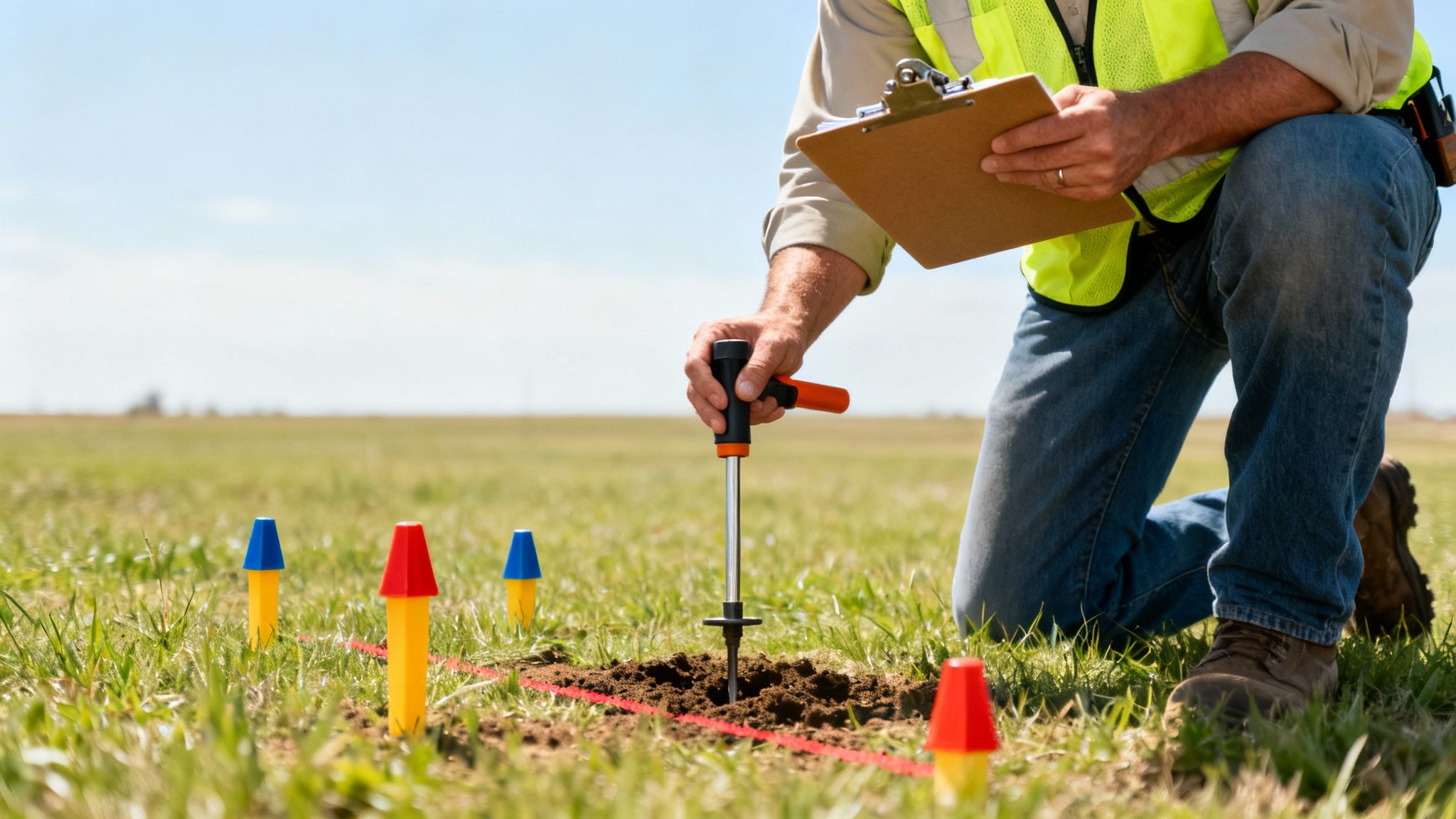
- Site Preparation: Oklahoma's unique terrain presents specific challenges. This phase includes clearing trees, grading for drainage, and connecting utilities. Actionable Step: Insist on a professional soil test. It's non-negotiable and dictates the required foundation engineering, preventing costly future repairs.
- Architectural & Design Fees: This covers the expertise needed to transform your ideas into buildable blueprints. Investing in smart design upfront ensures your home is both beautiful and functional.
- Permits & Fees: Each municipality, from Norman to Moore, has its own set of building codes and permit fees. Your builder manages the paperwork, but the fees are part of your budget.
- Construction Costs (Hard Costs): This is the largest portion of your investment. It covers all labor and materials—from the foundation's concrete and the frame's lumber to the roof's shingles and the windows you’ll look through.
With over 15 years of building across Oklahoma, we at ACET Custom Homes have learned that meticulous upfront planning is the key to a smooth project. A comprehensive site evaluation can save thousands in unforeseen foundation costs by eliminating surprises.
How Your Choices Drive the Final Price
This is where you have the most control. For 2024–2025, baseline construction costs for an Oklahoma custom home in the OKC metro generally range from $150 to $250 per square foot. High-end luxury builds can easily exceed $300 per square foot. What creates this wide range? Your material and finish selections.
Consider this practical example: a 2,500-square-foot home at $200 per square foot has a base construction cost of $500,000 (before land or site prep). Increasing that to $220 per square foot due to premium selections adds $50,000 to the total. Small choices add up quickly.
This is why understanding your financing early is critical. Construction loans operate differently than traditional mortgages, releasing funds in stages. Get a clear overview by reading our guide on how Oklahoma construction loans work.
Cost Breakdown Comparison: Standard vs. Premium Finishes
This table provides a real-world look at how different material choices can impact the budget for a hypothetical 2,500 sq. ft. home in the Oklahoma City area.
The difference is substantial. Working with a builder committed to transparency allows you to navigate these decisions with confidence, ensuring your final home perfectly balances your dreams and your budget.
Your Step-by-Step Design and Build Roadmap
Building a custom home can feel like assembling a 10,000-piece puzzle without the box top. You know the beautiful final picture you want, but the process of fitting every piece together seems overwhelming.
This roadmap is your guide. We've broken down the entire journey into a clear, predictable path, turning a complex process into a series of manageable steps. You’ll know what’s happening, what decisions to make, and when, as your vision steadily becomes reality.
Stage 1: Initial Vision and Consultation
Everything begins with a conversation. This is your opportunity to share your inspiration—your Pinterest boards, your must-have list, and your budget goals. An experienced custom home builder in Oklahoma City doesn't just build; they listen intently to understand your lifestyle and what "home" truly means to you.
This is a collaborative discovery process. We'll discuss everything from your desired layout to the overall atmosphere you want to create. We'll also have a frank conversation about budget to ensure your financial plan and your dream home are aligned from day one. This stage sets the compass for the entire project.
Stage 2: Site Evaluation and Architectural Design
With a clear vision established, we move on to two critical, parallel paths: analyzing your land and creating your blueprints.
Site EvaluationEvery piece of land has a unique story. Whether it’s a sprawling lot in rural Macomb or a prime plot in an Edmond subdivision, we conduct a thorough evaluation to understand its characteristics:
- Topography and Drainage: How the land slopes and directs water.
- Soil Conditions: Crucial in Oklahoma for engineering the correct foundation.
- Utility Access: Locating water, sewer/septic, electricity, and gas connections.
- Zoning and Setbacks: Understanding local rules for where and how you can build.
Architectural DesignSimultaneously, our design team begins translating your ideas into architectural plans. Modern tools like 3D design visualization are a game-changer here. You can virtually tour your future home, see how light will fill the kitchen, and adjust the layout before any ground is broken. This iterative process ensures the final blueprints perfectly match your vision.
An experienced builder knows that design and land are inseparable. A home plan must be tailored to its specific site to feel truly integrated with its surroundings.
Stage 3: Selections, Budgeting, and Permitting
With the architectural design finalized, the creative details come to life. The selections phase is where you choose everything that will go into your home, from major components to the smallest finishes.
Your actionable checklist for this stage includes:
- Exterior Materials: Brick, stone, siding, roofing.
- Interior Finishes: Flooring, cabinetry, countertops, paint colors.
- Fixtures: Lighting, plumbing hardware, appliances.
As you make these choices, we update the budget in real-time, providing a detailed, transparent cost breakdown. No surprises. While you focus on selections, our team handles the permitting process, submitting the plans to local authorities in cities like Norman or Chickasha to secure all necessary building permits.
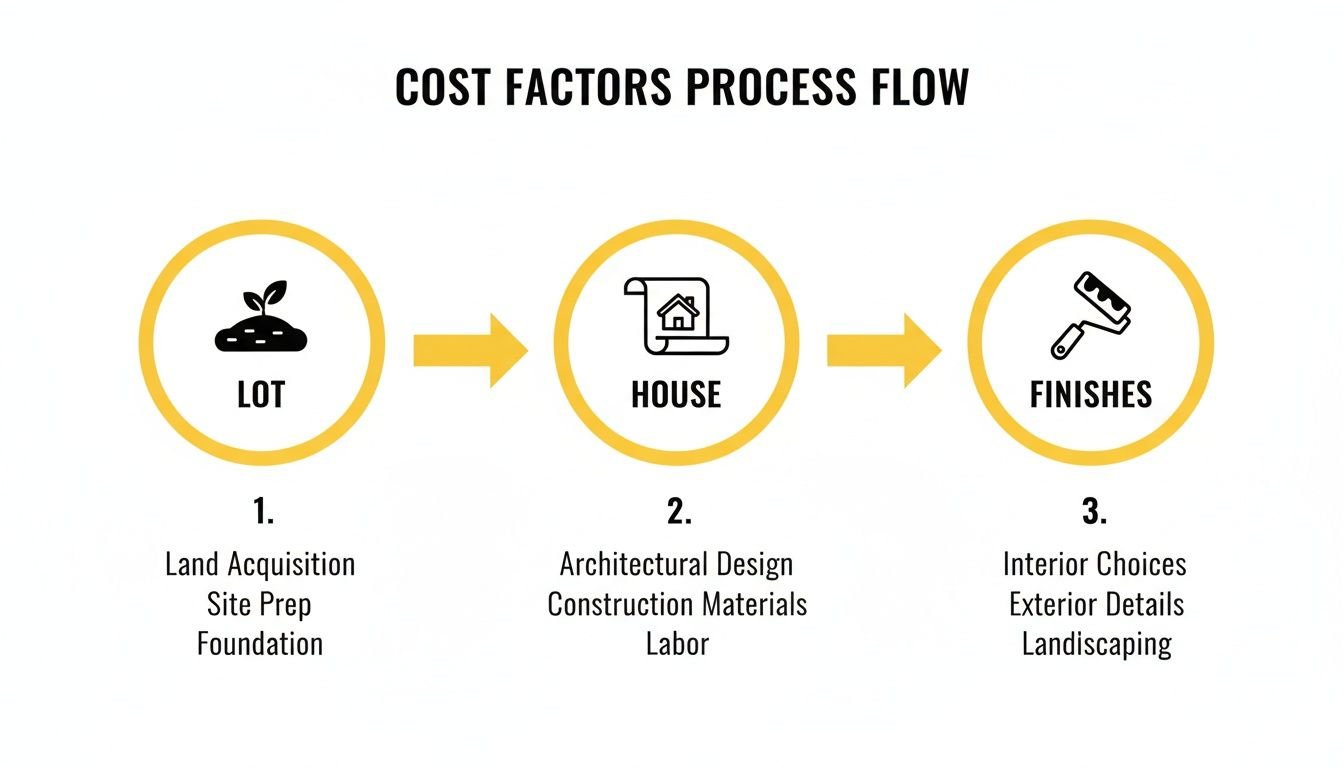
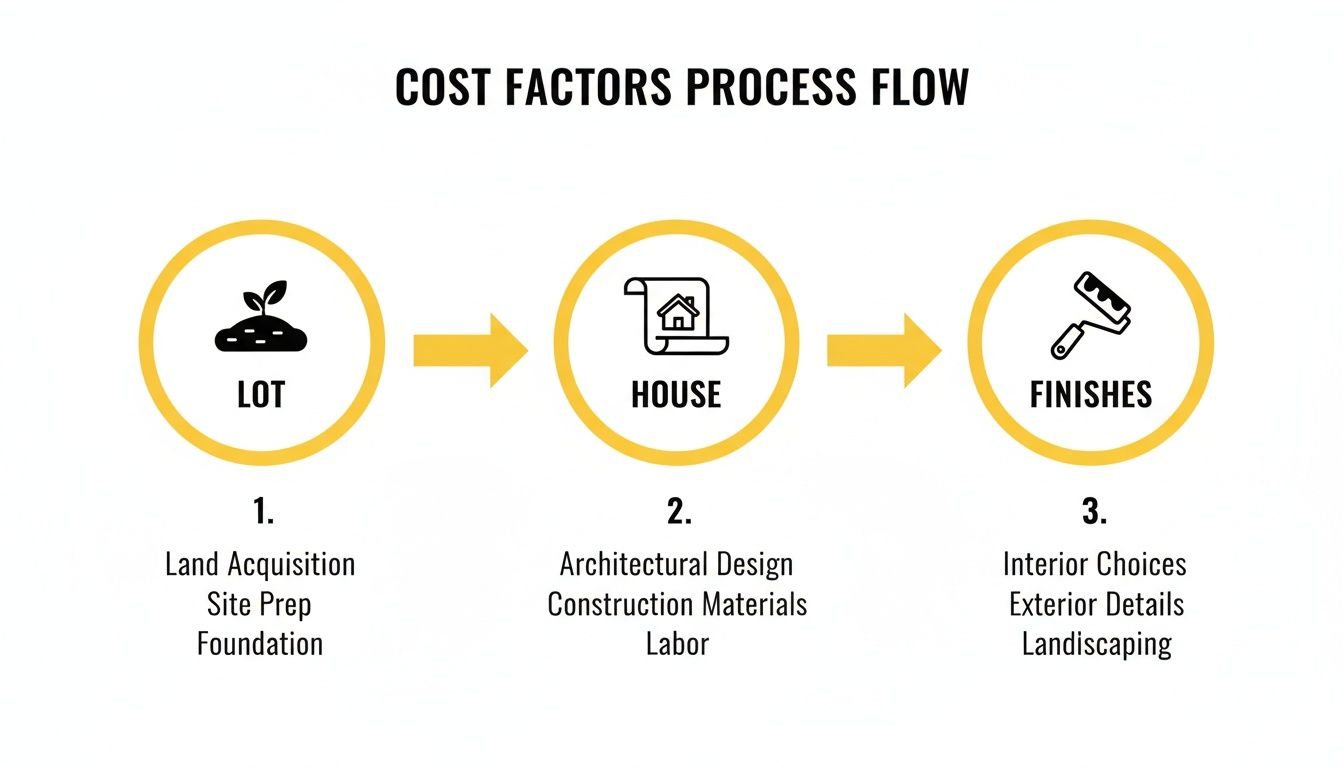
The graphic below illustrates the main cost drivers in any custom home project.
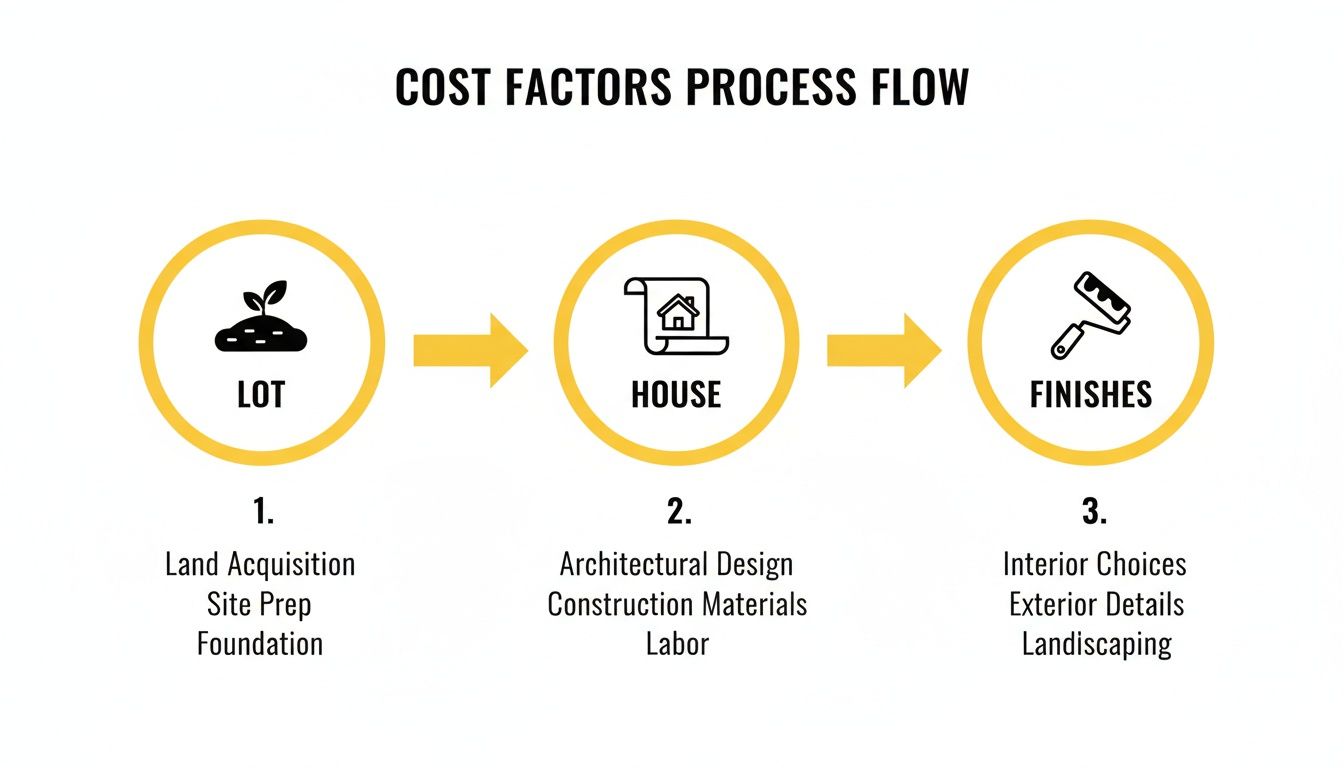
As you can see, the lot, the structure, and the level of finishes are the three pillars of your total project cost.
Stage 4: Construction and Final Walk-Through
With permits secured, we break ground. This is the longest phase, but it's also the most rewarding as you watch your home take shape.
A dedicated project manager oversees every step, from pouring the foundation and framing the walls to installing the final fixtures. We provide regular updates to keep you informed. For a more detailed look at this stage, explore our complete guide on the timeline for building a home.
The final step is the walk-through. We tour the completed home with you, using a detailed punch list to identify any detail needing perfection. We only hand over the keys when you are 100% satisfied. This meticulous check ensures the home we deliver is the one you dreamed of.
Navigating Oklahoma Land and Building Codes
The true foundation of your dream home isn't just concrete—it's the Oklahoma soil it rests on. You might fall in love with a lot for its stunning view in a rural town like Macomb or its quiet location in a Moore cul-de-sac. But ignoring what’s happening beneath the surface is a critical mistake that can lead to decades of problems.
A thorough site evaluation isn't just a preliminary step; it's one of the most vital investments in your home's longevity. As a custom home builder in Oklahoma City, we understand our local terrain intimately. Much of the state is dominated by expansive clay soil, which acts like a sponge. It swells with moisture during spring rains and shrinks dramatically in our hot, dry summers. This constant movement exerts immense pressure on a foundation, leading to cracks, shifting, and major structural issues.
From Soil Tests to Solid Foundations
This is why a professional soil test by a geotechnical engineer is our mandatory first step. An experienced builder won't discuss foundation types without this data. The report provides the engineering specifications needed to design a foundation that ensures your home's stability for a lifetime.
With 15+ years of build experience across Oklahoma, we’ve seen firsthand how an engineered foundation makes all the difference. While a standard slab may suffice elsewhere, conditions from Edmond to Elmore City often demand a more robust solution.
- Actionable Insight: For Oklahoma's tricky soil, insist on a Post-Tension Slab. We embed a grid of steel cables within the concrete form. After the concrete cures, we hydraulically tighten the cables, creating powerful internal compression. This makes the foundation incredibly strong and resistant to soil movement.
- Alternative Solution: For lots with severe soil movement or steep slopes, a Pier and Beam Foundation is often the best choice. It elevates the house, creating a crawl space and preventing direct contact with the volatile soil.
Proper drainage is equally crucial. We grade the land to ensure water flows away from your home, protecting the foundation’s integrity for the long term.
Red Flags to Watch for When Assessing a Lot
When looking at land, it’s easy to get caught up in the dream and overlook potential problems. Use this checklist to protect your investment:
- Poor Drainage: Do you see standing water or marshy areas? This could indicate a high water table or drainage issues that are expensive to remediate.
- Extreme Slopes: A steep hill may offer great views, but it will significantly increase site prep and foundation costs.
- Utility Access: Action Step: Confirm the exact location of water, sewer, and electrical connections. In rural areas like Guthrie or Chickasha, extending utilities can add tens of thousands to your budget.
- Deed Restrictions: Always check for covenants or deed restrictions. They can dictate the size, style, and even the placement of your home.
Navigating land selection is a core part of what a build-on-your-lot expert does. For a deeper dive, review our guide on the build on your lot process in Oklahoma.
Demystifying Local Building Codes and Permits
Once the land and foundation are planned, we tackle the permits. Every municipality, from OKC to the smallest towns, has its own building codes and inspection schedules. These aren't just bureaucratic hurdles; they are safety standards that ensure your home is structurally sound.
An established local builder has existing relationships with planning departments. We know their specific requirements, how to submit plans correctly the first time, and how to schedule inspections to keep your project moving smoothly, preventing costly delays.
How to Choose the Right Custom Home Builder
Of all the decisions you'll make, this is the most critical. Your choice of builder will define your entire home-building experience. It’s natural to feel anxious about picking the wrong partner—one who doesn’t understand your vision, mismanages the budget, or compromises on quality.
This isn’t about finding the cheapest bid; it's about finding a true partner for a life-changing investment. You are entrusting them with your dream and your finances. The right builder transforms a stressful process into an exciting collaboration, ensuring the home you move into is precisely the one you envisioned.
Essential Questions for Every Potential Builder
Before signing any contract, conduct a thorough interview with any builder you're considering. Their answers will reveal their process, transparency, and professionalism.
Use this checklist during your meeting:
- Process & Communication: "How will you keep us updated on progress, budget, and challenges? Do you use a project management app or schedule regular meetings?"
- Design & Selections: "What does your design and selection process entail? Do you provide an in-house designer to guide us through choosing finishes?"
- Subcontractor Relationships: "How long have you worked with your primary trade partners (framers, electricians, plumbers)? Are they all licensed and insured?"
- Budgeting & Change Orders: "How do you handle changes or unexpected costs? What is your process for documenting and approving change orders?"
- Warranty & Service: "What type of warranty do you offer, and what does it cover? How do you handle service requests after we move in?"
A confident, organized builder will provide clear, direct answers. Vague replies or a dismissive attitude are major red flags.
At ACET Custom Homes, we build on a foundation of total transparency. Our clients get access to a dedicated online portal to see real-time progress photos, track the budget, and approve selections—all in one place.
Key Red Flags to Watch Out For
Knowing the warning signs is just as important as asking the right questions. A suspiciously low price often hides much larger problems.
Top Red Flags:
- Vague Contracts: Your contract should be highly detailed, specifying everything from window brands to insulation types. A brief, general contract is a deal-breaker.
- High-Pressure Tactics: A professional will give you ample time to review their proposal and check references. Avoid anyone who pressures you to sign immediately.
- Lack of Verifiable References: A proud builder will happily connect you with past clients. Hesitation or providing only one or two names is a bad sign.
- No Physical or Online Presence: A legitimate business will have a professional website and a physical office. A builder working from a truck may not be around to honor their warranty.
The Oklahoma City construction market is evolving. A projected slowdown in multi-family projects by mid-2025 could affect the availability of skilled trades for single-family homes. In this environment, a builder's project management skills and strong subcontractor relationships are crucial to keeping your project on schedule. Learn more from the 2025 Oklahoma City forecast.
Choosing the right custom home builder in Oklahoma City is about selecting a guide with the experience, systems, and integrity to lead you on this journey. Your due diligence now will pay dividends for decades.
Common Questions About Building a Custom Home in OKC
Embarking on a custom home build is an exciting journey, but it’s one that naturally comes with a lot of questions. This is a significant investment of your time, money, and emotion, and you deserve clear, honest answers. Having built homes across the Oklahoma City area for years, we’ve heard nearly every question imaginable.
Here are the answers to some of the most common questions we receive from clients, whether they are building in a busy Edmond neighborhood or on a quiet piece of land in Elmore City. Our goal is to provide the practical information you need to move forward with confidence.
How Long Does It Take to Build a Custom Home in Oklahoma City?
This is usually the first question people ask. A realistic timeline, from our initial conversation to handing you the keys, is typically 12 to 18 months for a custom home in the OKC metro.
Here’s a step-by-step breakdown of that timeline:
- Design & Planning (3–5 months): This is the intensive creative phase where we finalize architectural designs, select every material, and solidify the budget.
- Permitting & Site Prep (1–2 months): We submit plans for city approval while simultaneously preparing your land for construction—clearing, grading, and installing utilities.
- Construction (8–12 months): This is the longest phase, where you see your home come to life, from foundation to framing to the final detailed finishes.
Factors like design complexity and Oklahoma's unpredictable weather can affect the timeline. A builder with a robust project management system is essential for maintaining a realistic and transparent schedule.
What Is the Average Cost Per Square Foot in Edmond?
Cost per square foot is a helpful starting point, but it's never a fixed number. For highly desirable areas like Edmond and Deer Creek, the starting point for a true custom home is around $175 per square foot, but this can easily surpass $300 per square foot for a high-end luxury build.
The three key factors that drive this cost are:
- Architectural Complexity: A simple rectangular design is more affordable to build than a home with complex rooflines and numerous corners.
- Site Conditions: A flat, clear lot is ideal. A sloped lot requiring extensive earthwork or a specialized foundation will increase site preparation costs.
- Level of Finishes: This is the biggest variable. Your choices in appliances, custom cabinetry, flooring, and countertops significantly impact the final price.
Can I Use My Own Architect or Floor Plan?
Yes, absolutely. A flexible builder is a good builder. While ACET Custom Homes offers a full design-build service to streamline the process, we are happy to collaborate with an architect or designer you’ve already selected.
If you bring us a set of plans, our first step is a thorough review. We will develop a detailed construction estimate, ensure the design is suitable for your specific lot, and verify that it complies with all local Oklahoma building codes. Our local experience often helps us identify potential issues on paper before they become costly problems in the field.
What Are the Biggest Challenges of Building in Oklahoma?
Every region has unique building challenges. In Oklahoma, our 15+ years of experience have taught us that the two biggest hurdles are our soil and our weather.
Expansive Clay Soil: A significant portion of central Oklahoma has highly reactive clay soil. It swells when wet and shrinks when dry, which can destroy a foundation if it isn't engineered correctly. Actionable Insight: An experienced local builder will always require a professional soil test and recommend the appropriate foundation—often an engineered post-tension slab—to ensure your home's long-term stability.
Severe Weather: Oklahoma's weather demands a higher standard of construction. High winds and heavy rain require specific framing techniques, reinforced roof systems, and impact-resistant materials to ensure your home is a safe haven. A quality builder doesn't just meet the minimum code; they build to withstand our climate.
Quick-Hit FAQs
How much do custom home builders charge in Oklahoma?Most custom builders use a "cost-plus" model, charging a percentage of the total project cost (typically 15-25%) for their management fee. Others may use a fixed-fee contract. Ensure this is clearly defined in your agreement.
Is it cheaper to buy or build a house in Oklahoma?Initially, building a custom home can cost more than buying an existing one. However, you get a brand-new, energy-efficient home tailored to your needs, with no looming repair or renovation costs. For more data, the National Association of Home Builders (NAHB) is an excellent resource.
Do I need a construction loan to build a custom home?Yes, unless you are paying in cash. A construction loan is different from a standard mortgage, as the bank releases funds in stages (or "draws") as construction milestones are met. We have strong relationships with local lenders specializing in construction financing and can guide you to the right partners.
Ready to design your custom home? Schedule a free consultation with ACET Custom Homes today.
Book Your Project Consultation