.png)
Your Guide to Building Oklahoma Custom Homes
Have you ever walked through a house and thought, "This is nice, but I would've done this differently"? That feeling is exactly why so many families are choosing to build Oklahoma custom homes. It’s the desire to create a space that doesn’t just house your family, but truly fits your life, from a kitchen designed for your chaotic mornings in Edmond to a back porch perfect for watching sunsets over a few acres in Macomb. This isn't just about building a house; it's about building your home, and that dream is more attainable than you might think.
Your Oklahoma Custom Home Journey Starts Here
Making the decision to build a custom home in Oklahoma is an exciting commitment to creating a space that is one-hundred-percent you. From the way sunlight hits the kitchen to the placement of every outlet, you are in control. Think of this guide as your roadmap, designed by builders with over 15 years of experience in Oklahoma, to turn what feels like a massive undertaking into a clear, manageable, and rewarding process.
The dream of a perfect home often starts with questions about cost, but the good news is that Oklahoma's real estate market offers a stable and promising environment for new construction. Reports consistently show a great balance of affordability and building activity, giving buyers in OKC, Moore, and Norman the confidence to invest in a custom project.
This guide will walk you through the entire journey, from that first spark of an idea to the day you get the keys. We’ll cover:
- The Building Process: A phase-by-phase breakdown so you know what to expect.
- Budgeting and Costs: A straight look at the numbers for land, materials, and labor.
- Lot Selection: How to find the perfect piece of Oklahoma land and prepare it for building.
- Local Design: Creating a home that’s beautiful and tough enough for Oklahoma weather.
When you build a custom home, every detail is your decision. You’re in the driver's seat. If you're just starting, it helps to first understand what a custom home truly is. Our goal is to give you the knowledge to build with confidence, ensuring the house you end up with is the home you've always imagined.
The Custom Home Building Process Step-by-Step
Thinking about the custom home building process can feel overwhelming. But in reality, it’s a series of well-defined, manageable steps. Once you see the roadmap, the journey becomes less intimidating and a lot more exciting.
You bring the vision; we bring the expertise. It's a partnership from day one. Every step, from our first conversation to handing you the keys, is designed to build on the last, ensuring the final home is a perfect reflection of you.
This visual guide breaks the journey into its three essential parts: the idea, the plan, and the build.
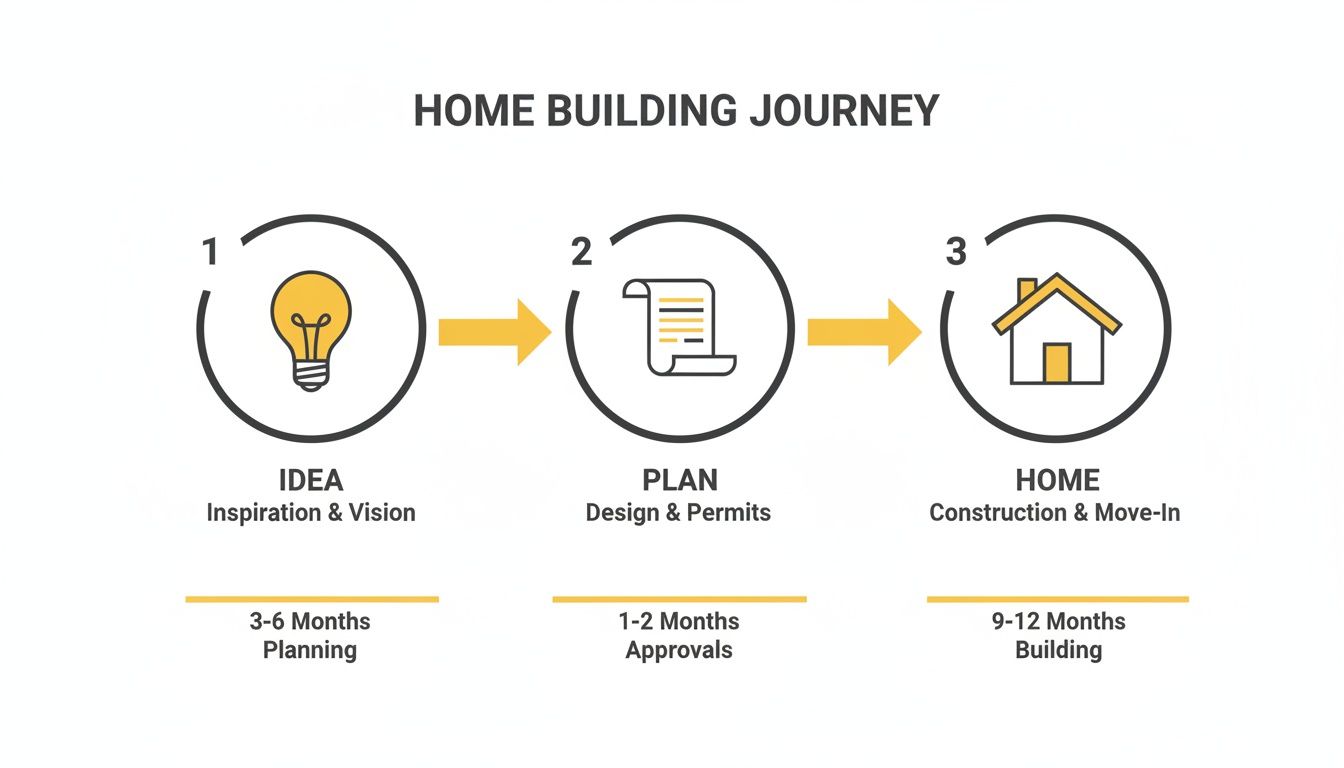
As you can see, a great home doesn't just happen. It starts with a solid vision and a rock-solid plan, which serve as the foundation for everything that follows.
Phase 1: Vision and Design Consultation
This is where your dream starts taking shape, and it’s one of the most critical parts of the process. In this meeting, we sit down and listen. You'll share your dreams, your daily needs, and the absolute "must-haves" for your new home. We’ll talk about everything.
We’ll also have a straightforward conversation about your budget. Aligning on finances from the start means we can design a home that fits your investment without costly surprises later. This first meeting sets the stage for a smooth project.
"A project's success is determined before the first shovel ever hits the ground. Our job in this phase is to translate a client's lifestyle into a blueprint." - Bono, Project Manager at ACET Custom Homes
Phase 2: Lot Selection and Site Preparation
Whether you already own the perfect piece of land or need help finding it, this step is critical. Here in Oklahoma, the land itself dictates how a home is built. The red clay soil in rural Guthrie is a world away from a suburban lot in Moore, directly impacting your foundation needs.
We perform a complete site evaluation, looking closely at:
- Topography and Drainage: We ensure water flows away from your home, not toward it.
- Utility Access: We confirm connections for water, electricity, and septic systems, especially vital for builds in places like Macomb or Elmore City.
- Zoning and Covenants: We ensure your dream home is fully compliant with all local rules.
Correct site prep is non-negotiable. This involves clearing the land, grading it for a level build pad, and ensuring the foundation will be on solid ground.
Phase 3: Architectural Plans and Permitting
With your vision and lot locked in, our design team transforms your ideas into detailed architectural plans. These are the official blueprints for your home. You'll review drafts and provide feedback until every detail feels perfect.
Once you approve the final designs, we handle the paperwork. We manage the complex process of submitting plans to the right city or county offices—whether in OKC, Edmond, or a smaller town like Shawnee—to secure all necessary building permits. This guarantees your home is built to meet or exceed all local codes.
Phase 4: Construction—From Foundation to Framing
Now for the exciting part: seeing your home take shape. Construction begins by pouring the foundation, the base that supports the entire house. Given Oklahoma's expansive clay soils, we often recommend post-tension slab foundations for their superior strength and long-term stability.
Next, the framing goes up, and you can see the skeleton of your home. This is a huge milestone. You can walk through the rooms and get a real feel for the layout. From there, we install plumbing, electrical, and HVAC systems before adding insulation and drywall. For more details, check out our guide on the custom home building process.
Phase 5: Final Finishes and Your Official Walkthrough
The last leg of the journey brings your home's personality to life. This is when flooring, cabinets, countertops, light fixtures, and appliances are installed. Our skilled crews paint walls, set tile, and add the trim work that gives a home its polished character.
Before we hand over the keys, we conduct a meticulous final walkthrough with you. We go room by room, creating a "punch list" of any tiny adjustments needed. We don't consider the job done until you are 100% satisfied. This is the moment your custom house finally becomes your home.
Understanding the Costs of a Custom Home in Oklahoma
Let's get right to the question on everyone's mind: "So, how much is this actually going to cost?" When it comes to building Oklahoma custom homes, the answer isn't a simple price-per-square-foot number. It’s a detailed financial blueprint with several key pieces that form the final budget.
Understanding these components from the start is the best way to build a realistic budget and make smart financial decisions. It helps avoid dreaded surprises and ensures your investment matches your vision, whether you're building in Edmond or Shawnee.
Breaking Down the Primary Cost Drivers
The total cost of your home is the sum of its parts. Think of it like a recipe—the quality and quantity of each ingredient shape the final result.
Here are the main categories for your budget:
- Land Acquisition: The cost of the lot itself, which varies from a suburban plot in Deer Creek to acres in rural Chickasha.
- Site Preparation: A major factor in Oklahoma, this includes clearing, grading, and ensuring proper drainage before pouring concrete.
- Foundation & Framing: The concrete foundation and lumber that create the home's structure.
- Exterior & Interior Finishes: Where your style shines, including siding, flooring, cabinets, countertops, and paint.
- Systems (HVAC, Electrical, Plumbing): The essential guts that keep your home comfortable and functional.
- Permits & Fees: Administrative costs paid to the city or county to ensure your home is built to code.
The Foundation Your Budget is Built On
In Oklahoma, what's under your home is just as important as what's in it. Our state is known for its expansive clay soil, which swells when wet and shrinks when dry. This movement can cause serious structural problems, making your foundation choice a massive financial decision.
For stable soil, a standard slab-on-grade foundation is often budget-friendly. However, in areas with volatile clay, we strongly recommend a post-tension slab. This foundation uses a grid of steel cables tightened after the concrete cures, creating a rigid slab that resists soil movement. It costs more upfront but protects your home from expensive repairs in the future.
"A client once told me, 'I'd rather invest in the foundation now than pay for the problem later.' That's the best advice I can give. A strong foundation is the best insurance policy you can buy for your home." - ACET Custom Homes Google Review
How Your Choices Shape the Final Cost
Every decision you make—from windows to kitchen appliances—impacts the bottom line. Let's look at how standard choices compare to common upgrades and what that means for your home's long-term value.
Key Cost Drivers for Oklahoma Custom Homes
This table breaks down how different selections can influence both your initial budget and your home's lasting worth.
Making smart choices on these big-ticket items is crucial. For a deeper dive into high-end projects, see our guide to luxury home construction costs. Building a custom home is about balancing what you want now with what will serve you best for years to come.
How to Choose the Perfect Lot for Your Home
The piece of land you choose is the single most important decision you'll make—it's the true foundation of your dream home. Picking the right spot for your custom home in Oklahoma is about more than just a great view. It requires a practical, boots-on-the-ground evaluation to ensure your property is build-ready without costly surprises.
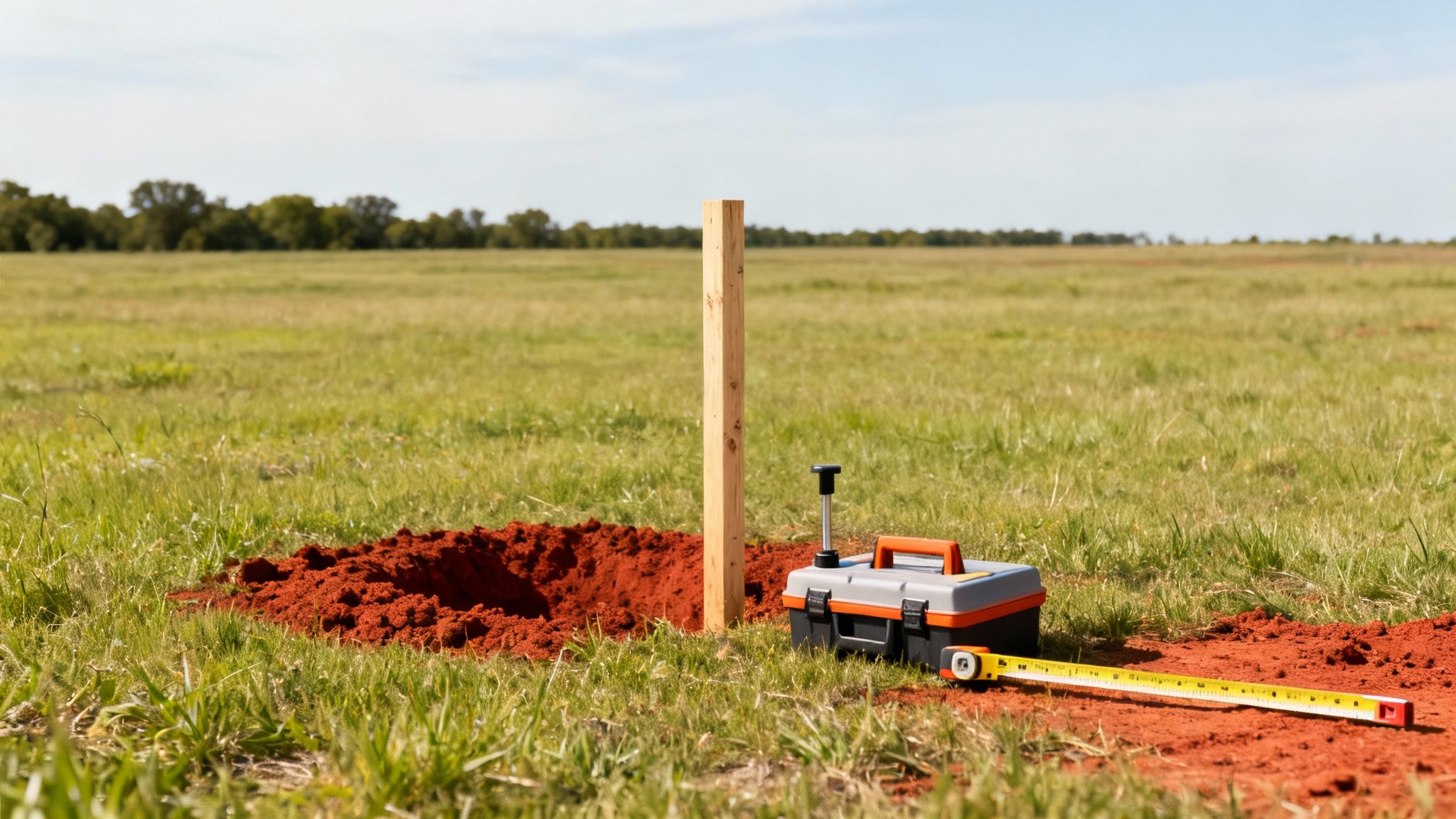
It comes down to spotting potential problems before they become your problems. This is where a builder's experience is invaluable, helping you see the land not just for what it is, but for what it can be.
Your Essential Site Evaluation Checklist
Before you sign on the dotted line for land, a thorough evaluation is non-negotiable. The fundamentals are the same whether you're eyeing a plot in an Edmond neighborhood or acreage near Elmore City. A builder can walk you through this process, but here are the key areas to investigate.
- Utility Access: In OKC or Norman, hookups are usually straightforward. In the country, you need firm answers. How far are utility hookups? Will you need a well and septic system? The cost to run utilities can add tens of thousands to your budget.
- Zoning and Covenants: Every property has rules. Local zoning laws dictate what you can build and where. Many neighborhoods have HOA covenants that restrict everything from fence height to paint color.
- Topography and Drainage: Pay close attention to the land's slope. A gentle slope helps water drain away from your foundation. A steep lot can dramatically increase site prep costs.
Why Oklahoma Soil Demands Respect
Here in Oklahoma, you can't talk about building without talking about our soil. The state is famous for its expansive clay soil, which acts like a sponge—swelling when wet and shrinking when dry. This movement can wreck a foundation, leading to cracks and serious structural issues.
This is why a geotechnical soil test is an absolute necessity. The process involves taking core samples from your lot for lab analysis. The report tells us what we're building on and gives an engineer the data to design the right foundation—often a post-tension slab—that can handle the soil's movement.
"Ignoring what's under the ground is the most expensive mistake you can make. We had a client who almost bought a beautiful lot, but a soil test revealed a high water table and unstable soil that would have required thousands in extra foundation work. We found them a better spot just down the road." - Bono, Project Manager, ACET Custom Homes
Site Selection Red Flags to Watch For
When walking a potential lot, watch for these common warning signs. Catching them early can save you from a massive financial headache.
Choosing the right land is the first, most crucial step in the journey of building on your lot. It’s about ensuring the home you've dreamed of is built on solid ground from the start.
Designing a Home That Fits Oklahoma
This is where the magic really happens—turning your dreams into a livable design that feels like it belongs right here in Oklahoma. We don't grab a generic floor plan. We create spaces that work for your family's rhythm, stand up to our wild weather, and capture your personal style, whether it’s a modern farmhouse in Guthrie or a sleek home in OKC.
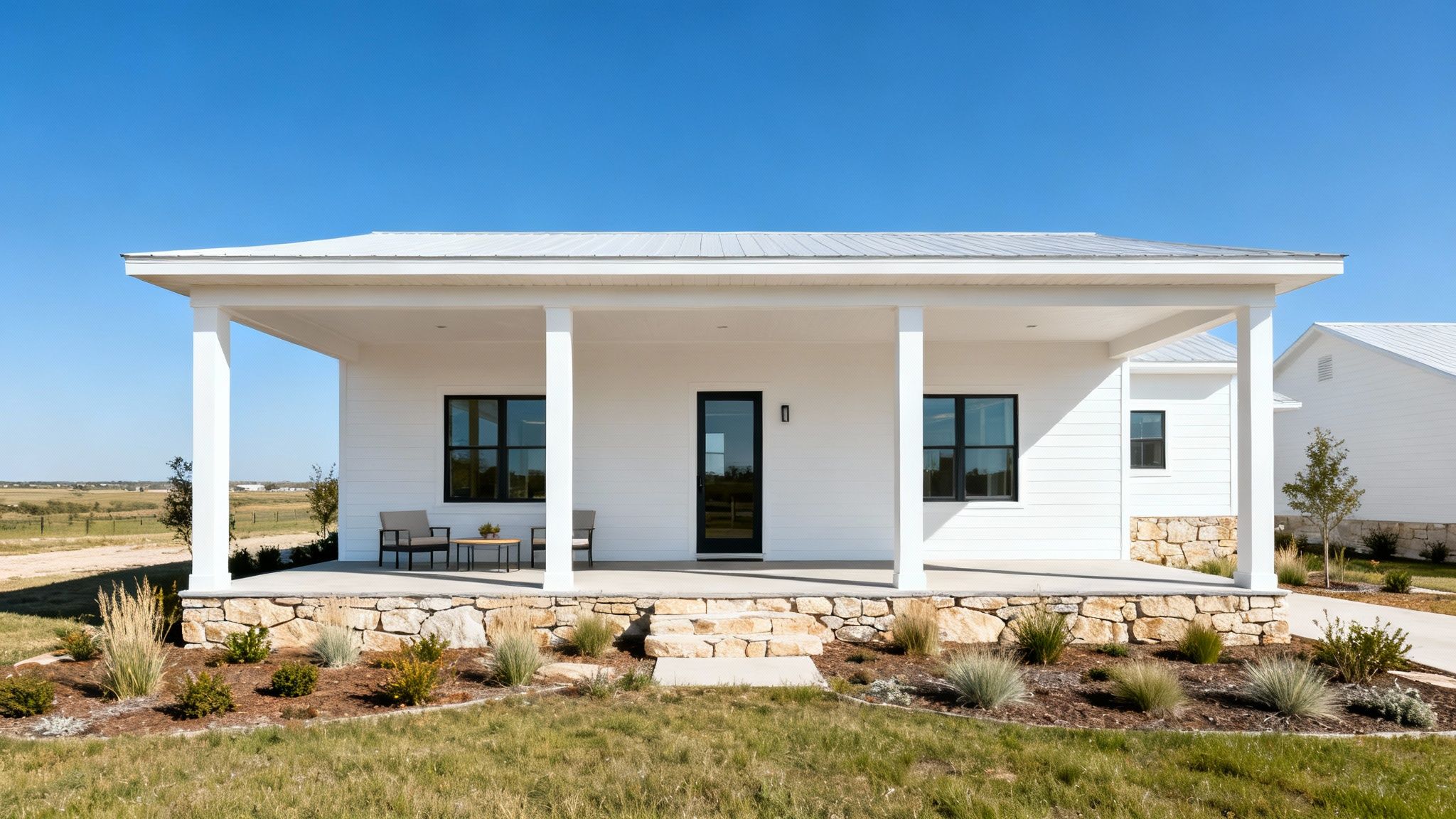
Building custom homes in Oklahoma is about more than aesthetics. It’s about planning for life here. That means choosing durable finishes that won’t fade in our sun, designing outdoor living areas you can enjoy most of the year, and focusing on energy efficiency to keep you comfortable through scorching summers and surprise freezes.
Tailoring Your Floor Plan to Your Lifestyle
A good floor plan is the heart of a custom home. It should support how you live, not force you into a box. Instead of asking you to adapt to a pre-drawn layout, we start with your life.
Do you host every holiday? An open-concept kitchen, living, and dining space is probably a must. Do you need a quiet space to work from home? We’ll need a dedicated office away from the hustle.
We think about the little things that make a big difference:
- The "Drop Zone": A small, organized spot by the garage or front door for keys, mail, and backpacks is a game-changer for keeping clutter under control.
- Kitchen Workflow: We focus on the "kitchen triangle"—the path between your sink, stove, and fridge—to make cooking effortless.
- Future-Proofing: Should we plan for a first-floor primary suite so you can age in place? What about a bonus room that can evolve from a nursery to a playroom to a teen hangout?
A well-designed home thinks ahead. It’s a smart investment, especially in high-demand areas like Edmond, where median home values have been appreciating well above state projections.
Designing for Oklahoma's Unique Climate
You can’t talk about building in Oklahoma without talking about the weather. Your home’s design has to respect its power. From intense summer heat to the threat of severe storms, building smart is non-negotiable.
Energy Efficiency Best Practices:
- Strategic Window Placement: We use windows to bring in natural light while placing them to avoid the punishing afternoon sun.
- High-Performance Insulation: Spray foam insulation in the walls and attic acts as a thermal shield, dramatically cutting your heating and cooling bills.
- Efficient HVAC Systems: We recommend an HVAC system with a high SEER (Seasonal Energy Efficiency Ratio) rating, sized for your home's layout.
"I remember a client in Moore who was adamant about energy efficiency. We used Low-E windows and a radiant barrier in the attic. A year later, he called to tell me his summer electric bills were half of what they were in his old, smaller house. That’s the power of smart design." – Bono, Project Manager, ACET Custom Homes
Beyond energy costs, storm resistance is a huge design factor. This could mean using impact-resistant roofing, reinforcing garage doors, or integrating a dedicated safe room into your floor plan.
Selecting Finishes and Materials
This is the fun part—where you inject your personality into your home. From exterior brick to interior paint, flooring, and light fixtures, these choices define your home's character. With over 15 years of experience building here, we know which materials look great and hold up to Oklahoma's demands.
Here’s a look at how different choices can shape your home's style and function:
The right design partner helps you navigate these decisions, ensuring everything comes together in a cohesive way that fits your budget. To learn more, dive deeper into our custom home design services in Oklahoma.
Answering Your Top Questions About Building a Custom Home
Embarking on a custom home journey brings up many questions. To help clear things up and give you the confidence to take the next step, here are answers to some of the most common questions we hear from folks in OKC, Edmond, and surrounding communities.
How Long Does It Really Take to Build a Custom Home in Oklahoma?
This is usually the first question people ask! From our first design meeting to the day you get your keys, you can generally expect the process to take anywhere from 10 to 16 months.
This timeline can shift based on a few key factors, like the complexity of your home's design, unpredictable Oklahoma spring storms, or how long it takes for permits in your specific area, whether in Norman or a rural spot like Macomb.
What’s the Average Cost Per Square Foot for a New Build in the OKC Area?
While a simple "price per square foot" can be misleading, a realistic starting point for high-quality custom construction around Oklahoma City is between $200 to $300+ per square foot.
That's a wide range because the final number reflects your choices. The biggest factors are:
- Your Land: A tricky lot with poor soil that needs extensive site prep will cost more.
- Your Finishes: The level of luxury you choose for countertops, flooring, and fixtures plays a huge role.
- Architectural Complexity: Vaulted ceilings, unique rooflines, and other custom features will influence the price.
The only way to get a true picture of your investment is to sit down with a builder and walk through your vision.
"A client's budget is the foundation of the project. We treat it with the same respect we treat the home's actual foundation—with precision and transparency. Every line item is discussed, so there are no surprises." - Bono, Project Manager at ACET Custom Homes
What Should I Look for in a Builder’s Contract?
Your contract is your most important document, so review it with a fine-tooth comb. A trustworthy builder will provide a contract that is crystal clear and protects everyone.
Make sure it explicitly details:
- A Detailed Scope of Work: It should spell out everything from the type of foundation to the brand of faucets.
- A Clear Payment Schedule: Payments should be linked to tangible progress, like when the foundation is poured or framing is finished.
- The Change Order Process: The contract must outline how any changes will be priced, documented, and approved in writing.
- Warranty Information: Look for a comprehensive structural warranty. The standard recommended by the National Association of Home Builders (NAHB) is a 10-year warranty.
A transparent, thorough contract is the bedrock of a great builder-client relationship, ensuring you’re working from the same playbook from day one.
Ready to design your custom home? Schedule a free consultation with ACET Custom Homes today.
Book Your Project Consultation