.png)
What Does a Custom Home Builder Do in Oklahoma?
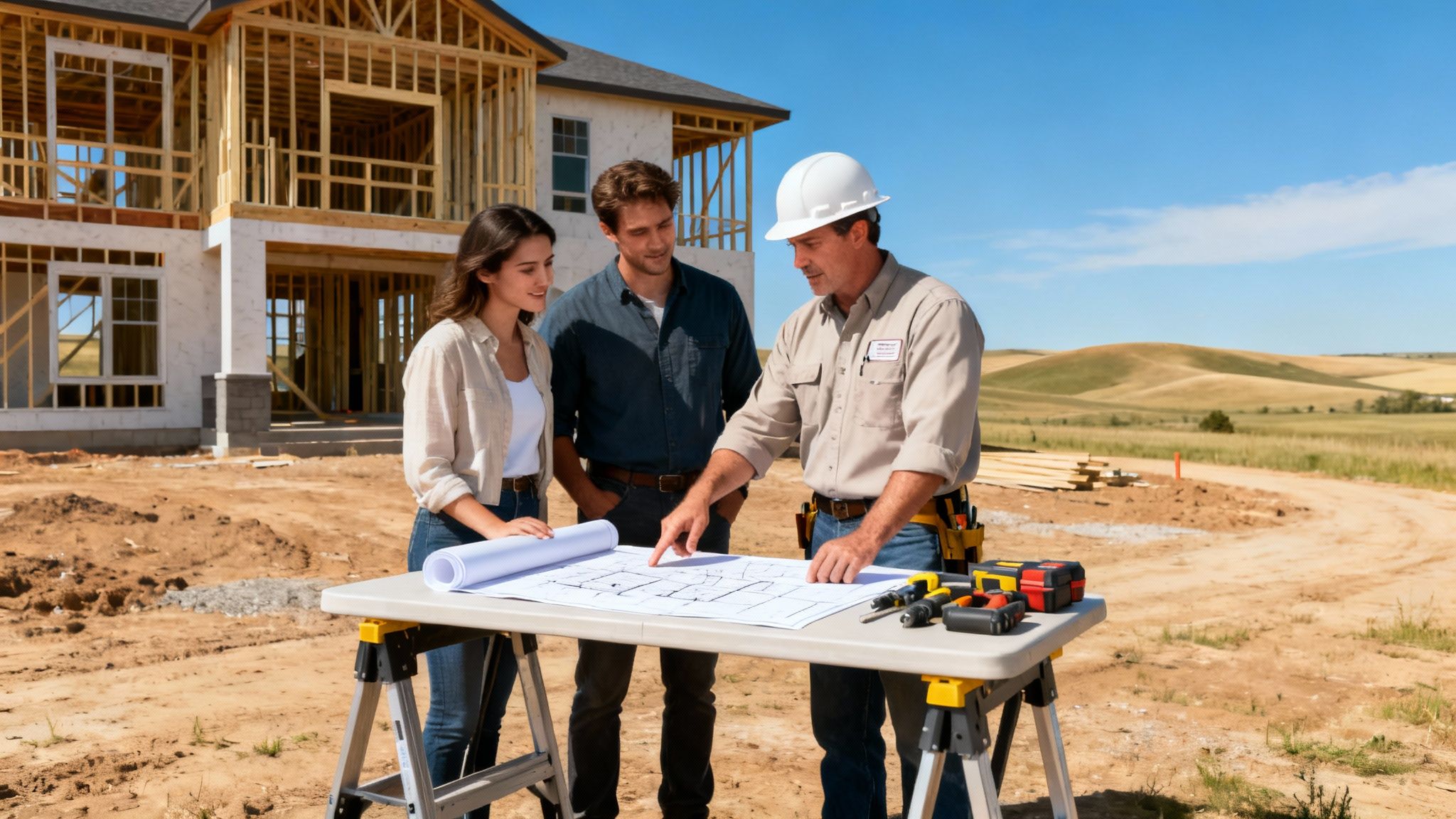
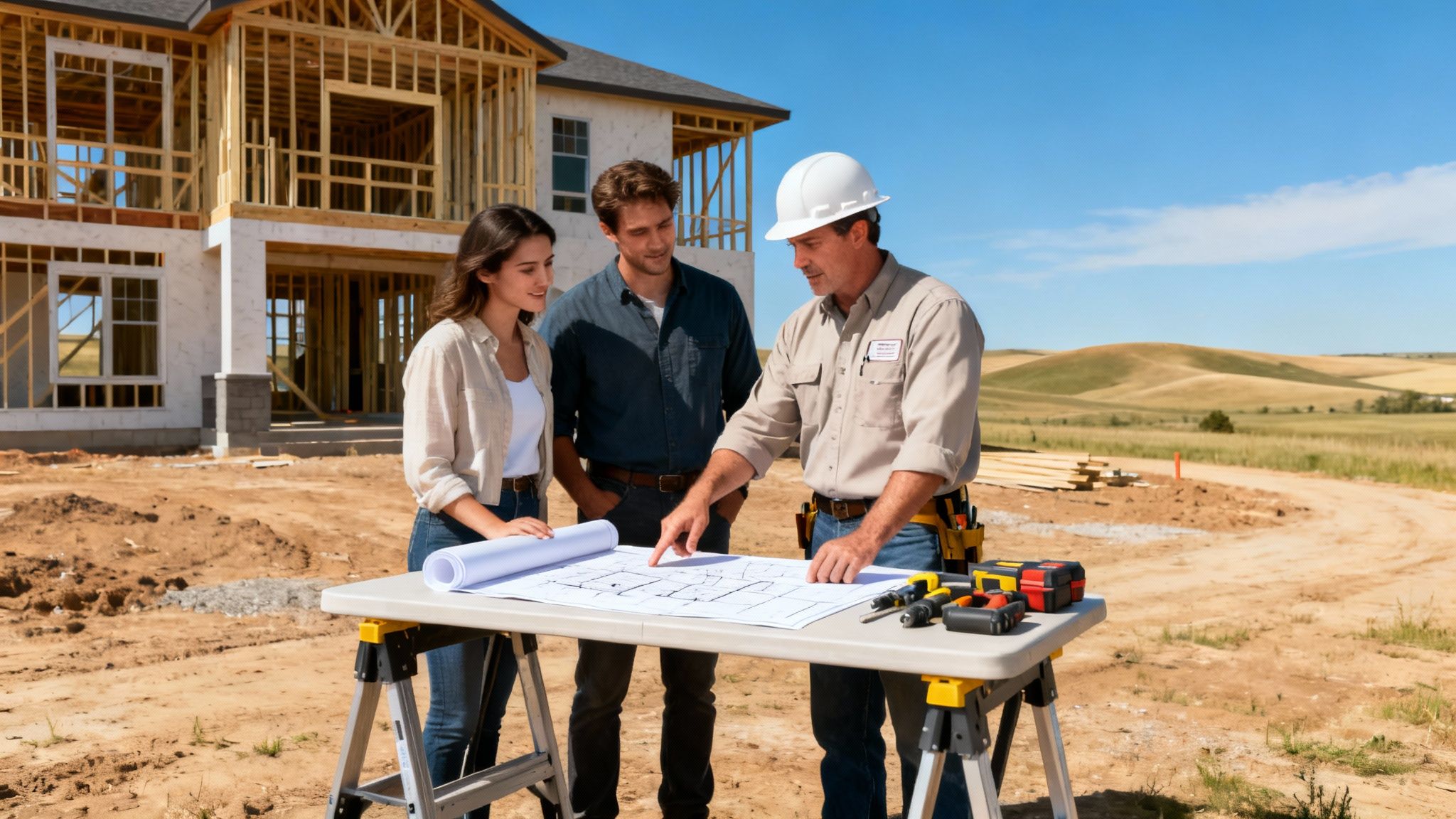
Quick answer: A custom home builder coordinates the people, information, decisions, money, materials, schedule, and construction activities required to turn a client's property and home design into a completed residence.
The role starts well before framing and can continue through preconstruction, design coordination, estimating, lender documentation, site development, procurement, construction management, change orders, inspections, punch work, and project closeout.
What makes a custom home builder different?
A custom builder works around a specific client's project rather than simply selling a preselected home already planned for a particular lot. The degree of customization varies by company, but the process generally gives the homeowner more influence over the property, floor plan, architecture, specifications, and finishes.
ACET Custom Homes focuses on personalized projects, including build-on-your-land homes and customized plans throughout the Oklahoma City metro and surrounding and rural Oklahoma communities.
1. Helping define the project
Early conversations establish the fundamentals: where the client wants to build, whether land is already owned, desired home size, architectural direction, floor-plan status, budget range, financing readiness, timeline, and major priorities.
This early definition matters because a home cannot be planned responsibly without understanding the property and financial target.
2. Reviewing the land and site
A custom builder can help identify construction considerations that may affect whether a property is a good fit. Depending on the site, those considerations may include access, drainage, grading, utilities, septic or sewer, driveway requirements, clearing, surveys, testing, engineering, setbacks, easements, and local approvals.
ACET does not currently sell land or lots, but it can be a resource while clients evaluate properties.
See the Build on Your Land in Oklahoma guide.
3. Coordinating floor plans and design
A builder's design role varies. Some builders require finished architectural plans before becoming involved. Others participate earlier.
ACET clients may bring an existing plan, customize an ACET floor plan, or combine ideas from multiple plans into a personalized design. ACET also uses 3D design to help clients visualize important spaces and finish direction.
The design ultimately has to align with the property, structural requirements, constructability, specifications, and budget.
4. Developing the construction budget
A custom builder translates the plans and scope into a project budget. That can require subcontractor pricing, material takeoffs, allowances, site-development estimates, specifications, and other project-specific inputs.
ACET does not use one official per-square-foot number because homes of the same size can have materially different costs. As a general positioning guide, ACET typically considers custom-home projects with an overall build investment around $399,999 and above. That is not a quote, guaranteed minimum, or fixed package price.
See the Oklahoma custom-home cost guide.
5. Coordinating with the construction lender
ACET is not a lender and does not provide financing. When a client uses a construction loan, however, the builder may need to provide documentation such as plans, budgets, contracts, draw schedules, insurance information, invoices, or other items requested by the lender.
The builder and lender have different roles, but their processes need to work together for the project to move efficiently.
Learn more in ACET's construction-loan guide.
6. Managing preconstruction
Before physical construction begins, the builder may coordinate estimating, selections, engineering, surveys, testing, procurement planning, trade scheduling, utility coordination, permits or approvals, lender requirements, and other readiness items.
Good preconstruction reduces the number of decisions that have to be made urgently after work is already underway.
7. Managing subcontractors and suppliers
Custom-home construction requires coordination among many specialized trades. The builder schedules and manages those activities so that work occurs in the correct sequence and meets the project's plans and specifications.
The builder also coordinates suppliers and material deliveries, including long-lead items that may need to be ordered well before installation.
8. Managing procurement and long-lead materials
Product availability can affect both budget and schedule. Builders need to identify items such as custom windows, doors, cabinetry, specialty finishes, fixtures, or other products that require early decisions.
When appropriate, ACET may use established international manufacturers and vendors for selected products. Those decisions are evaluated based on specifications, quality, logistics, lead times, duties, installation requirements, schedule, and total project value.
9. Managing the construction schedule
The builder coordinates the sequence of site work, foundation, framing, rough-ins, insulation, drywall, exterior and interior finishes, inspections, punch work, and completion.
ACET's broader planning-to-completion journey can take roughly 12 to 18 months, while actual construction once fully ready to build is commonly around 8 to 10 months. These are planning ranges, not guarantees.
See the custom-home timeline guide.
10. Communicating with the homeowner
A major part of the builder's job is turning complex construction information into decisions the client can understand. That includes communicating progress, upcoming selections, schedule changes, budget effects, and issues that require homeowner input.
The construction agreement should establish important expectations, while day-to-day project communication keeps the homeowner informed as work progresses.
11. Managing changes
Changes happen in custom construction. The builder should have a defined process for documenting requested changes, pricing them, identifying schedule consequences when applicable, obtaining authorization, and incorporating the change into the work.
A clear change-order process helps prevent disagreements about what was requested, what it costs, and whether it was approved.
12. Coordinating inspections and completion
Depending on the jurisdiction and project, construction may involve governmental inspections, lender inspections, engineering observations, trade testing, or other verification.
Near completion, the builder coordinates final work and punch-list items so outstanding details can be documented and addressed according to the contract and project requirements.
What a custom home builder does not automatically provide
The word “builder” does not mean every company provides every related service. Clients should verify the actual scope.
- A builder is not automatically the lender.
- A builder is not automatically the land seller or real-estate broker.
- A builder is not automatically the architect or engineer.
- A builder is not automatically responsible for every owner-purchased item.
- A builder's warranty is defined by the contract and applicable product or trade warranties—not by a universal industry promise.
Does Oklahoma require a statewide home-builder license?
Oklahoma does not have one universal statewide residential general-contractor license that functions as a home-builder license across every jurisdiction. Licensing and registration requirements can vary by trade and local authority.
Clients should verify business information, insurance, relevant trade licensing where applicable, local requirements, references, contract terms, and project history rather than relying on a single supposed statewide home-builder license number.
How should you evaluate a custom home builder?
Look beyond photos. Ask how the company handles:
- Land and site evaluation
- Design coordination
- Budget development
- Scope and allowances
- Construction financing documentation
- Payment and draw procedures
- Selections and procurement
- Subcontractor coordination
- Change orders
- Schedule updates
- Quality concerns
- Punch-list completion
- Warranty terms
For a detailed checklist, read How to Choose a Custom Home Builder in Oklahoma.
What does ACET Custom Homes handle?
ACET's custom-home process can include build-on-your-land planning, floor-plan customization, 3D design, site coordination, estimating, procurement planning, lender documentation, construction management, and project completion.
ACET does not currently sell land or provide financing. The team can, however, help clients understand how those decisions connect to the build and can coordinate with outside professionals involved in the project.
Frequently asked questions
Can a custom builder help before I buy land?
Yes. Early builder input can help identify construction-related issues before a property purchase. ACET does not currently sell lots.
Can I bring my own plans?
Yes. ACET can review client-provided plans and discuss customization, site fit, constructability, and budget alignment.
Does the builder handle my construction loan?
No. The loan is between the client and lender. The builder may provide documentation and coordinate with the lender as required by the construction-financing process.
Does the builder decide every finish?
No. In a custom project, many selections are client decisions made within the project's design, budget, specifications, availability, and schedule.
Does ACET build outside the Oklahoma City metro?
Yes. ACET primarily serves the Oklahoma City metro and surrounding and rural Oklahoma communities. Projects farther than approximately 60 miles are reviewed individually based on scope, logistics, and feasibility.
The builder is the coordinator of the complete construction process
The value of a custom builder is not limited to physically constructing walls and a roof. The builder coordinates the property, plans, budget, trades, materials, schedule, documentation, decisions, and construction sequence required to deliver the project.
Planning a custom home in Oklahoma? Contact ACET Custom Homes to discuss your land status, floor-plan direction, budget range, timeline, and next steps.
Book Your Project Consultation